Raising Emotionally Intelligent Kids: What Neuroscience Actually Recommends
We spend enormous energy teaching children to read, calculate, and compete. But the skill that most predicts their long-term happiness, relationships, and success — emotional intelligence — is rarely taught at all.
Psychologist Daniel Goleman, who popularized the concept of emotional intelligence (EQ) in the 1990s, found that EQ predicts life outcomes more reliably than IQ in most domains: career success, relationship quality, mental health, and even physical wellbeing.
The good news: emotional intelligence is not fixed at birth. It is built, slowly and deliberately, through everyday interactions — most of which happen at home.
1.Name Emotions — Out Loud, Every Day
The habit:
Label what your child is feeling, before they can do it themselves.
Neuroscientist Matthew Lieberman at UCLA coined the term “affect labeling” — the simple act of putting feelings into words. Brain imaging studies show that naming an emotion reduces activity in the amygdala (the brain’s threat center) and activates the prefrontal cortex (the reasoning center).
In plain terms: naming a feeling calms it.
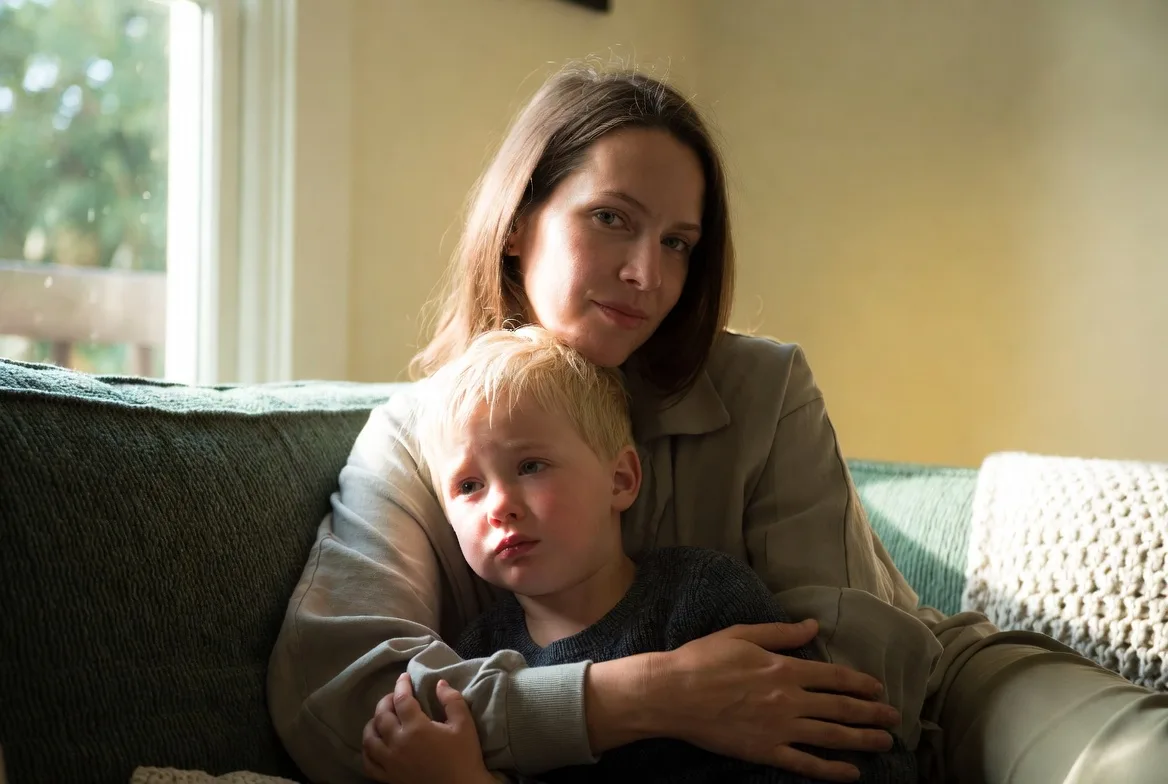
When your child is upset, try: “It looks like you’re feeling frustrated right now. That makes sense.” You’re not solving the problem. You’re teaching their brain to process emotion rather than be overwhelmed by it.
“Name it to tame it.”
— Dr. Daniel Siegel, The Whole-Brain Child
2.Validate First — Solve Later
The habit:
Acknowledge the feeling before offering a solution.When children come to us with emotional distress, our instinct is to fix it. But jumping to solutions skips the most important step: being heard.Research from John Gottman’s lab at the University of Washington found that children with “emotion-coaching” parents — those who acknowledge feelings before redirecting behavior — develop stronger emotional regulation, better peer relationships, and lower rates of behavioral problems. The sequence:
Acknowledge → Validate → Guide.
“You’re angry that we have to leave. That’s hard. Let’s say goodbye to your friends and then we can talk about it in the car.”
3. Let Children Experience Uncomfortable Emotions
The habit:
Resist rescuing your child from every difficult feeling.
Modern parenting culture has developed a strong reflex to eliminate discomfort. But frustration, sadness, and disappointment are not problems to be solved — they are experiences to be processed.
Developmental psychologist Alicia Lieberman at UCSF found that children who are protected from all negative emotions develop lower frustration tolerance and weaker coping skills over time. The discomfort is the training.
This doesn’t mean ignoring distress. It means staying present and calm while your child feels something hard — and trusting them to come through it.
4. Model Emotional Regulation Yourself
The habit:
Let your children see you manage your own emotions — imperfectly but honestly.Children learn emotional regulation primarily by watching the adults around them. If you never express frustration, sadness, or anxiety, children receive an implicit message that these emotions are dangerous or shameful.If you express them but then regulate — “I’m feeling really stressed right now. I’m going to take a few slow breaths before I respond” — you give children a live demonstration of emotional intelligence in action.You don’t need to be perfect. You need to be real, and then regulated.(This is the same principle behind modeling screen use — children mirror what they see, not what they’re told.)
5. Teach the Difference Between Feelings and Actions
The habit:
All feelings are allowed. Not all actions are.This distinction is one of the most important concepts in emotional development. Children who understand it develop both emotional freedom and behavioral responsibility.”It’s okay to feel angry. It’s not okay to hit.””It’s okay to feel disappointed. It’s not okay to scream at your sister.”Dr. Ross Greene’s research on collaborative problem solving shows that children who internalize this distinction are significantly less likely to act out and more likely to develop internal moral reasoning over time.
6. Build Empathy Through Perspective-Taking
The habit:
Ask “how do you think they felt?” regularly.
Empathy — the ability to understand and share another’s emotional state — is not innate in full form. It develops through practice, specifically through perspective-taking exercises.
After a conflict, a story, or a movie: “How do you think she felt when that happened? Why?” These simple questions activate the brain’s mirror neuron system and build the neural pathways underlying social understanding.
Research from the Greater Good Science Center at UC Berkeley shows that children who regularly engage in perspective-taking develop stronger empathy scores, better conflict resolution skills, and more positive peer relationships.
7. Create Emotional Safety at Home
The habit:
Make your home a place where all emotions are welcome — even the difficult ones.
Emotional safety means children feel they can express what they feel without shame, punishment, or dismissal. It doesn’t mean every behavior is acceptable. It means every feeling is.
Signs of emotional safety at home:
Children come to you when they’re upset, not hide it
Crying is met with presence, not impatience
Mistakes are treated as learning, not failure
Difficult conversations happen without escalation
This environment is built over years of small, consistent responses — not grand gestures.
What to Expect
Emotional intelligence develops slowly and non-linearly. Regression is normal, especially during stress or major transitions.
Ages 2–4:
Emotion identification begins. Tantrums are normal — they are the immature nervous system’s attempt to regulate.
Ages 5–7:
Children begin to hide emotions. This is developmental, not a problem.
Ages 8–12:
Emotional vocabulary expands rapidly with support. This is the critical window.
Adolescence:
EQ skills are tested intensely — and consolidated if foundations were built.
What This Means for Families
Raising an emotionally intelligent child is not a curriculum. It is a way of being present — noticing, naming, validating, and modeling, day after day, in the ordinary moments that make up a childhood.
The research is clear: children who grow up in emotionally attuned families are more resilient, more empathetic, and more equipped to navigate the full complexity of human life.
That is perhaps the most important thing we can give them.
Key Research Referenced
Goleman, D. — Emotional Intelligence, 1995
Lieberman, M.D. — Affect labeling and amygdala regulation, UCLA
Gottman, J. — Emotion coaching and child outcomes, University of Washington
Lieberman, A.F. — Emotional protection and coping development, UCSF
Greene, R. — The Explosive Child — collaborative problem solving
Siegel, D. — The Whole-Brain Child
📩 Join 1,000+ Parents Who Read The Family Science Brief
Every week, one evidence-based insight — translated into something you can actually use at home. No fluff. No guilt. Just science that works.