Hidden Sugar in Kids’ Food
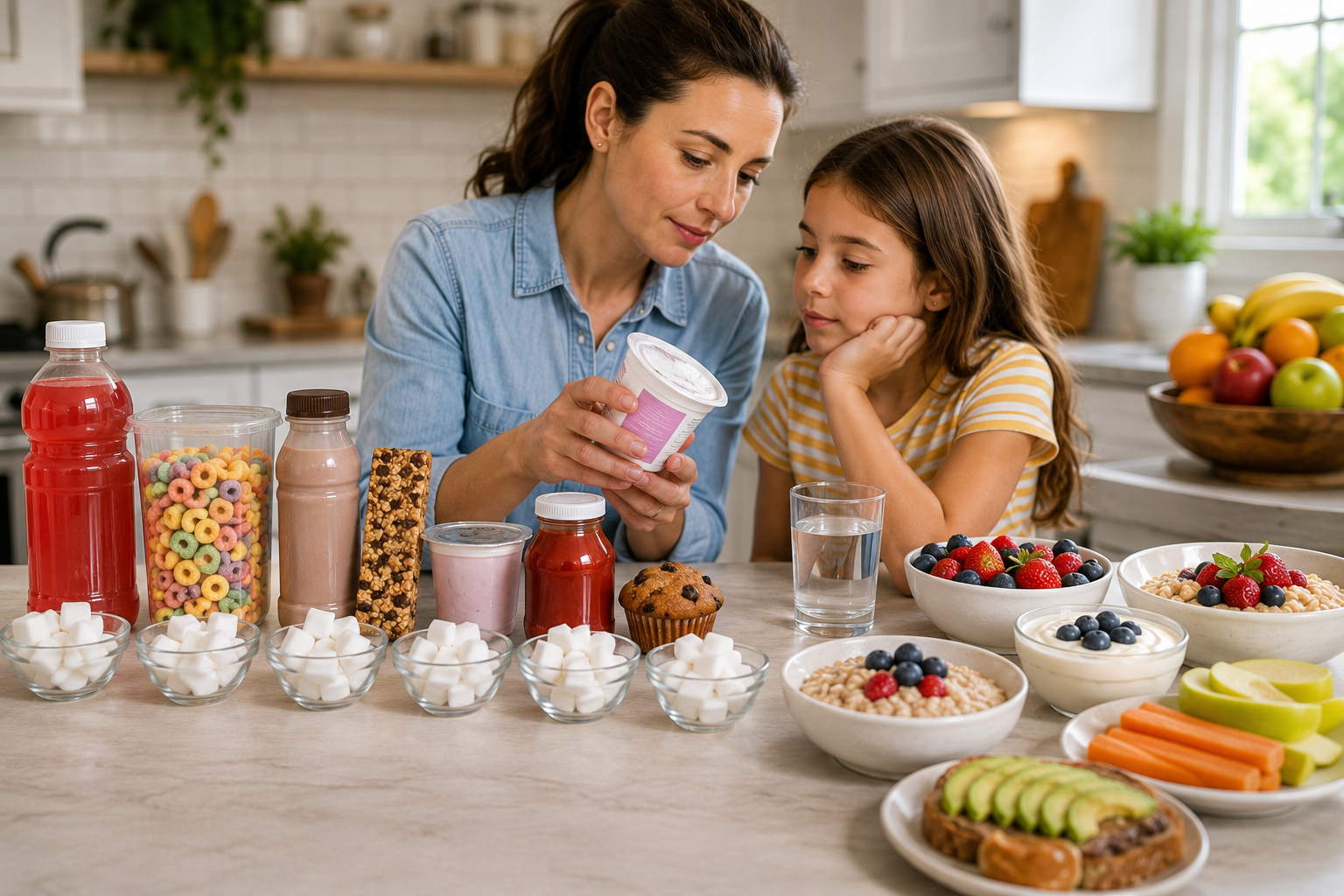
Every parent knows candy and soda contain sugar. The surprise is that many foods marketed as “healthy” for children can also contain significant amounts of added sugar. Breakfast cereals, flavored yogurts, fruit drinks, granola bars, and even some pasta sauces may contribute more sugar than parents realize.
The good news is that reducing added sugar doesn’t require banning favorite foods or creating stressful mealtimes. Small, consistent changes can make a meaningful difference while still allowing children to enjoy eating. This article is part of our Complete Guide to Kids’ Nutrition.
Sugar isn’t the enemy, and children don’t need a completely sugar-free diet. What matters most is the overall pattern of eating and limiting added sugars while encouraging nutrient-rich foods.
According to the American Heart Association, children and teens aged 2 to 18 should consume less than 25 grams (about 6 teaspoons) of added sugar per day, while children under 2 should avoid added sugar altogether. Yet many children exceed this amount before lunchtime through breakfast cereals, flavored drinks, sweetened yogurt, and packaged snacks alone.
Why Too Much Added Sugar Matters
Children need carbohydrates for energy, but not all carbohydrates are the same. Naturally occurring sugars found in fruit, vegetables, and plain dairy come packaged with fiber, vitamins, minerals, and water. Added sugars, on the other hand, provide calories with little nutritional value.
Consistently eating large amounts of added sugar has been associated with:
- Higher risk of childhood obesity
- Increased risk of tooth decay
- Greater likelihood of insulin resistance over time
- Poorer overall diet quality
- More frequent blood sugar spikes followed by energy crashes
Occasional treats are part of a normal childhood. The concern is when added sugar becomes an everyday habit rather than an occasional indulgence.
Sugar, Energy, and Mood
Many parents notice that children seem energetic after eating sugary foods. While sugar can cause a temporary rise in blood glucose, the body quickly releases insulin to bring levels back down. This rapid rise and fall may leave some children feeling tired, hungry, or less focused soon afterward. Meals that combine protein, fiber, and healthy fats provide steadier energy and help children stay satisfied for longer.
Added Sugar and Dental Health
Added sugar also plays a major role in tooth decay. Bacteria in the mouth feed on sugars and produce acids that gradually weaken tooth enamel. Frequent sugary snacks and drinks expose teeth to these acids throughout the day, increasing the risk of cavities. Drinking water after meals, brushing twice a day with fluoride toothpaste, and limiting sugary snacks between meals all help protect children’s dental health.
How Much Sugar Is Recommended?
The American Heart Association recommends:
| Age | Added Sugar Recommendation |
|---|---|
| Under 2 years | No added sugar |
| Ages 2-18 | Less than 25 grams (about 6 teaspoons) per day |
Many children consume considerably more than this, often without realizing it because sugar is spread across multiple foods throughout the day.
The Biggest Hidden Sources of Sugar
Parents often expect desserts to contain sugar. The bigger surprise is how many everyday foods contribute significant amounts.
Breakfast Cereals
Many cereals marketed to children contain as much added sugar as cookies. Choosing cereals with higher fiber and lower added sugar can help children stay full longer while avoiding rapid blood sugar spikes.
Flavored Yogurt
Plain yogurt is highly nutritious. However, many fruit-flavored yogurts contain several teaspoons of added sugar. Adding fresh berries or sliced fruit to plain yogurt often provides similar sweetness with more fiber and nutrients.
Fruit Drinks
Despite pictures of fruit on the package, many fruit drinks contain relatively little actual fruit juice and significant amounts of added sugar. Whole fruit remains a much healthier choice because it contains fiber that slows sugar absorption.
Granola Bars
Many parents pack granola bars believing they’re a healthy snack. Some are, but others resemble candy bars in terms of sugar content. Reading nutrition labels can help identify better options.
Chocolate Milk
Chocolate milk provides calcium and protein, but it also contains added sugar. For children who dislike plain milk, chocolate milk can still fit into a healthy diet occasionally, but water and plain milk should remain the primary beverages.
Flavored Oatmeal
Instant flavored oatmeal packets often contain added sugars. Preparing plain oats and adding cinnamon, fruit, or mashed banana creates natural sweetness without relying on large amounts of added sugar.
Pasta Sauce
Some pasta sauces contain surprisingly high amounts of added sugar. Checking labels and comparing brands can reveal large differences.
Ketchup and Condiments
Small servings add up. Ketchup, barbecue sauce, sweet salad dressings, and other condiments may contribute more sugar than parents expect.
Learning to Read Nutrition Labels
Nutrition labels have become much easier to understand. Parents can focus on three simple areas:
- Added Sugars — Look specifically for Added Sugars, not just Total Sugars. Foods like milk and fruit naturally contain sugar, but added sugars are the ones to limit.
- Ingredient List — Ingredients are listed from highest to lowest by weight. If sugar, syrup, or another sweetener appears among the first few ingredients, the product is likely high in added sugar.
- Compare Similar Products — Two cereals, yogurts, or snack bars may look almost identical but contain very different amounts of added sugar. Comparing labels can quickly reveal healthier choices.
Sugar Has Many Names
Manufacturers use dozens of different names for added sugar. Some common examples include:
- Cane sugar
- Brown sugar
- Corn syrup
- High-fructose corn syrup
- Dextrose
- Maltose
- Glucose
- Fructose
- Rice syrup
- Agave syrup
- Honey
- Maple syrup
Although some sound more natural than others, they all count as added sugar when used as sweeteners.
Does Fruit Count?
No. Whole fruit contains natural sugars together with fiber, water, vitamins, minerals, and antioxidants. The fiber slows the absorption of sugar, making whole fruit a healthy everyday choice for most children.
Fruit juice is different. Even 100% fruit juice contains concentrated natural sugars but much less fiber than whole fruit, so it should be consumed in moderation.
Dried fruit can also be part of a healthy diet, but because most of the water has been removed, it’s easy to eat larger amounts of natural sugar in a small serving. Portion size matters.
Starting the Day Without Too Much Sugar
Breakfast is often where children consume the largest amount of added sugar. Sweetened cereals, pastries, flavored yogurt, and sugary drinks can add up quickly. Instead, aim for breakfasts that combine protein, fiber, and healthy fats, such as:
- Oatmeal topped with berries
- Whole-grain toast with peanut butter
- Eggs with whole-grain toast
- Plain yogurt with fresh fruit
- Homemade smoothies made with yogurt, fruit, and oats
These meals provide more stable energy and help children stay full until lunchtime.
Better Snack Swaps
| Instead of | Try |
|---|---|
| Fruit snacks | Fresh fruit |
| Sugary yogurt | Plain yogurt with berries |
| Cookies | Apple slices with peanut butter |
| Candy | Trail mix |
| Sugary cereal | Oatmeal with banana |
| Fruit drink | Water or milk |
The goal isn’t perfection. Improving one snack at a time is often more successful than changing everything overnight.
Hidden Sugar Swaps at a Glance
| Instead of | Try |
|---|---|
| Sweetened breakfast cereal | Plain oatmeal with fruit |
| Fruit drink | Whole fruit and water |
| Flavored yogurt | Plain yogurt with berries |
| Granola bar | Nuts and fresh fruit |
| Chocolate milk every day | Plain milk most days |
What About Artificial Sweeteners?
Many products labeled “sugar-free” replace sugar with low-calorie or artificial sweeteners. Research on their long-term use in children is still evolving. Rather than replacing sugary foods with artificially sweetened alternatives, most pediatric nutrition experts recommend emphasizing whole, minimally processed foods whenever possible. Water, fruit, vegetables, whole grains, and naturally nutritious snacks remain the healthiest everyday choices.
What About Birthday Parties and Holidays?
Birthday parties, holidays, and family celebrations are part of childhood. There’s no need to avoid cake or special treats completely. Instead of focusing on occasional desserts, aim for healthy eating habits most of the time. Long-term patterns matter far more than what children eat at one celebration.
Tips That Actually Work
Instead of banning sweets completely:
- Keep healthy snacks visible
- Avoid using desserts as rewards
- Offer water with meals
- Let children enjoy treats occasionally without guilt
- Introduce new foods repeatedly without pressure
- Model healthy eating as a family
Children learn eating habits by watching adults far more than by listening to lectures.
Healthy Habits Work Together
Reducing added sugar is only one part of healthy living. Children also benefit from regular physical activity, age-appropriate sleep, balanced meals, good hydration, and family meals whenever possible. These habits work together to support healthy growth, energy, mood, and overall well-being.
Daily Sugar Checklist
- ✅ Water is the main drink
- ✅ Fruit served every day
- ✅ Vegetables included at meals
- ✅ Mostly whole grains
- ✅ Protein with every meal
- ✅ Sweets are occasional, not everyday
- ✅ Read labels before buying new packaged foods
Still have questions? Here are some of the most common concerns parents ask about kids and added sugar.
Frequently Asked Questions
Is sugar bad for children?
No. Sugar itself isn’t toxic. The concern is consuming too much added sugar too often.
Is fruit healthier than fruit juice?
Yes. Whole fruit contains fiber that slows sugar absorption and helps children feel full.
Should I completely ban sweets?
No. Completely restricting sweets may actually increase their appeal. Teaching moderation is generally more realistic and sustainable.
Are natural sweeteners healthier?
Honey, maple syrup, coconut sugar, and agave syrup are still forms of added sugar. They should also be consumed in moderation.
How can I reduce sugar without arguments?
Start gradually. Replacing one sugary snack each day is usually more successful than making dramatic changes all at once.
Does honey count as added sugar?
Yes. Although honey is natural, it is still considered an added sugar when used to sweeten foods or drinks. It should be enjoyed in moderation, just like maple syrup, agave syrup, and other sweeteners.
Are sugar-free drinks better for kids?
Sugar-free drinks contain less sugar, but water and plain milk remain the healthiest everyday beverage choices for most children. They support hydration without encouraging a preference for very sweet flavors.
Final Thoughts
Hidden sugars are found in many foods children eat every day — not just desserts. The goal isn’t to make children afraid of sugar or to eliminate every sweet treat. Instead, it’s about recognizing where added sugar hides, reading labels with confidence, and choosing whole, nutrient-rich foods more often.
Small, consistent changes — like swapping one sugary snack for a healthier option or choosing water instead of a sweetened drink — can have a meaningful impact over time. Healthy eating isn’t about perfection. It’s about building lifelong habits that help children grow, learn, and thrive.