How to Choose Healthy Snacks for Kids: A Parent’s Evidence-Based Guide
Walk down any supermarket aisle and you’ll see hundreds of snacks marketed to children. Bright packaging, words like natural, made with real fruit, whole grain, or no artificial colors often give parents the impression that a product is a healthy choice.
Unfortunately, marketing doesn’t always reflect nutritional quality.
Many products designed for children still contain significant amounts of added sugar, refined starches, or highly processed ingredients despite their healthy appearance.
Learning how to evaluate snacks beyond the front of the package helps families make better decisions without eliminating convenience.
Why Snack Marketing Can Be Misleading
Food companies know that parents want convenient foods that also support their children’s health.
Because of this, packaging often emphasizes one positive feature while drawing attention away from less desirable ingredients.
For example:
- “Made with whole grains”
- “Contains vitamin C”
- “No high-fructose corn syrup”
- “Organic”
- “Gluten-free”
Although these statements may be factually correct, they do not automatically make a snack nutritious.
Nutrition experts recommend evaluating the complete Nutrition Facts label and ingredient list instead of relying on marketing claims alone. If you’re not sure how to read one, see our complete guide to reading nutrition labels.
Myth vs. Fact
| Myth | Fact |
|---|---|
| “Made with whole grains” means it’s mostly whole grain | It may contain only a small amount of whole grain mixed with refined flour |
| “Natural” means lower in sugar or calories | Natural products can still be heavily processed |
| “Organic” means healthier | Organic snacks can still be high in added sugar and saturated fat |
| “No artificial colors” means low sugar | This claim says nothing about sugar content — a candy without dyes is still candy |
| “Made with real fruit” means it can replace whole fruit | Many contain only fruit concentrate, plus added sugars and starches |
Claim on the Package → What to Check Instead
| Claim on the Package | What to Check Instead |
|---|---|
| Healthy | Nutrition Facts panel |
| Natural | Ingredient list |
| Organic | Added sugar and saturated fat |
| Made with Whole Grains | First ingredient listed |
| Source of Vitamins | Overall nutritional profile |
| Made with Real Fruit | Grams of added sugar, fiber content |
| No Artificial Colors | Total sugar and sodium |
For a step-by-step walkthrough of each part of the label, see our guide to reading nutrition labels for kids’ foods.
What Makes a Healthy Snack?
A healthier snack generally provides nutrients that support growth while helping children stay satisfied between meals.
Look for foods that include:
- Fiber
- Protein
- Healthy fats
- Vitamins and minerals
- Minimal added sugars
- Simple ingredient lists
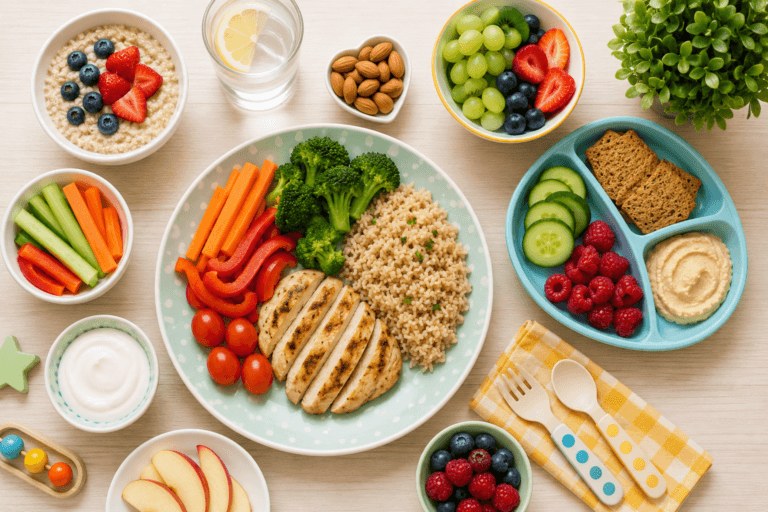
Whole-food snacks naturally provide many of these nutrients without unnecessary additives.
Examples include:
- Fresh fruit
- Plain yogurt
- Cheese
- Unsalted nuts (for children age 4 or older, depending on development and maturity)
- Whole-grain crackers
- Hummus with vegetables
- Boiled eggs
Watch for Added Sugars
One of the biggest differences between healthier and less healthy snacks is the amount of added sugar.
Many products that appear healthy—including fruit snacks, flavored yogurts, cereal bars, and snack cookies—can contain surprising amounts of added sugar.
The American Heart Association recommends that children ages 2 to 18 consume no more than about 25 grams (roughly 6 teaspoons) of added sugar per day. Regularly consuming foods high in added sugar may contribute to lower overall diet quality and make it more difficult for children to meet their daily nutritional needs.
For practical tips, read our guide to Hidden Sugar in Kids’ Food.
Whole Fruit vs. Fruit-Flavored Snacks
Packaging featuring colorful fruit images can be misleading.
Many fruit-flavored snacks contain little actual fruit and rely primarily on sugar, starches, flavorings, and concentrates.
USDA Team Nutrition materials make the same point for children: products with fruity names or fruit pictures may contain little or no real fruit, do not belong to the Fruit Group, and tend to be high in added sugars.
Compared with many fruit-flavored snacks, whole fruit generally provides more fiber, water, vitamins, and naturally occurring plant compounds that support a balanced diet.
- Natural fiber
- Water
- Vitamins and minerals
- Beneficial plant compounds
- Greater satiety
Whenever practical, choosing fresh, frozen, or unsweetened fruit more often than fruit-flavored processed snacks can help improve overall diet quality.
Protein and Fiber Can Help Kids Feel Fuller for Longer
Snacks that combine protein with fiber may help children feel satisfied for longer compared with snacks made primarily from refined carbohydrates. This combination can also support more balanced energy between meals.
Examples include:
- Apple slices with peanut butter
- Cheese and whole-grain crackers
- Greek yogurt with berries
- Cottage cheese and fruit
- Hard-boiled eggs
For young children, peel and grate the apple, mash it, or cook it until soft. Prepare food according to the child’s development. Spread peanut butter thinly rather than in thick chunks.
For more ideas on building balanced meals your kids will actually eat, see our guide, Best Healthy School Lunch Ideas Kids Will Actually Eat. For 25 ready-to-pack snack ideas, see our complete list of healthy snacks for kids.
Are Granola Bars a Healthy Choice?
Granola bars can be convenient, portable, and easy to pack in school lunches. However, their nutritional quality varies widely.
Some bars are made with whole oats, nuts, seeds, and dried fruit, while others contain large amounts of added sugars, syrups, chocolate coatings, or refined grains. Instead of assuming every granola bar is healthy, compare products side by side using the questions in the “Comparing Popular Kids’ Snacks” section below.
A granola bar can certainly fit into a healthy eating pattern, but it’s worth choosing one with a better nutritional profile.
Yogurt: Healthy or Dessert in Disguise?
Yogurt is another product where labels can be misleading. Plain yogurt naturally contains protein, calcium, and beneficial nutrients. Many flavored yogurts marketed to children, however, include significant amounts of added sugar.
Parents don’t necessarily need to avoid flavored yogurt altogether. Another option is to buy plain Greek yogurt and add fresh berries, banana slices, cinnamon, or a small drizzle of honey (only for children over one year of age). This allows you to control the sweetness while increasing the nutritional value of the snack.
Ultra-Processed Doesn’t Always Mean “Forbidden”
Not every packaged snack needs to be avoided.
Many nutritious packaged options are available, including:
- Plain popcorn (for children age 4 or older, depending on development and maturity)
- Unsweetened applesauce
- Whole-grain crackers
- Hummus
- Unsalted mixed nuts (for children age 4 or older, depending on development and maturity)
- Cheese sticks (for young children, cut into short strips rather than round pieces)
- Plain yogurt
- Frozen fruit
- Whole-grain cereals with little added sugar
The goal is not perfection.
Instead, parents can gradually replace highly processed choices with foods that contain fewer refined ingredients and more whole foods. To understand why this matters for growing kids, see our article on How Ultra-Processed Foods Affect Children’s Brains.
Small improvements made consistently often have a greater impact than strict dietary rules.
Comparing Popular Kids’ Snacks
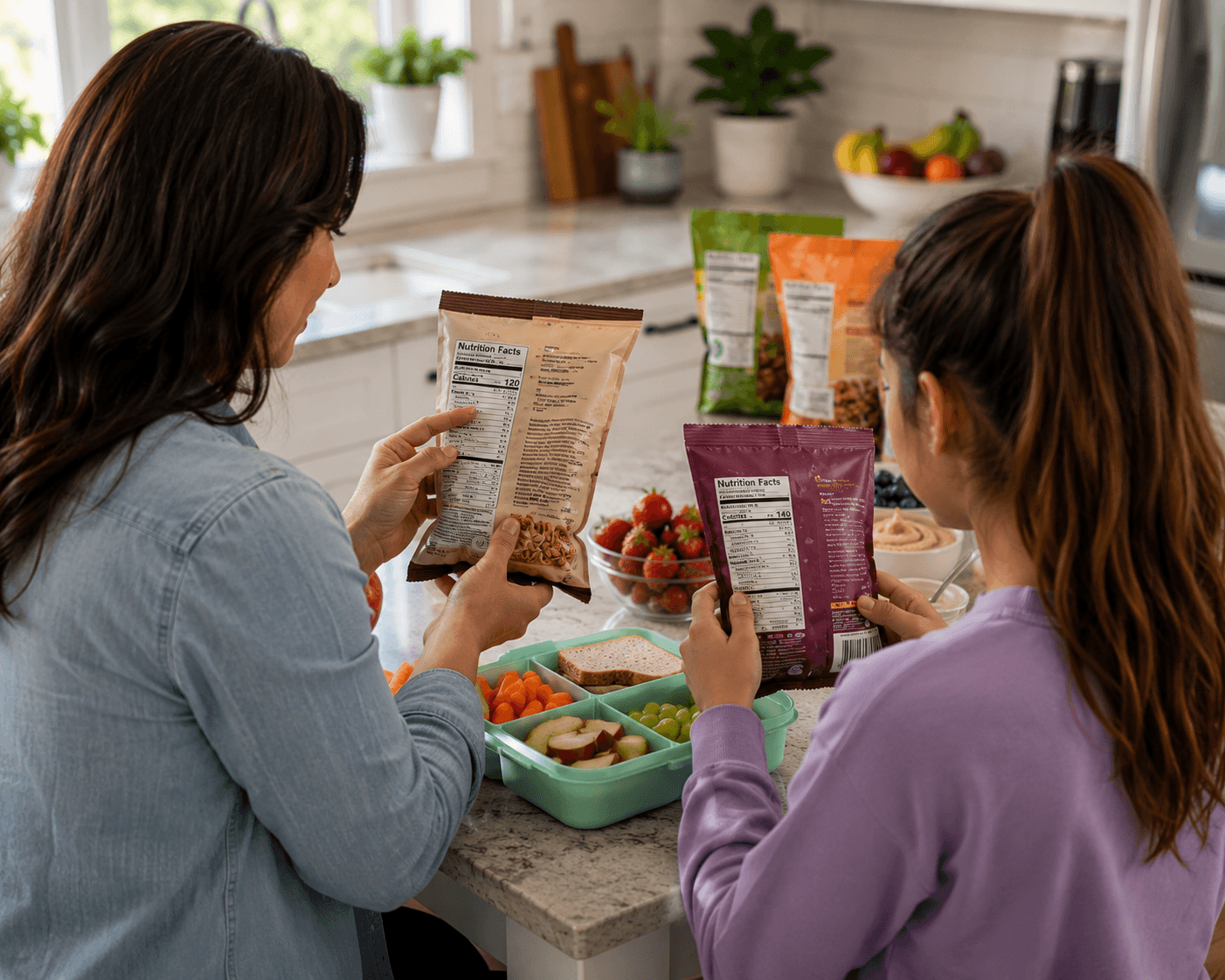
Many packaged snacks look similar on store shelves, but their nutritional value can vary considerably. Comparing products side by side helps parents make more informed decisions instead of relying on marketing claims.
When comparing two snacks, consider these questions:
- Which contains less added sugar?
- Which provides more fiber?
- Which has a shorter ingredient list?
- Does it contain a meaningful source of protein?
- Would this snack keep my child full for more than an hour?
Small differences can add up over weeks and months, especially when snacks are eaten every day.
Smart Grocery Shopping Tips
Healthy shopping doesn’t require buying expensive specialty foods. A few simple habits can make grocery trips easier and help families build healthier routines over time.
- Shop after eating rather than when hungry.
- Plan snacks before going to the store.
- Spend more time in sections with whole foods.
- Compare Nutrition Facts labels instead of front-package claims.
- Choose plain versions of yogurt, oatmeal, and cereals whenever possible.
- Buy seasonal fruits and vegetables to reduce costs.
- Keep healthy snacks visible at home.
For more guidance, read our complete guide to reading nutrition labels.
Easy Healthy Snack Swaps
Replacing one snack at a time is often more realistic than changing everything at once.
| Consider choosing… | Instead of… |
|---|---|
| Fresh berries or grapes (completely chopped into tiny pieces for young children) | Fruit-flavored gummies |
| Whole-grain toast with peanut butter (spread thinly for young children) | Sugary granola bars |
| Plain Greek yogurt with fresh fruit | Flavored yogurt |
| Air-popped popcorn (for children age 4 or older, depending on development and maturity) | Potato chips |
| Apple slices with nut butter (for young children, peel and grate the apple, mash it, or cook it until soft, and spread the nut butter thinly) | Chocolate cookies |
| Boiled egg with whole-grain crackers | Sugary breakfast bars |
Healthy eating focuses on building balanced eating habits over time rather than aiming for perfection. Small, realistic changes are often easier for families to maintain.
Common Mistakes Parents Make
- Believing every snack labeled “natural” is healthy.
- Ignoring serving size when comparing products.
- Focusing only on calories instead of overall nutrition.
- Assuming organic products automatically contain less sugar.
- Keeping large quantities of highly processed snacks easily accessible.
- Expecting children to instantly accept healthier alternatives.
Children often need repeated exposure to new foods before accepting them. Patience and consistency are usually more effective than pressure.
Key Takeaways
- Don’t judge a snack by its packaging.
- Read both the Nutrition Facts label and ingredient list.
- Choose snacks rich in fiber and protein whenever possible.
- Limit foods high in added sugars.
- Whole foods are usually the best everyday snack choice.
- Small improvements made consistently can have lasting benefits.
Building Healthy Snack Habits Takes Time
Healthy eating habits develop gradually, not overnight. Instead of trying to change every snack at once, focus on making one or two realistic improvements each week. Small, consistent changes are often easier for children to accept and can become lasting family habits over time.
This article is intended for educational purposes only and should not replace personalized medical or dietary advice. If your child has food allergies, a medical condition, or specific nutritional needs, consult your pediatrician or a registered dietitian.
Frequently Asked Questions
Are packaged snacks always unhealthy?
No. Many packaged snacks can fit into a balanced diet. The key is choosing products with less added sugar, more fiber, and simple ingredient lists.
How much added sugar should children have?
The American Heart Association recommends no more than about 25 grams (roughly 6 teaspoons) of added sugar per day for children ages 2 to 18, with most sweetness ideally coming from whole fruits rather than processed foods.
Is organic automatically healthier?
Not necessarily. Organic products can still contain added sugars, refined grains, and highly processed ingredients. Always read the nutrition label.
What makes a filling snack?
Snacks that combine protein, fiber, and healthy fats generally provide longer-lasting fullness than refined carbohydrates alone.
Should children avoid all processed foods?
No. The goal is balance. Many minimally processed foods are nutritious and convenient. Focus on building an overall healthy eating pattern instead of eliminating every processed food.
How many snacks should a child have per day?
Most children do well with one to two planned snacks per day between meals, depending on age, activity level, and appetite.
What are good snack options for picky eaters?
Familiar whole foods presented in simple, appealing ways—like fruit slices, thin cheese slices, or crackers with a favorite dip—tend to work best for picky eaters.
Are gluten-free snacks automatically healthier?
No. Gluten-free labeling only means a product doesn’t contain wheat, barley, or rye. Gluten-free snacks can still be high in added sugar, refined starches, or sodium — the same label rules apply.
Do “low fat” snacks mean less sugar?
Not necessarily. Manufacturers sometimes add extra sugar to low-fat products to maintain flavor and texture, so a low-fat snack can still be high in added sugar.