Iron Deficiency in Kids: Signs, Causes & Best Foods
Estimated reading time: 11–13 minutes
Iron is an essential mineral that helps children’s bodies grow, develop, and function properly. It plays a vital role in making hemoglobin—the protein in red blood cells that carries oxygen from the lungs to every part of the body. Without enough iron, children may feel tired, have difficulty concentrating, or struggle to keep up with normal growth and daily activities.
Iron deficiency is one of the most common nutritional deficiencies in children worldwide. It can affect infants, toddlers, school-age children, and teenagers, although some age groups are at higher risk than others. Fortunately, when identified early, iron deficiency can often be managed through dietary changes and, when appropriate, medical treatment.
Because the symptoms may develop gradually, many parents don’t realize their child is low in iron until the deficiency becomes more significant. Learning to recognize the warning signs—and understanding which foods support healthy iron intake—can help protect your child’s health.
In this evidence-based guide, you’ll learn what iron deficiency is, why it matters, who is most at risk, how it is diagnosed, and the best ways to help children maintain healthy iron levels. This article is part of our Complete Guide to Kids’ Nutrition.
What Is Iron Deficiency?
Iron deficiency occurs when the body does not have enough iron to meet its needs.
Iron is required to produce hemoglobin, which allows red blood cells to transport oxygen throughout the body. When iron stores become too low, the body cannot produce enough healthy red blood cells, potentially leading to iron-deficiency anemia if the deficiency is not corrected.
It’s important to understand that iron deficiency and iron-deficiency anemia are not exactly the same condition.
- Iron deficiency means the body’s iron stores are low.
- Iron-deficiency anemia develops when low iron begins to reduce hemoglobin levels and affects the body’s ability to carry oxygen efficiently.
Detecting iron deficiency before anemia develops gives families the best opportunity to prevent complications.
Why Is Iron Important for Children?
Children’s bodies grow rapidly, especially during infancy, early childhood, and adolescence. During these periods of growth, their need for iron increases.
Iron supports many essential functions, including carrying oxygen throughout the body, healthy brain development, memory and learning, attention and concentration, physical growth, immune system function, and energy production.
Research suggests that prolonged iron deficiency during early childhood may affect cognitive development and learning, highlighting the importance of early prevention and treatment.
How Common Is Iron Deficiency?
Iron deficiency is one of the most common nutrient deficiencies worldwide.
Although it can occur at any age, it is especially common among infants after about six months of age, toddlers between 1 and 3 years, children with limited or highly selective diets, adolescent girls after menstruation begins, and children with certain medical conditions affecting nutrient absorption.
Regular pediatric checkups help identify children who may benefit from screening based on their age, diet, growth, and medical history.
Signs and Symptoms of Iron Deficiency in Kids
In the early stages, iron deficiency may not cause any noticeable symptoms. As iron stores continue to decline, however, children may develop signs that can easily be mistaken for normal tiredness or busy schedules.
Common symptoms include persistent fatigue or low energy, pale skin, reduced appetite, difficulty concentrating, irritability, headaches, feeling cold more often than usual, shortness of breath during physical activity, dizziness, and poor exercise tolerance.
Some children may also experience slower growth or reduced academic performance if iron deficiency remains untreated for an extended period.
Because these symptoms can have many possible causes, parents should avoid self-diagnosing iron deficiency. A healthcare professional can determine whether testing is appropriate.
Common Causes of Iron Deficiency
| Cause | Explanation |
|---|---|
| Increased Iron Needs During Growth | Periods of rapid growth increase the body’s demand for iron. If dietary intake does not keep pace, iron stores may gradually decline. |
| Low Dietary Iron Intake | Children who eat little meat, beans, lentils, fortified cereals, or leafy greens may not consume enough iron. Highly selective eating increases the risk. |
| Drinking Too Much Cow’s Milk | Large amounts of cow’s milk in toddlers can increase risk, since milk is naturally low in iron and can reduce appetite for iron-rich foods. |
| Reduced Iron Absorption | Digestive conditions such as celiac disease and inflammatory bowel disease may reduce the body’s ability to absorb iron efficiently. |
| Blood Loss | Less common in younger children, but can include heavy menstrual periods in teenagers, certain gastrointestinal conditions, and rare bleeding disorders. |
Identifying the underlying cause is an important part of effective treatment.
Which Children Are Most at Risk?
While iron deficiency can affect any child, certain groups are more likely to develop low iron levels.
Children at higher risk include infants born prematurely or with a low birth weight; babies who are exclusively breastfed beyond about 6 months without introducing iron-rich complementary foods, as recommended by their healthcare provider; toddlers who drink large amounts of cow’s milk; children with very selective eating habits; children following vegetarian or vegan diets without careful meal planning; adolescents during rapid growth spurts; teen girls after menstruation begins; children with digestive disorders that affect nutrient absorption, such as celiac disease or inflammatory bowel disease; and children with chronic medical conditions that increase iron needs or blood loss.
Being in one of these groups does not mean a child will develop iron deficiency. It simply means regular monitoring and a balanced diet become especially important.
Iron Deficiency vs. Iron-Deficiency Anemia
Many people use these terms interchangeably, but they describe different stages of the same problem.
Iron deficiency occurs first. At this stage, the body’s iron stores become depleted, but hemoglobin levels may still be within the normal range.
If iron levels continue to fall, the body can no longer produce enough healthy red blood cells. This leads to iron-deficiency anemia, a condition in which hemoglobin levels drop below normal and oxygen delivery throughout the body becomes less efficient.
Detecting iron deficiency early allows treatment before anemia develops.
How Doctors Diagnose Iron Deficiency
Because symptoms alone cannot confirm iron deficiency, healthcare professionals rely on a medical evaluation and laboratory testing.
Your child’s healthcare provider may review symptoms and dietary habits, ask about growth and development, perform a physical examination, and order blood tests when appropriate.
Depending on the situation, testing may include a Complete Blood Count (CBC), hemoglobin, hematocrit, ferritin (a measure of iron stores), and additional iron studies if needed.
Parents should avoid giving iron supplements before discussing testing with a healthcare professional, as excessive iron intake can be harmful.
The Best Iron-Rich Foods for Kids
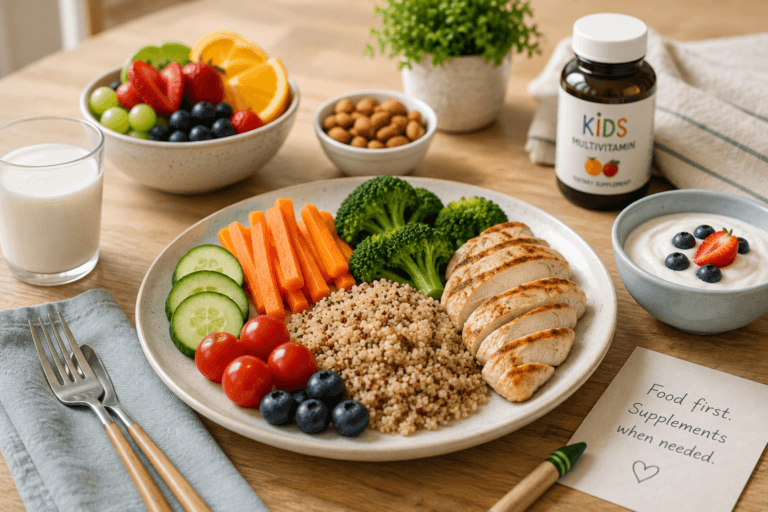
For most healthy children, food is the best source of iron. Offer a variety of iron-rich foods throughout the week instead of relying on a single source. For more meal-planning ideas, see our guides on Healthy Snacks for Kids and Best Healthy School Lunch Ideas Kids Will Actually Eat.
| Heme Iron Foods (Animal Sources) | Non-Heme Iron Foods (Plant Sources) |
|---|---|
| Lean beef | Lentils |
| Chicken | Chickpeas |
| Turkey | Beans |
| Fish | Tofu |
| Sardines | Spinach |
| Eggs (especially the yolk) | Kale, fortified cereals, oatmeal, pumpkin seeds, sesame seeds, quinoa |
Heme iron (from animal sources) is absorbed more efficiently by the body, while non-heme iron (from plant sources) is generally absorbed at a lower rate. Including a wide variety of these foods supports overall nutrition while helping children meet their iron needs.
Heme vs. Non-Heme Iron
Not all dietary iron is absorbed equally.
| Heme Iron | Non-Heme Iron |
|---|---|
| Found in animal foods | Found mainly in plant foods |
| Absorbed more easily | Absorption varies depending on the meal |
| Less affected by other foods | Can be improved with vitamin C |
Both types contribute to a healthy diet, and children can meet their iron needs through different eating patterns when meals are well planned.
Vitamin C Helps the Body Absorb Iron
Vitamin C significantly improves the absorption of non-heme iron. Pairing iron-rich foods with vitamin C-rich foods is a simple way to increase the amount of iron the body absorbs.
Good sources of vitamin C include oranges, strawberries, kiwi, bell peppers, tomatoes, broccoli, mango, and papaya.
Meal Ideas
Instead of serving foods separately, try combinations such as fortified cereal with strawberries, lentil soup with tomatoes, bean tacos with salsa, spinach salad with orange slices, and oatmeal topped with berries.
Small combinations like these can make a meaningful difference over time.
Foods and Drinks That Can Reduce Iron Absorption
Some foods and beverages can temporarily reduce the absorption of iron, particularly non-heme iron. Examples include tea, coffee, and large amounts of calcium consumed at the same time as iron-rich meals.
This does not mean children should avoid calcium-rich foods. Calcium is essential for healthy bones. Instead, it may be helpful to serve iron-rich meals and calcium-rich foods at different times of the day when advised by your healthcare provider.
Similarly, toddlers who drink excessive amounts of cow’s milk may eat fewer iron-rich foods, increasing their risk of deficiency. Offering milk in moderation as part of a balanced diet helps support overall nutrition.
Do Children Need Iron Supplements?
Most healthy children can meet their iron needs through a balanced diet. However, some children may require iron supplements if testing confirms iron deficiency or iron-deficiency anemia.
Iron supplements should only be given under the guidance of a healthcare professional. Taking iron when it isn’t needed—or taking too much—can cause side effects such as stomach pain, constipation, nausea, and, in severe cases, iron toxicity.
If your child’s pediatrician recommends an iron supplement, be sure to follow the prescribed dose exactly, store supplements out of children’s reach, attend follow-up appointments and blood tests to monitor your child’s progress, and continue offering iron-rich foods alongside treatment unless advised otherwise.
Never start iron supplements based solely on symptoms or advice from non-medical sources.
Can Iron Deficiency Be Prevented?
In many cases, yes. Healthy eating habits and regular pediatric care play an important role in preventing iron deficiency.
Parents can help by offering a variety of iron-rich foods throughout the week, pairing plant-based iron sources with foods rich in vitamin C, limiting excessive cow’s milk intake in toddlers, encouraging a balanced diet that includes fruits, vegetables, whole grains, legumes, and lean protein, and attending routine well-child visits, where growth and nutrition can be monitored. Reading ingredient lists carefully also helps — see our guide on How to Read Nutrition Labels for Kids’ Foods.
Children with medical conditions, restrictive diets, or other risk factors may need individualized advice from their healthcare provider.
When Should You Call Your Child’s Pediatrician?
Schedule an appointment if your child appears unusually tired for several weeks, has pale skin along with fatigue or weakness, frequently complains of dizziness or headaches, has difficulty concentrating or shows a decline in school performance, eats a very limited diet or refuses most iron-rich foods, has heavy menstrual bleeding (for adolescents), has a medical condition that may affect iron absorption, or has symptoms that are worsening or not improving.
Prompt evaluation can help identify the cause and ensure your child receives the appropriate care.
Frequently Asked Questions
What are the first signs of iron deficiency in kids?
Early signs may include fatigue, pale skin, irritability, reduced appetite, and difficulty concentrating. Some children have no noticeable symptoms until the deficiency becomes more severe.
Can a child have iron deficiency without anemia?
Yes. Iron stores can become depleted before hemoglobin levels fall. This is why laboratory testing is sometimes needed even when anemia has not yet developed.
What foods are highest in iron for children?
Lean beef, chicken, turkey, fish, lentils, beans, chickpeas, fortified breakfast cereals, spinach, tofu, pumpkin seeds, and quinoa are all nutritious sources of iron.
Does vitamin C really help with iron absorption?
Yes. Eating foods rich in vitamin C alongside plant-based sources of iron can significantly improve the body’s absorption of non-heme iron.
Should I give my child an iron supplement just in case?
No. Iron supplements should only be used when recommended by a healthcare professional after an appropriate medical evaluation.
Key Takeaways
- Iron is essential for healthy growth, brain development, and oxygen transport.
- Iron deficiency is common in children but is often preventable.
- Symptoms can be subtle and should not be used to diagnose iron deficiency without medical evaluation.
- A balanced diet that includes iron-rich foods and vitamin C supports healthy iron levels.
- Iron supplements should only be used under the supervision of a healthcare professional.
- Regular pediatric checkups help identify children who may be at risk.
Continue Reading
- The Ultimate Guide to Kids’ Nutrition (Complete Guide)
- Healthy Snacks for Kids: 25 Nutritious Snack Ideas Parents Will Love
- Best Healthy School Lunch Ideas Kids Will Actually Eat (Science-Based Guide)
- How to Read Nutrition Labels for Kids’ Foods
- Kids’ Immune System Foods
- 10 Simple Healthy Habits for Kids That Science Actually Supports
References
This article is based on guidance from trusted health organizations, including:
- American Academy of Pediatrics (AAP)
- Centers for Disease Control and Prevention (CDC)
- National Institutes of Health – Office of Dietary Supplements (NIH ODS)
- World Health Organization (WHO)
- Academy of Nutrition and Dietetics
Because recommendations may change over time, always consult your child’s pediatrician for personalized medical advice.