Healthy Dinner Ideas for Busy Families
Estimated reading time: 11–13 minutes
After a long day of school, work, and activities, dinner is often the one meal that brings the whole family together. Yet for busy parents, figuring out what to cook — especially something healthy that kids will actually eat — can feel like a daily challenge.
The good news is that a nutritious family dinner doesn’t need to be complicated, expensive, or time-consuming. With a few simple strategies and a well-stocked kitchen, families can put together balanced meals even on the busiest weeknights.
In this evidence-based guide, you’ll learn why family dinners matter, what makes a dinner nutritionally balanced, 25 healthy dinner ideas organized by category, simple prep strategies, and practical tips for picky eaters. This article is part of our Complete Guide to Kids’ Nutrition.
Why Family Dinners Matter
Sharing meals together offers benefits that go beyond nutrition alone.
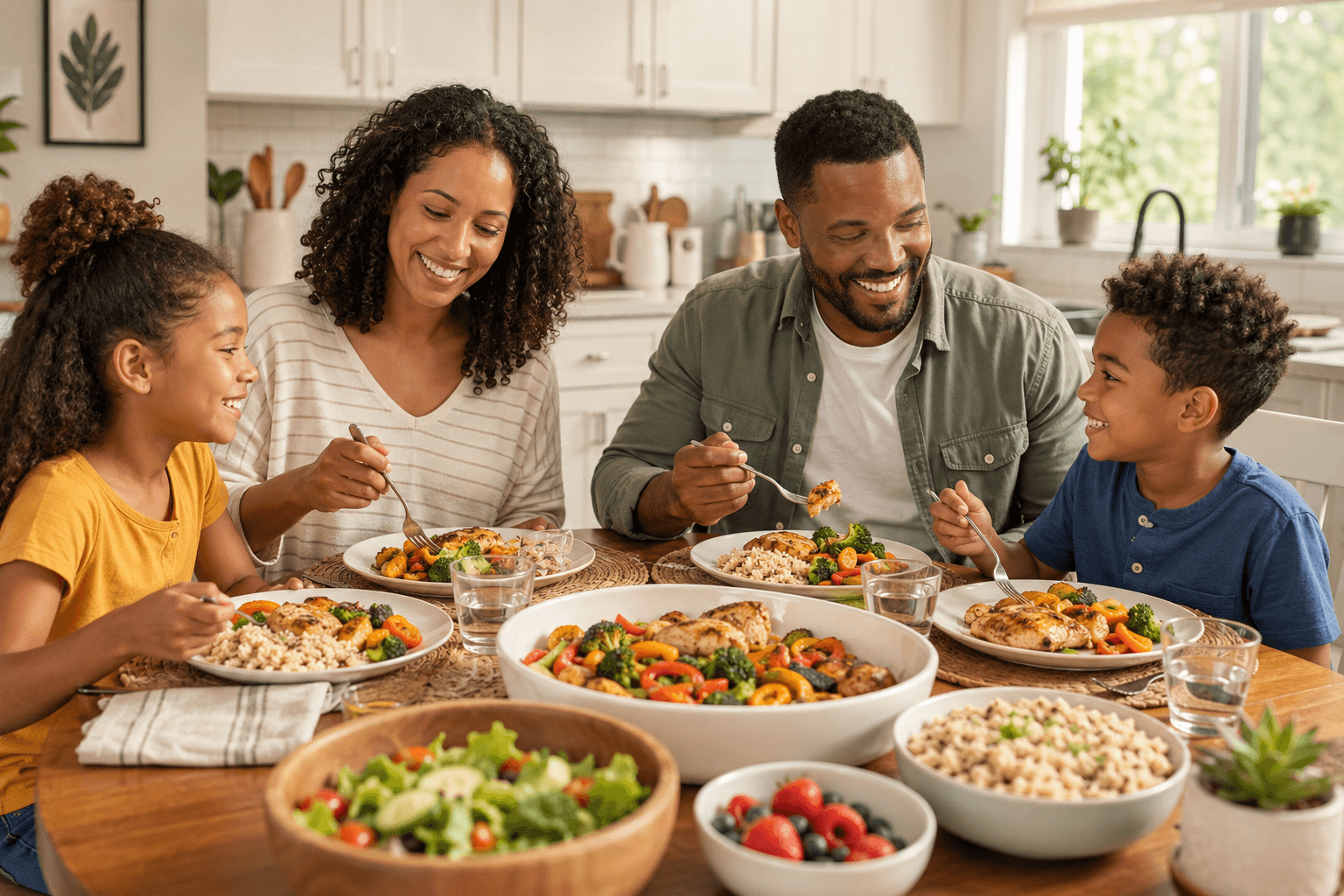
Research associates regular family meals with better overall diet quality in children, increased consumption of fruits and vegetables, stronger family communication and connection, lower rates of picky eating over time, and opportunities for children to learn healthy eating habits by example.
Family dinners don’t need to be elaborate or perfectly cooked. What matters most is consistency and a relaxed, positive mealtime atmosphere.
What Makes a Healthy Dinner?
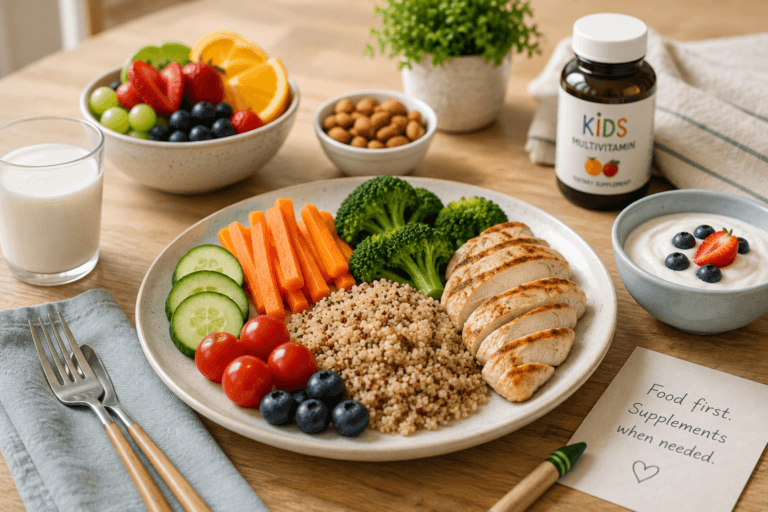
A balanced dinner plate generally includes protein, which supports growth and helps children feel satisfied; vegetables, which provide fiber, vitamins, minerals, and antioxidants; whole grains, which offer fiber and lasting energy; healthy fats, which support brain development; and a healthy drink, such as water or milk.
A simple way to visualize a balanced plate: about half vegetables, a quarter protein, and a quarter whole grains, with a small serving of healthy fat.
| Dinner Component | Healthy Examples |
|---|---|
| Protein | Chicken, fish, beans, eggs, tofu — see Best High-Protein Foods for Kids |
| Vegetables | Broccoli, carrots, spinach, peppers |
| Whole Grains | Brown rice, quinoa, whole-wheat pasta — see Best High-Fiber Foods for Kids |
| Healthy Fats | Olive oil, avocado, nuts and seeds (for children age 4 or older, depending on development and maturity) |
| Healthy Drink | Water or milk — see Healthy Drinks for Kids |
25 Healthy Dinner Ideas for Busy Families
15-Minute Meals
1. Sheet Pan Chicken Fajitas
Sliced chicken, bell peppers, and onions roasted together, served with whole-wheat tortillas.
2. Turkey Taco Bowls
Ground turkey, black beans, rice, and chopped vegetables in a bowl.
3. Egg Fried Rice
Brown rice, scrambled eggs, frozen peas and carrots, and a splash of low-sodium soy sauce.
4. Whole-Wheat Pasta with Marinara and Chicken
Pre-cooked or rotisserie chicken tossed with pasta and a vegetable-rich marinara sauce.
5. Quesadillas with Beans and Cheese
Whole-wheat tortillas filled with beans, cheese, and vegetables, cooked until crisp.
One-Pan Dinners
6. Sheet Pan Salmon with Roasted Vegetables
Salmon fillets and a mix of broccoli, carrots, and potatoes roasted on one tray.
7. One-Pan Chicken and Rice
Chicken thighs baked with rice, broth, and mixed vegetables.
8. Skillet Beef and Vegetable Stir-Fry
Lean beef strips stir-fried with broccoli, bell peppers, and snap peas.
9. Baked Chicken Thighs with Sweet Potatoes and Green Beans
A simple, hands-off sheet pan meal.
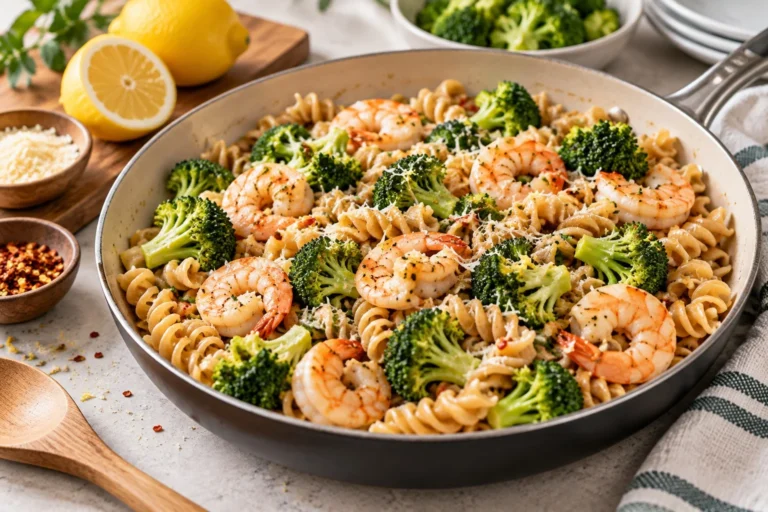
10. Shrimp and Vegetable Skillet
Shrimp sautéed with zucchini, tomatoes, and garlic, served over rice or quinoa.
Slow Cooker / Make-Ahead Meals
11. Slow Cooker Chicken Chili
Chicken, beans, tomatoes, and mild spices simmered together.
12. Slow Cooker Turkey Meatballs
Serve over whole-wheat pasta or with a side of vegetables.
13. Freezer-Friendly Beef and Vegetable Stew
Prepare in bulk and freeze in individual portions.
14. Slow Cooker Lentil Soup
A budget-friendly, fiber-rich meal that reheats well.
15. Make-Ahead Baked Ziti
Assemble ahead of time and bake when needed.
Vegetarian Family Meals
16. Black Bean and Sweet Potato Tacos
A fiber-rich, plant-based dinner the whole family can enjoy.
17. Vegetable and Lentil Curry
Served over brown rice or quinoa.
18. Cheese and Veggie Stuffed Peppers
Bell peppers filled with rice, beans, and cheese.
19. Chickpea and Vegetable Stir-Fry
Chickpeas sautéed with seasonal vegetables and served over grains.
20. Whole-Wheat Veggie Pizza
Homemade or store-bought whole-wheat crust topped with vegetables and cheese.
Budget-Friendly Dinners
21. Bean and Rice Bowls
A simple, affordable, protein- and fiber-rich meal.
22. Baked Chicken Drumsticks with Roasted Vegetables
An economical protein choice.
23. Vegetable Fried Rice with Eggs
Uses pantry staples and leftover vegetables.
24. Pasta with White Beans and Spinach
A budget-friendly way to add protein and fiber to pasta night.
25. Homemade Soup with Whole-Grain Bread
A flexible way to use up vegetables and stretch a grocery budget — plan your shopping with our Healthy Grocery List for Families.
Smart Dinner Prep Tips
A little advance preparation can make weeknight dinners much easier. Try washing and chopping vegetables ahead of time, cooking extra chicken to use in tomorrow’s lunch, freezing leftovers in family-sized portions, keeping frozen vegetables on hand for busy evenings, and using simple seasonings that the whole family enjoys.
Turning These Ideas Into a Week of Dinners
To turn these ideas into a full week of meals, see our Weekly Healthy Meal Plan for Families, which includes a 7-day menu, a grocery list, and meal-prep tips. If you would rather repeat a small set of dinners that already work for your family, our guide to building a family dinner rotation shows how to set one up.
Tips for Picky Eaters at Dinner
Include at least one food you know your child already likes on the plate, avoid pressuring or bargaining over “one more bite,” offer new foods alongside familiar ones without requiring they be eaten, involve children in simple prep tasks like washing vegetables or setting the table, keep portions small and allow seconds if your child is still hungry, and stay consistent — it can take many exposures before a child accepts a new food.
What to Do If Your Child Refuses Dinner
Occasional food refusal is normal and usually not a cause for concern.
Avoid creating a separate “backup meal” every time your child refuses dinner, as this can reinforce selective eating over time. Keep mealtime calm and avoid turning it into a power struggle. Offer the same meal again at a later time or the next day.
If refusal is frequent, persistent, or accompanied by poor growth, weight loss, or extreme food selectivity, speak with your child’s pediatrician.
Common Dinner Mistakes Parents Make
Common mistakes include relying too heavily on highly processed, packaged meals; skipping vegetables because of past refusals; serving inconsistent portion sizes for young children; cooking a separate meal for the child every night; not involving children in any part of meal preparation; and rushing meals or eating in front of screens regularly.
Frequently Asked Questions
How can I make dinner healthier without spending more time cooking?
Choose simple one-pan meals, keep a stock of frozen vegetables and pre-cooked proteins, and prep ingredients in advance when possible.
Is it okay to serve the same dinners every week?
Yes. Repetition can actually reduce stress around meal planning and help children feel more comfortable with familiar foods.
What if my child only eats a few foods at dinner?
Continue offering a variety of foods without pressure. Most children gradually expand their diet over time with repeated, low-pressure exposure.
Are frozen meals ever a healthy option?
Some are. Look for options with vegetables, lean protein, whole grains, and moderate sodium content.
What time should kids eat dinner?
There is no single ideal dinner time for every family. In general, serving dinner about 2–3 hours before bedtime gives children enough time to digest their meal while supporting a consistent daily routine.
How can I get my family to eat dinner together more often?
Start with a realistic goal, such as two or three shared dinners per week, and gradually build from there.
Key Takeaways
- Regular family dinners support better diet quality and stronger family connection.
- A balanced dinner includes protein, vegetables, whole grains, and healthy fats.
- One-pan, slow cooker, and make-ahead meals can make busy weeknights easier.
- Avoid creating separate meals for picky eaters; offer familiar foods alongside new ones instead.
- Consistency, not perfection, is the goal of healthy family dinners.
Continue Reading
- The Ultimate Guide to Kids’ Nutrition (Complete Guide)
- Healthy Grocery List for Families
- Healthy Breakfast Ideas for Kids
- Best High-Protein Foods for Kids by Age
- Best High-Fiber Foods for Kids
- Healthy Drinks for Kids: Best & Worst Choices
- Best Healthy School Lunch Ideas Kids Will Actually Eat
References
This article is based on recommendations from trusted health organizations, including:
- American Academy of Pediatrics (AAP)
- U.S. Department of Agriculture (USDA) — MyPlate
- Centers for Disease Control and Prevention (CDC)
- Academy of Nutrition and Dietetics
Because nutrition recommendations may change over time, consult your child’s pediatrician or a registered dietitian for personalized advice.