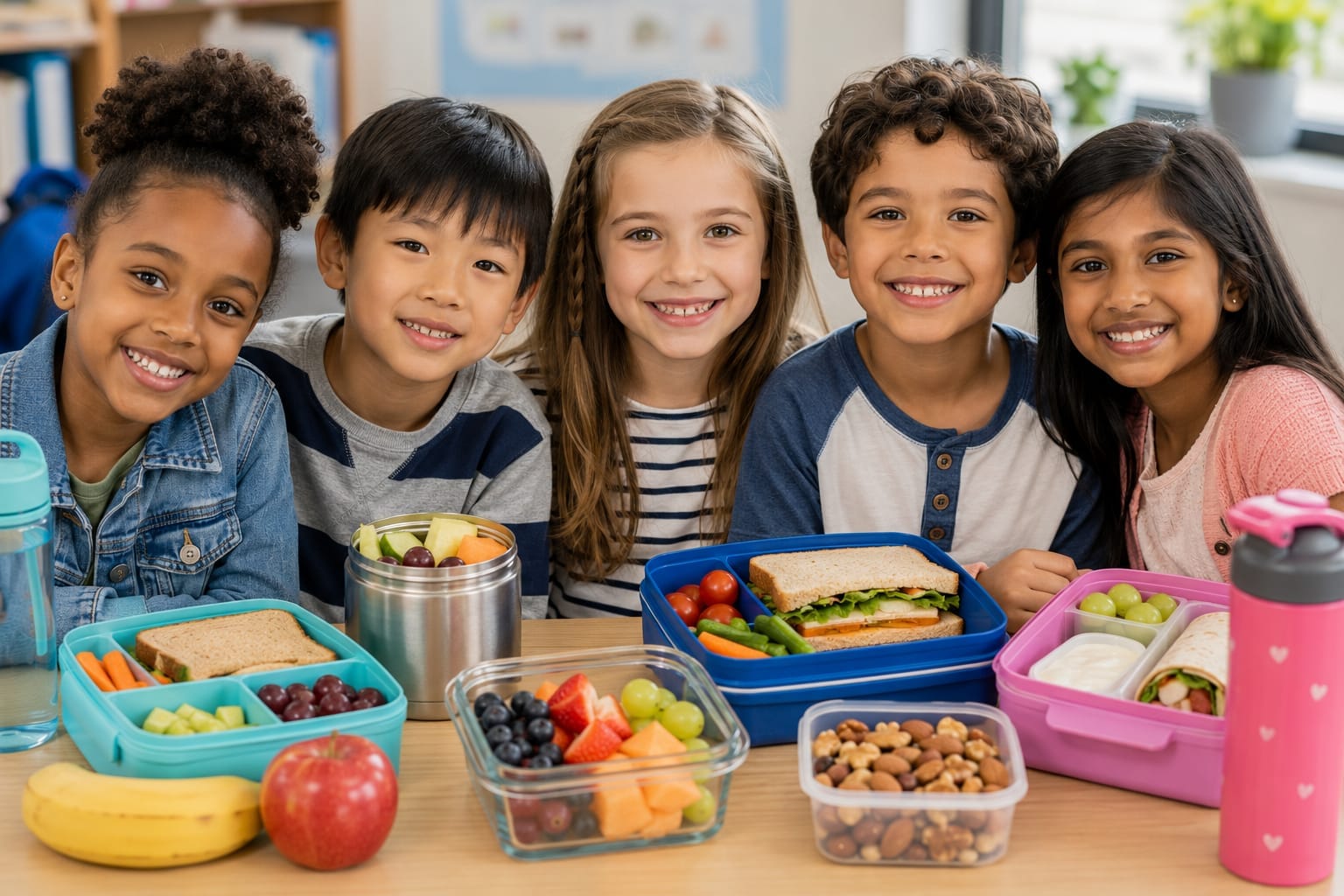
Best Healthy School Lunch Ideas Kids Will Actually Eat (Science-Based Guide)
Packing a healthy school lunch every morning can feel like a daily challenge. Parents want meals that support learning, growth, and energy—but children often come home with half their lunch untouched.
Is your child bringing lunch home uneaten? Before changing what you pack, it is worth checking whether the issue is the food at all. See why your child’s lunch comes home uneaten.
The good news is that healthy lunches don’t need to be complicated. Research shows that children are more likely to eat balanced meals when foods are familiar, colorful, easy to handle, and include choices they enjoy.
This guide explains how to build nutritious lunchboxes that children actually want to eat, using evidence-based nutrition principles recommended by organizations like the American Academy of Pediatrics (AAP) and the U.S. Dietary Guidelines. This article is part of our Complete Guide to Kids’ Nutrition.
Why School Lunch Matters
School-aged children spend nearly one-third of their day in school. Their lunch provides important nutrients that help support:
- Brain development
- Memory and concentration
- Stable energy levels
- Healthy growth
- Mood regulation
- Immune function
A lunch that combines protein, fiber, healthy fats, fruits, and vegetables provides longer-lasting energy than meals high in refined carbohydrates or sugary snacks.
What Makes a Healthy Lunch?
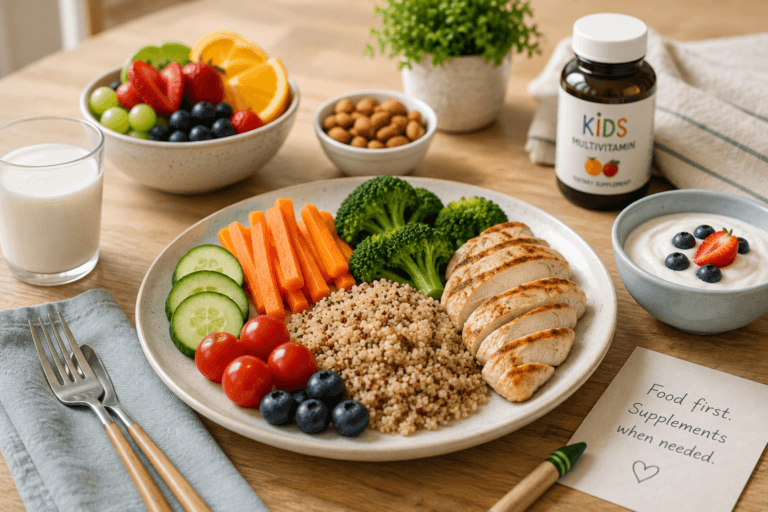
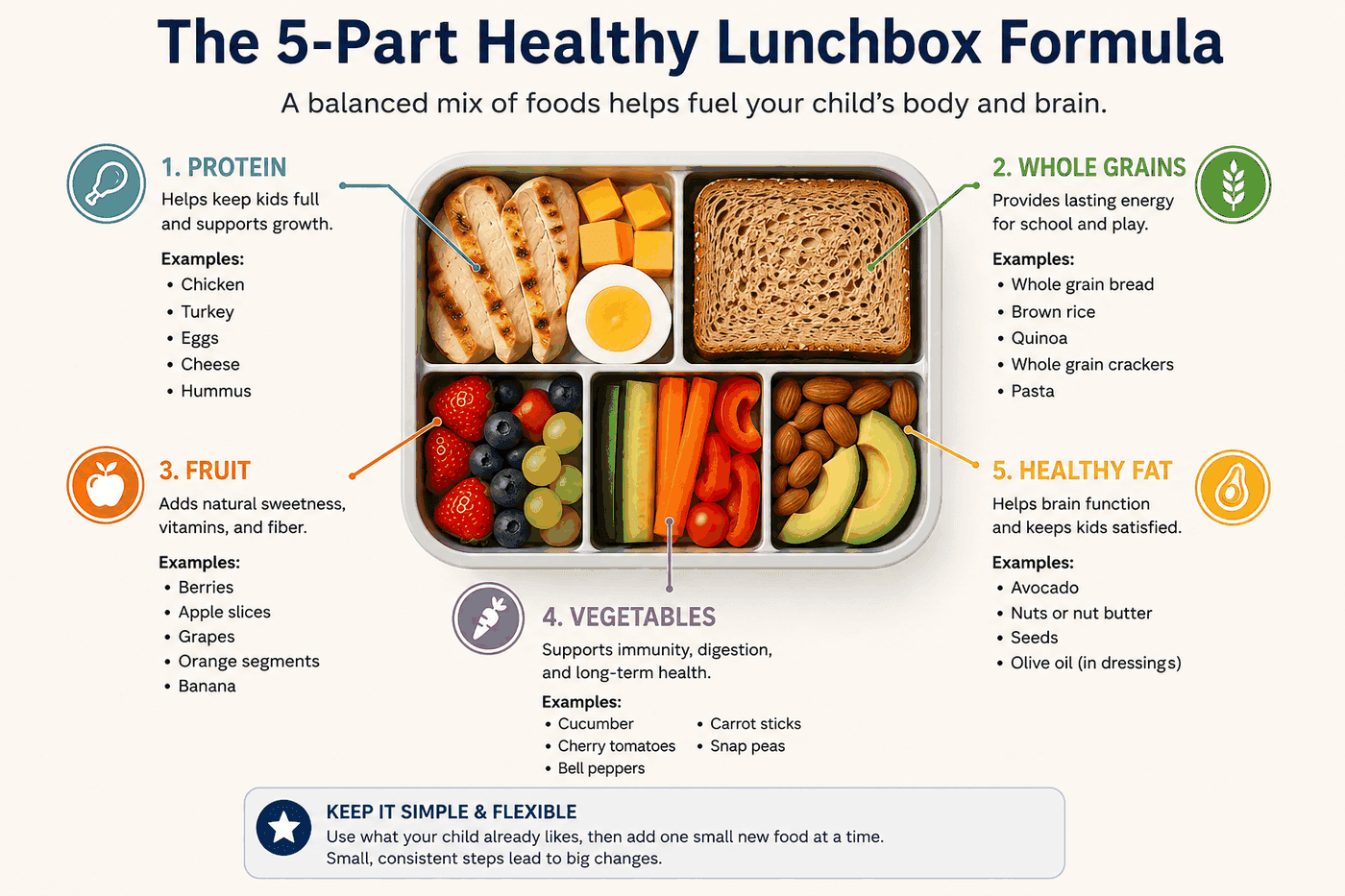
A balanced school lunch is easiest to build by including five key components recommended in healthy eating patterns: a source of protein, whole grains, fruits, vegetables, and healthy fats.
1. Protein
Protein helps children stay full longer while supporting muscle growth and brain development. Healthy protein options include:
- Grilled chicken
- Turkey slices
- Boiled eggs
- Tuna
- Salmon
- Cheese
- Cottage cheese
- Greek yogurt
- Beans
- Lentils
- Hummus
- Tofu
Note: If your child’s school has allergy policies, avoid packing foods such as peanuts or tree nuts when prohibited. Choose allergy-friendly alternatives, such as sunflower seed butter, if appropriate.
2. Whole Grains
Whole grains provide slow-release carbohydrates and fiber. Examples include:
- Whole wheat bread
- Whole grain wraps
- Brown rice
- Whole grain crackers
- Whole wheat pasta
- Oat-based muffins
3. Fruits
Fruit naturally provides vitamins, minerals, antioxidants, and fiber. Easy lunchbox fruits include:
- Apples
- Grapes
- Strawberries
- Blueberries
- Orange slices
- Pears
- Kiwi
- Watermelon cubes
4. Vegetables
Vegetables don’t have to be complicated. Easy options include:
- Baby carrots
- Cucumber slices
- Bell peppers
- Cherry tomatoes
- Snap peas
- Broccoli florets
Adding a small container of hummus or yogurt dip often encourages children to eat more vegetables.
5. Healthy Fats
Healthy fats help support brain development and improve satiety. Good choices include:
- Avocado
- Nuts (when school policies allow)
- Seeds
- Nut butter
- Cheese
- Olive oil-based dressings
A Simple Formula for Every Lunchbox
A balanced lunch can be built using one simple formula: Protein + Whole Grain + Fruit + Vegetable + Healthy Fat. This combination supports steady energy throughout the school day.
10 Healthy School Lunch Ideas Kids Actually Eat
1. Turkey Sandwich Lunch
- Whole wheat bread
- Turkey slices
- Cheese
- Apple slices
- Baby carrots
This lunch provides lean protein, fiber, and complex carbohydrates to help support steady energy and concentration during afternoon classes.
2. Chicken Wrap
- Whole wheat tortilla
- Grilled chicken
- Lettuce
- Tomatoes
- Grapes
A portable, protein-rich option that combines lean meat with fresh vegetables and naturally sweet fruit for balanced energy.
3. Hummus Lunch Box
- Hummus
- Whole grain pita
- Cucumber
- Bell peppers
- Strawberries
A plant-based option offering fiber and protein from hummus and whole grains, paired with vitamin-rich vegetables and fruit.
4. Yogurt Parfait Lunch
- Plain Greek yogurt
- Blueberries
- Granola
- Banana
- Pumpkin seeds
Rich in calcium and probiotics, this combination supports digestive health along with sustained energy from fruit and whole grains.
5. Egg Lunch Box
- Boiled eggs
- Whole grain crackers
- Cheese cubes
- Apple
- Cucumbers
Eggs provide high-quality, complete protein that helps children stay full and focused through the school day.
6. Pasta Salad
- Whole wheat pasta
- Chicken
- Cherry tomatoes
- Cucumbers
- Olive oil dressing
A filling, kid-friendly meal combining complex carbohydrates, lean protein, and heart-healthy fats from olive oil.
7. Bean & Cheese Quesadilla
- Whole wheat tortilla
- Black beans
- Cheese
- Salsa
- Orange slices
Beans add plant-based protein and fiber, making this a satisfying vegetarian-friendly lunch option.
8. Rice Bowl
- Brown rice
- Chicken
- Peas
- Corn
- Avocado
A well-rounded, whole-grain meal that pairs lean protein with fiber-rich vegetables and healthy fats from avocado.
9. DIY Snack Box
- Cheese cubes
- Whole grain crackers
- Grapes
- Baby carrots
- Hummus
A no-prep, grazing-style lunch that still covers protein, whole grains, fruit, and vegetables in one box.
10. Tuna Sandwich
- Whole wheat bread
- Tuna
- Lettuce
- Pear slices
- Bell peppers
Tuna offers lean protein and omega-3 fatty acids that support brain health, paired with fiber-rich fruit and vegetables.
Foods That Help Kids Stay Full Longer
One of the biggest reasons children ask for snacks shortly after lunch is that their meal wasn’t balanced enough. Meals that contain mostly refined carbohydrates are digested quickly, causing energy levels to rise and fall rapidly.
Adding protein, fiber, and healthy fats helps children stay satisfied for longer while supporting steady energy and concentration throughout the school day.
- Greek yogurt
- Boiled eggs
- Chicken or turkey
- Beans and lentils
- Cheese
- Whole grains
- Fresh fruit
- Vegetables with hummus
- Avocado
- Nut or seed butter (where school policies allow)
Instead of packing large portions of one food, aim for a variety of nutrient-rich foods that work together to keep children feeling satisfied.
Lunchbox Food Safety Tips
Food safety is just as important as nutrition. School lunches often remain unrefrigerated for several hours, making proper packing essential.
- Use an insulated lunch bag.
- Add at least one frozen ice pack.
- Wash fruits and vegetables before packing.
- Keep hot foods in a preheated insulated container.
- Avoid leaving perishable foods at room temperature for extended periods.
- Teach children to throw away foods that smell or look unusual.
Following these simple precautions helps reduce the risk of foodborne illness while keeping meals fresh until lunchtime.
Foods to Limit in School Lunches
No single food needs to be completely forbidden, but some options are better kept as occasional treats rather than everyday lunchbox staples.
- Sugary drinks
- Candy
- Highly processed snack cakes
- Chips as the main side dish
- Fruit-flavored snacks with added sugar
- Highly processed deli meats in large amounts
Choosing mostly whole, minimally processed foods provides children with more vitamins, minerals, fiber, and lasting energy.
Meal Prep Tips for Busy Parents
Preparing school lunches becomes much easier when some of the work is done ahead of time.
- Wash and cut fruits and vegetables on the weekend.
- Cook extra chicken during dinner for next day’s lunch.
- Boil several eggs at once.
- Prepare homemade trail mix (if permitted by school).
- Portion snacks into reusable containers.
- Keep healthy lunch ingredients stocked and easy to reach.
- Let children help choose fruits and vegetables for the week.
Even spending 20 to 30 minutes preparing food ahead of time can make weekday mornings much less stressful.
Healthy Drinks for School Lunches
What goes in the lunchbox to drink matters just as much as the food itself.
- Water is the best choice for most children.
- Plain milk can provide protein, calcium, and vitamin D.
- Avoid sugary drinks, soda, energy drinks, and fruit drinks with added sugar.
- Whole fruit is generally a better choice than fruit juice because it provides fiber.
Sending a reusable water bottle alongside the lunchbox makes it easy for children to stay hydrated throughout the school day.
What if Your Child Is a Picky Eater?
Building a healthy lunch habit takes patience, especially with selective eaters.
- Start with familiar foods your child already enjoys.
- Offer one new food alongside favorite foods rather than replacing the whole lunch at once.
- Keep portions small to reduce pressure and food waste.
- Avoid pressuring children to finish everything on their plate.
- Involve kids in packing their own lunch to increase their interest in eating it.
Small, consistent steps are usually more effective than trying to change a picky eater’s habits all at once.
Want to know why picky eating happens? See How to Get Picky Eaters to Try New Foods (What Science Actually Says) for the research behind food neophobia, repeated exposure, and why pressure backfires.
Key Takeaways
- A balanced lunch should include protein, whole grains, fruits, vegetables, and healthy fats.
- Protein and fiber help children stay full and focused longer.
- Simple meals are often more successful than elaborate lunchboxes.
- Food safety is essential when packing school lunches.
- Preparing ingredients ahead of time saves time and reduces stress.
- Healthy eating habits are built through consistency rather than perfection.
Frequently Asked Questions
What is the healthiest school lunch for kids?
A healthy school lunch includes lean protein, whole grains, fruits, vegetables, and healthy fats. This combination provides balanced nutrition and steady energy throughout the day.
What foods keep children full the longest?
Protein-rich foods such as eggs, yogurt, chicken, beans, and cheese, combined with fiber-rich fruits, vegetables, and whole grains, help children stay satisfied longer.
Should kids eat snacks at school?
Yes. A nutritious snack can help maintain energy between meals, especially during long school days. Fresh fruit, yogurt, cheese, vegetables, or whole-grain crackers are good choices.
How can I make healthy lunches more appealing?
Offer colorful foods, include familiar favorites, vary textures, and involve children in choosing and preparing their lunches. Kids are more likely to eat foods they helped select.
Continue Reading
- The Ultimate Guide to Kids’ Nutrition (Complete Guide)
- Foods That Naturally Support Kids’ Immune Systems
- What Science Says About Breakfast and Children’s Brain Performance
References
- Dietary Guidelines for Americans, 2025–2030
- USDA MyPlate – School-Age Children
- American Academy of Pediatrics – HealthyChildren.org: Packing Healthy Lunches
- Harvard T.H. Chan School of Public Health – The Nutrition Source
- Centers for Disease Control and Prevention – Nutrition, Physical Activity and Obesity in Schools