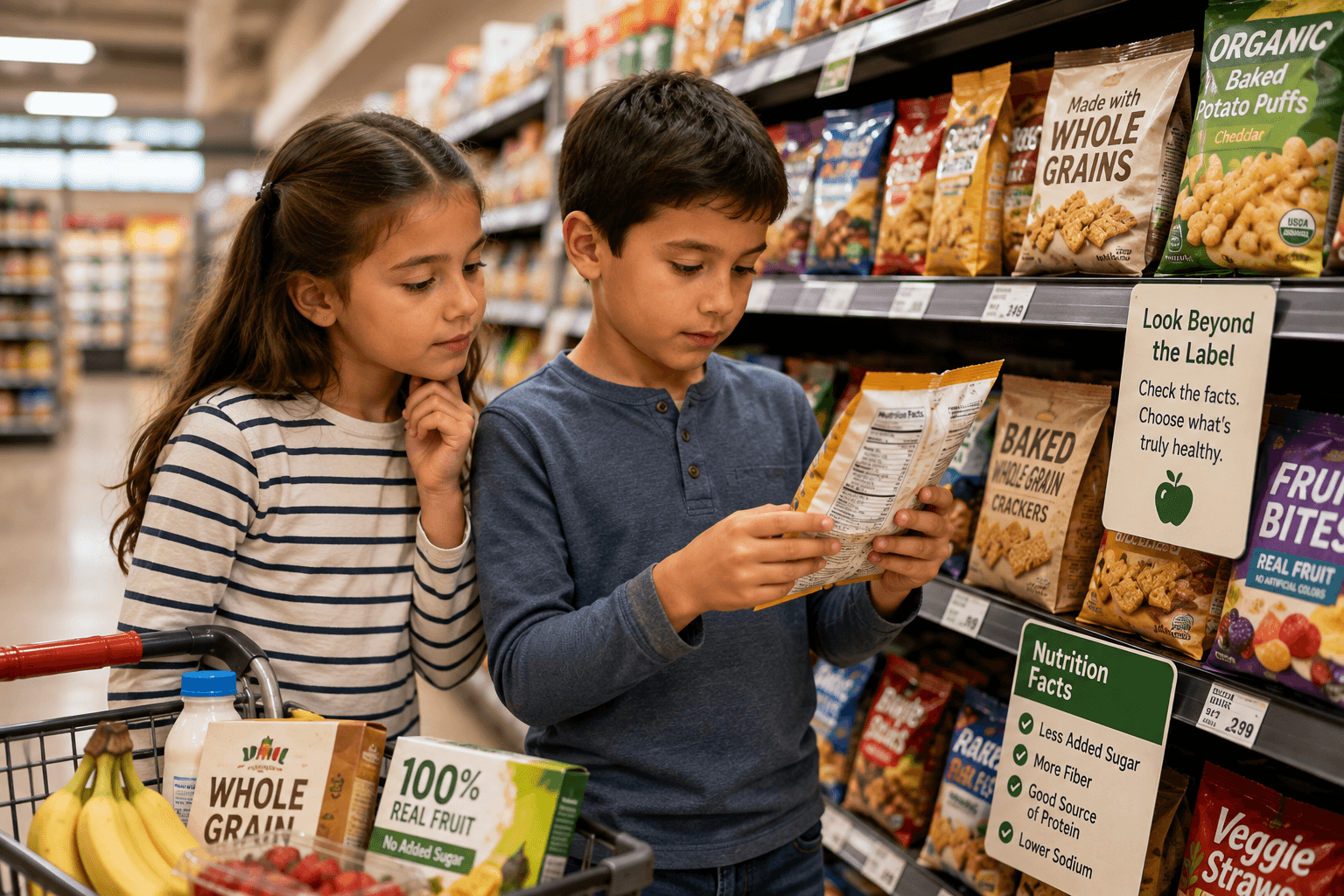
Are “Healthy” Kids’ Snacks Really Healthy? The Truth Behind the Labels
Quick Answer
No — a “healthy” label doesn’t guarantee a snack is nutritious. Words like natural, organic, made with whole grains, or made with real fruit are marketing claims, not nutrition facts. The only reliable way to judge a snack is to check the Nutrition Facts panel and ingredient list for added sugar, fiber, protein, and sodium — not the front of the package.
At a Glance
- “Healthy,” “natural,” and “organic” are marketing terms with no strict nutrition standard on snack packaging
- The American Heart Association recommends children ages 2–18 limit added sugar to less than 6 teaspoons (about 25g) per day
- Ingredients are listed by weight — the first 2–3 ingredients make up most of the product
- A snack with fiber + protein keeps kids fuller longer than one made mostly of refined carbs
- Packaged snacks aren’t automatically unhealthy — plain popcorn, cheese sticks, and roasted chickpeas are nutritious packaged options
- The Nutrition Facts panel is more reliable than any front-of-package claim
Key Facts
| Fact | Why It Matters |
|---|---|
| The word “healthy” has no single legal nutrition standard on most snack packaging | Front-label claims are marketing, not verified nutrition |
| Fruit snacks often contain more added sugar than real fruit content | Whole fruit provides fiber and water that fruit snacks lack |
| Organic snacks can still be high in added sugar and saturated fat | “Organic” refers to farming methods, not nutrient content |
| Ingredients are listed by weight, heaviest first | If sugar appears in the first 2–3 ingredients, the product is likely high in sugar |
| The AHA and USDA recommend limiting added sugars in children’s diets | Excess added sugar is linked to cavities and poorer overall diet quality |
Walk through any grocery store, and you’ll find shelves packed with snacks promising to be healthy, natural, made with whole grains, organic, or packed with vitamins. Colorful packaging, smiling cartoon characters, and claims about supporting growth can make these products seem like excellent choices for children.
But are they really as healthy as they appear?
The answer is not always.
Many packaged snacks marketed to families contain more added sugar, refined grains, sodium, and highly processed ingredients than parents realize. While some products genuinely provide balanced nutrition, others rely on attractive marketing rather than meaningful nutritional value.
This doesn’t mean parents need to avoid packaged snacks altogether. Busy families often depend on convenient foods, and many nutritious options are available. The key is learning how to look beyond the front of the package and evaluate what’s actually inside.
This guide explains how to recognize misleading marketing claims, understand nutrition labels, identify healthier snack options, and make informed choices based on recommendations from organizations such as the American Academy of Pediatrics (AAP), the U.S. Department of Agriculture (USDA), and the American Heart Association (AHA).
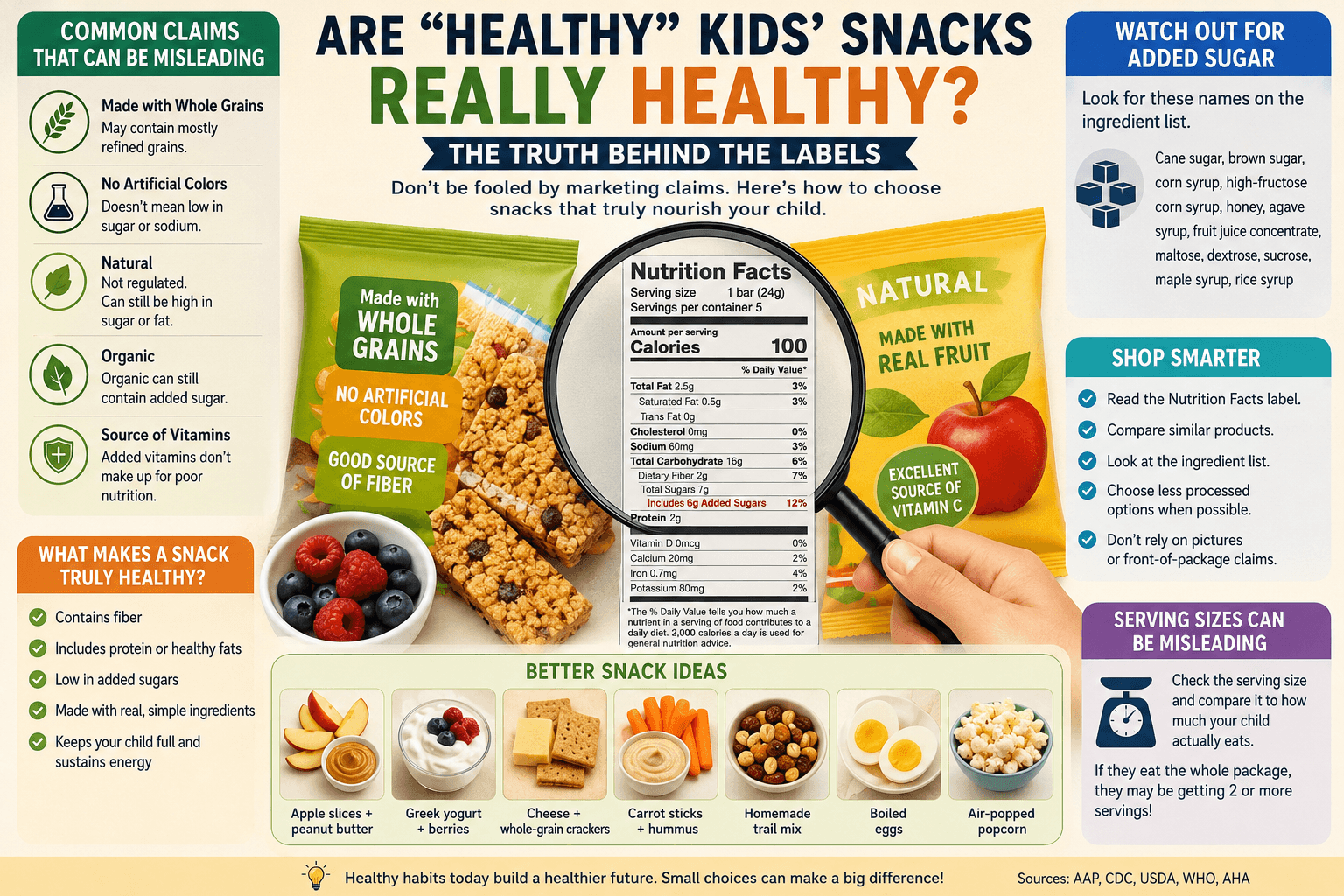
Why Snack Marketing Can Be Misleading
Food companies know that parents want the best for their children. That’s why snack packaging often highlights positive words and attractive images designed to build trust.
Some common claims include:
- Made with whole grains
- No artificial colors
- Natural
- Organic
- Source of calcium
- Excellent source of Vitamin C
- Gluten-free
- Non-GMO
These statements may all be technically true. However, none of them automatically mean the snack is nutritious overall.
For example, a granola bar may advertise that it contains whole grains while also providing large amounts of added sugar. A fruit-flavored snack may contain added vitamin C but very little real fruit. Even an organic cookie is still a cookie if it’s high in sugar and saturated fat.
The healthiest choice isn’t determined by a single claim on the package. Instead, it’s the combination of ingredients, nutrients, and overall dietary pattern that matters.
🔬 Science Says
Marketing claims such as “natural” or “made with real fruit” do not necessarily reflect a product’s overall nutritional quality. Nutrition experts recommend evaluating the Nutrition Facts label and ingredient list instead of relying on front-of-package claims.
Myth vs. Fact
| Myth | Fact |
|---|---|
| “Made with whole grains” means it’s mostly whole grain | It may contain only a small amount of whole grain mixed with refined flour |
| “Natural” means lower in sugar or calories | Natural products can still be heavily processed |
| “Organic” means healthier | Organic snacks can still be high in added sugar and saturated fat |
| “No artificial colors” means low sugar | This claim says nothing about sugar content — a candy without dyes is still candy |
| “Made with real fruit” means it’s a fruit substitute | Many contain only fruit concentrate, plus added sugars and starches |
Claim on the Package → What to Check Instead
| Claim on the Package | What to Check Instead |
|---|---|
| Healthy | Nutrition Facts panel |
| Natural | Ingredient list |
| Organic | Added sugar and saturated fat |
| Made with Whole Grains | First ingredient listed |
| Source of Vitamins | Overall nutritional profile |
| Made with Real Fruit | Grams of added sugar, fiber content |
| No Artificial Colors | Total sugar and sodium |
What Does “Healthy” Actually Mean?
One of the biggest misconceptions is that the word healthy has a simple definition. In reality, nutrition experts evaluate foods based on several factors rather than one characteristic.
A healthier snack generally provides beneficial nutrients while limiting ingredients that children should consume in moderation.
These include:
- Fiber
- Protein
- Vitamins and minerals
- Healthy fats
- Whole food ingredients
At the same time, healthier snacks usually contain lower amounts of:
- Added sugars
- Sodium
- Saturated fat
- Highly refined grains
- Artificially sweetened beverages
Rather than asking whether a snack is “healthy” or “unhealthy,” nutrition professionals encourage parents to think about overall balance. A single snack won’t determine a child’s health. What matters most is the quality of eating habits over days, weeks, and months.
The Front of the Package Doesn’t Tell the Whole Story
The front label is designed primarily for marketing. The nutrition facts panel and ingredient list provide far more useful information.
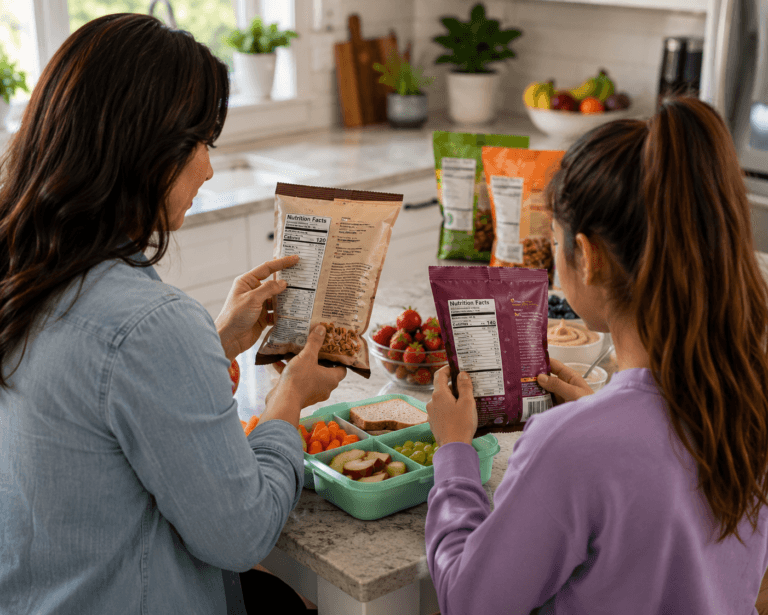
Many parents spend only a few seconds choosing snacks, making it easy to rely on eye-catching claims. Instead, develop the habit of turning the package over.
The back label often reveals information the front doesn’t emphasize, including:
- How much added sugar the snack contains
- The actual serving size
- The amount of fiber
- Sodium content
- Protein content
- The complete ingredient list
This simple habit can make a significant difference when comparing similar products.
How to Read the Nutrition Facts Label Like a Parent
One of the most valuable skills parents can develop is learning how to read the Nutrition Facts label. It may seem overwhelming at first, but focusing on a few key sections makes comparing products much easier.
1. Start with the Serving Size
The serving size tells you how much of the product the nutrition information refers to. This is important because children often eat more than one serving without realizing it.
For example, a snack bag may appear to contain one portion, but the Nutrition Facts panel may list two servings. If your child eats the entire package, they consume twice the calories, sugar, sodium, and other nutrients listed on the label.
Always compare the serving size with the amount your child is actually likely to eat.
👪 Parent Tip
Check the “servings per container” line first. A single snack pack that looks like one portion may legally count as two — doubling the sugar and calories your child actually eats.
2. Check the Added Sugars
This is one of the most important numbers on the label. Unlike the natural sugars found in fruit and plain milk, added sugars are incorporated during processing to improve flavor, texture, or shelf life.
Examples include: cane sugar, brown sugar, corn syrup, high-fructose corn syrup, honey, maple syrup, agave syrup, rice syrup, and fruit juice concentrate.
Many products use several different sweeteners, making sugar appear lower on the ingredient list even though the total amount is still high. According to the American Heart Association, children ages 2–18 should consume less than 6 teaspoons (about 25 grams) of added sugar per day, and children under age 2 should avoid added sugar entirely. The Dietary Guidelines for Americans, 2025–2030, similarly recommend keeping added sugars under 10% of total daily calories for anyone over age 2. A single sugary snack can already use up a large share of that daily limit, which is why diets high in added sugar are associated with an increased risk of excess calorie intake, dental cavities, and poorer overall diet quality.
💡 Did You Know?
Many fruit snacks contain around 8–12 grams of added sugar per serving, depending on the brand — a meaningful share of a child’s daily added sugar limit, while providing little to no dietary fiber.
3. Look for Fiber
Dietary fiber supports healthy digestion and helps children feel full after eating. Unfortunately, many processed snack foods contain very little fiber because refined grains remove much of the grain’s natural fiber during processing.
Snacks containing whole grains, beans, nuts, seeds, vegetables, or fruit generally provide more fiber than highly processed alternatives. When comparing similar products, choosing the option with more fiber is often a better choice.
4. Consider the Protein Content
Protein helps support normal growth and development and contributes to satiety. A snack that combines protein with fiber is usually more satisfying than one made mostly from refined carbohydrates.
Good sources of protein include: Greek yogurt, cheese, cottage cheese, eggs, nut butters, nuts (for children old enough to safely eat them), roasted chickpeas, and edamame.
Protein doesn’t have to be the main focus of every snack, but including some protein can help create a more balanced option.
5. Pay Attention to Sodium
Many savory snacks marketed to children — including crackers, chips, popcorn, and cheese-flavored snacks — can contain surprisingly high amounts of sodium.
Children need some sodium, but regularly consuming highly salted snacks may make lower-sodium foods seem less appealing over time. Children should limit sodium intake according to age-specific recommendations, and a single serving of salty crackers or chips can represent a meaningful share of a young child’s daily limit. Comparing similar products can help you choose lower-sodium options without sacrificing convenience.
Understanding the Ingredient List
The ingredient list often tells a more complete story than the marketing on the front of the package. Ingredients are listed in descending order by weight — the ingredients appearing first make up the largest portion of the product.
For example, if sugar appears among the first few ingredients, the snack likely contains a substantial amount. On the other hand, products that begin with ingredients such as oats, whole wheat, peanuts, almonds, apples, or yogurt generally contain more whole-food ingredients.
Short ingredient lists aren’t always healthier, but they are often easier to understand. If most ingredients sound like foods you recognize, that’s usually a positive sign.
Are Fruit Snacks Actually Healthy?
Fruit snacks are one of the most confusing products for parents. The packaging often features pictures of fresh strawberries, oranges, grapes, or apples. Some products even display statements such as “made with real fruit,” “excellent source of Vitamin C,” or “fat free.”
Although these claims may be accurate, many fruit snacks contain only small amounts of fruit and are primarily made from fruit juice concentrate, starches, gelatin or pectin, flavorings, and added sugars. They also lack one of the biggest nutritional advantages of whole fruit: fiber.
Whole fruit provides water, fiber, vitamins, minerals, and naturally occurring plant compounds that work together to support a healthy dietary pattern. The USDA’s MyPlate guidelines note that whole and cut fruit count toward a child’s daily fruit intake, while fruit snacks and fruit-flavored candies generally do not. For most children, an apple, banana, berries, pear, orange, or sliced melon is usually a more nutritious choice than processed fruit snacks.
Are Granola Bars a Healthy Choice?
Granola bars can be convenient, portable, and easy to pack in school lunches. However, their nutritional quality varies widely.
Some bars are made with whole oats, nuts, seeds, and dried fruit, while others contain large amounts of added sugars, syrups, chocolate coatings, or refined grains. Instead of assuming every granola bar is healthy, compare products by looking at:
- Added sugars
- Fiber
- Protein
- Whole grain ingredients
- Portion size
A granola bar can certainly fit into a healthy eating pattern, but it’s worth choosing one with a better nutritional profile.
Yogurt: Healthy or Dessert in Disguise?
Yogurt is another product where labels can be misleading. Plain yogurt naturally contains protein, calcium, and beneficial nutrients. Many flavored yogurts marketed to children, however, include significant amounts of added sugar.
Parents don’t necessarily need to avoid flavored yogurt altogether. Another option is to buy plain Greek yogurt and add fresh berries, banana slices, cinnamon, or a small drizzle of honey (only for children over one year of age). This allows you to control the sweetness while increasing the nutritional value of the snack.
What Makes a Snack Truly Nutritious?
There is no single “perfect” snack for every child. Nutritional needs vary depending on age, activity level, appetite, and the rest of the day’s meals.
Instead of searching for a perfect food, focus on snacks that offer a good balance of nutrients.
A nutritious snack often includes:
- A source of fiber
- A source of protein or healthy fat
- Minimal added sugars
- Whole or minimally processed ingredients
- Vitamins and minerals from real foods
Simple snacks built from whole foods are often naturally balanced without requiring complicated nutrition calculations.
Healthy Snack Ideas That Don’t Rely on Marketing
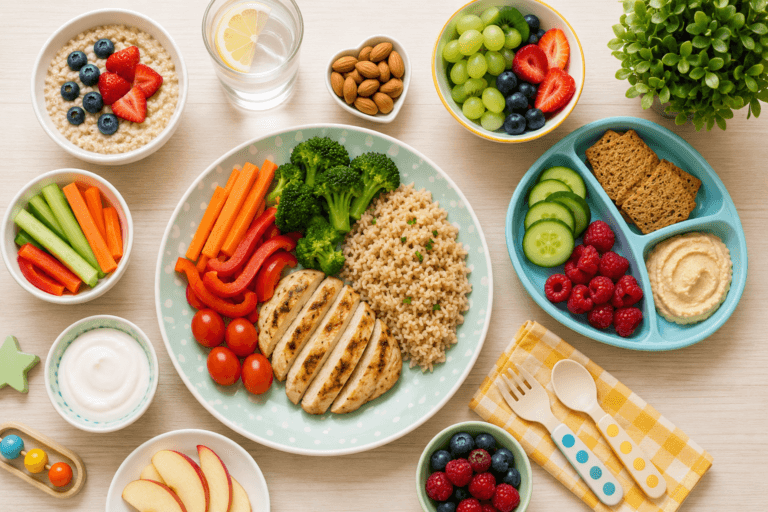
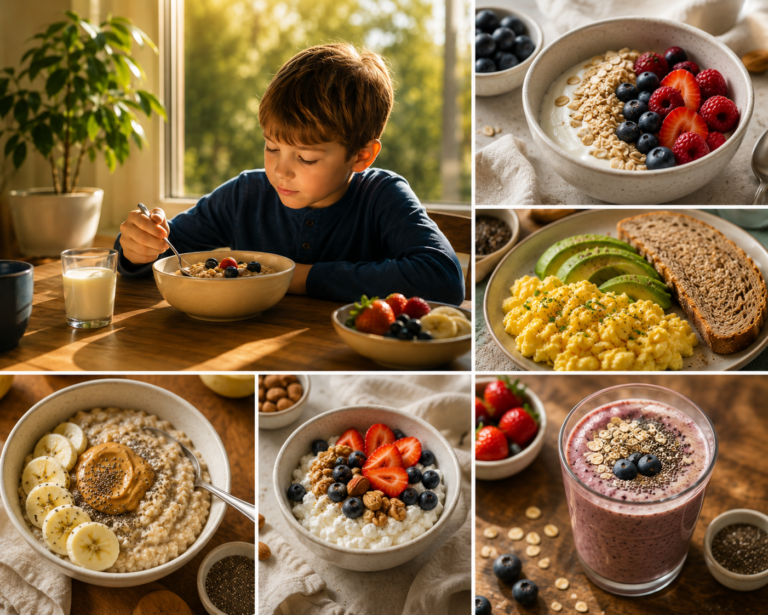
Many of the healthiest snacks don’t come with colorful packaging or health claims at all. Try combinations like:
- Apple slices with natural peanut butter
- Banana with unsweetened Greek yogurt
- Carrot sticks with hummus
- Cucumber slices with cheese
- Whole-grain crackers with tuna
- Hard-boiled eggs with cherry tomatoes
- Cottage cheese with berries
- Pear slices with almonds (for children old enough to safely eat nuts)
- Homemade trail mix with unsalted nuts, seeds, and dried fruit
- Air-popped popcorn for older children who can safely chew it
These snacks provide a variety of nutrients while helping children become familiar with real foods instead of highly processed alternatives.
Packaged Snacks Can Still Fit Into a Healthy Diet
It’s unrealistic for most families to prepare every snack from scratch. Parents have busy schedules, children attend school and sports activities, and convenience matters.
Fortunately, packaged snacks are not automatically unhealthy. Many nutritious packaged options are available, including:
- Plain popcorn
- Unsweetened applesauce
- Whole-grain crackers
- Roasted chickpeas
- Unsalted mixed nuts (age appropriate)
- Cheese sticks
- Plain yogurt
- Frozen fruit
- Whole-grain cereals with little added sugar
Rather than avoiding packaged foods completely, aim to choose products with better nutritional quality most of the time. Healthy eating is about patterns, not perfection.
Teaching Children to Make Smart Food Choices
Children learn by watching the adults around them. Instead of labeling foods as “good” or “bad,” consider teaching simple nutrition skills.
For example, encourage children to ask:
- Does this snack contain real food ingredients?
- Does it have fiber?
- Does it contain a lot of added sugar?
- Will it keep me full until my next meal?
These conversations help children build a healthy relationship with food without creating unnecessary fear or guilt. The goal is not to eliminate treats but to help children understand that everyday snacks should nourish their growing bodies.
Shopping Tips for Parents
The grocery store can feel overwhelming, especially when nearly every package claims to be healthier than the next. These simple habits can make shopping easier:
- Read the Nutrition Facts label before buying
- Compare similar products instead of choosing the first option
- Look for whole-food ingredients near the top of the ingredient list
- Choose snacks with more fiber and less added sugar when possible
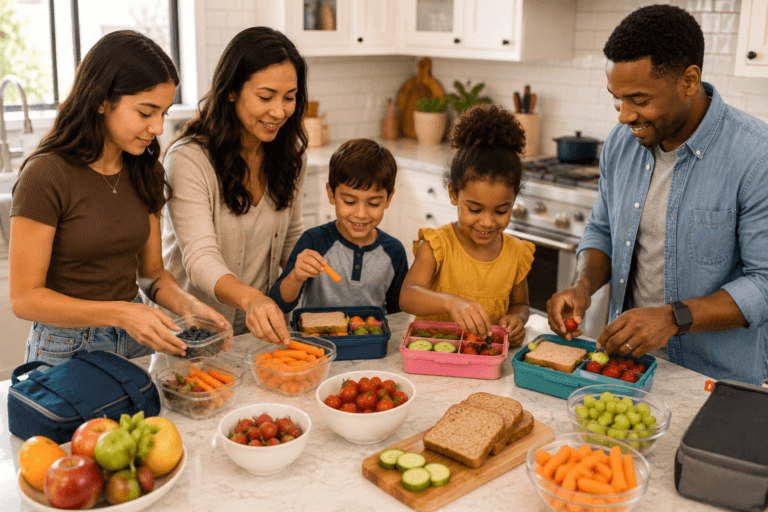
- Keep a variety of fresh fruits and vegetables available at home
- Remember that convenience and nutrition can exist together
Small decisions made consistently often have a greater impact than occasional “perfect” choices.
Quick Snack Comparison
| Instead of… | Try… | Why It’s a Better Choice |
|---|---|---|
| Fruit-flavored gummies | Fresh berries or apple slices | More fiber, vitamins, and water with no added sugars |
| Sugary granola bar | Whole-grain granola bar with nuts and lower added sugar | More fiber and protein for longer-lasting energy |
| Potato chips | Air-popped popcorn | Higher in fiber and typically lower in saturated fat |
| Sweetened yogurt | Plain Greek yogurt with fresh fruit | More protein and less added sugar |
| Cookies | Whole-grain crackers with cheese | Provides protein, calcium, and more balanced nutrition |
Parent Checklist: Choosing a Healthier Snack
Use this simple checklist when shopping:
- Is the serving size realistic?
- Does it contain 5 grams or less of added sugar per serving whenever possible?
- Does it provide fiber?
- Does it contain a source of protein or healthy fat?
- Are whole-food ingredients listed near the top?
- Is sodium reasonable compared with similar products?
- Would this snack help keep my child satisfied until the next meal?
If you answered “yes” to most of these questions, the snack is likely a good addition to a balanced eating pattern.
This article is intended for educational purposes only and should not replace personalized medical or dietary advice. If your child has food allergies, a medical condition, or specific nutritional needs, consult your pediatrician or a registered dietitian.
Frequently Asked Questions
Are all packaged kids’ snacks unhealthy?
No. Many packaged snacks can be part of a balanced eating pattern. The key is choosing products that are lower in added sugar and sodium while providing nutrients such as fiber, protein, and whole grains.
Is organic always healthier?
Not necessarily. Organic foods follow specific farming standards, but they may still contain added sugars, refined grains, or saturated fat. Always read the Nutrition Facts label and ingredient list.
Are fruit snacks a good substitute for fresh fruit?
Usually not. While some fruit snacks contain fruit ingredients, they generally do not provide the same amount of fiber, water, and naturally occurring nutrients found in whole fruit.
How often should children eat snacks?
This depends on a child’s age, activity level, and appetite. Many children benefit from one or two nutritious snacks between meals, especially during periods of growth. Parents can focus on offering balanced options rather than encouraging constant grazing.
Should parents completely avoid sugary snacks?
No. Completely restricting certain foods may make them more appealing. Most nutrition experts recommend emphasizing nutritious everyday foods while allowing sweets occasionally as part of a balanced eating pattern.
How much added sugar should a child have per day?
The American Heart Association recommends children ages 2–18 consume less than 6 teaspoons (about 25 grams) of added sugar per day, and that children under age 2 avoid added sugar entirely.
Are gluten-free snacks automatically healthier?
No. Gluten-free labeling only means a product doesn’t contain wheat, barley, or rye. Gluten-free snacks can still be high in added sugar, refined starches, or sodium — the same label rules apply.
What should I look for first on a snack label?
Start with the serving size, then check added sugar and fiber. These three numbers give the fastest, most reliable picture of whether a snack fits a balanced diet.
Do “low fat” snacks mean less sugar?
Not necessarily. Manufacturers sometimes add extra sugar to low-fat products to maintain flavor and texture, so a low-fat snack can still be high in added sugar.
Key Takeaways
- Marketing claims don’t always reflect a snack’s nutritional quality
- The Nutrition Facts label provides more reliable information than the front of the package
- Pay close attention to added sugars, fiber, protein, sodium, and serving size
- Whole foods such as fruit, vegetables, yogurt, eggs, nuts, and whole grains often make excellent snacks
- Packaged snacks can fit into a healthy diet when chosen thoughtfully
- Teaching children how to evaluate foods helps build lifelong healthy eating habits
- Healthy eating is about consistent patterns — not perfect choices
Final Thoughts
Parents today have more snack choices than ever before — but they also face more confusing marketing messages.
Words like healthy, natural, organic, and made with whole grains can be helpful, but they don’t tell the whole story. The most reliable way to evaluate a snack is to look beyond the front of the package and examine the Nutrition Facts label and ingredient list.
Remember that no single food determines your child’s health. A balanced diet is built over time through a variety of nutritious foods, regular meals, and healthy eating habits.
Instead of striving for perfection, focus on making informed choices most of the time. Small, consistent improvements — such as choosing snacks with more fiber, less added sugar, and more whole-food ingredients — can have a meaningful impact on your child’s overall nutrition.
Helping children understand food, rather than fear it, is one of the most valuable lessons parents can teach. By encouraging curiosity, offering a variety of nutritious options, and modeling balanced eating habits, families can create a positive relationship with food that lasts a lifetime.