Healthy Snacks for Kids: 25 Nutritious Snack Ideas Parents Will Love
Parents often hear that children should avoid too much sugar and ultra-processed food, but finding snacks that are both nutritious and appealing can feel surprisingly difficult. Grocery store shelves are packed with colorful packages claiming to be “natural,” “made with whole grains,” or “rich in vitamins.” Unfortunately, many of these products still contain large amounts of added sugar, refined starches, or unnecessary ingredients.
Healthy snacks don’t need to be complicated. In fact, the best snacks are usually built from simple, familiar foods that provide lasting energy and important nutrients rather than quick bursts of sugar.
For growing children, snacks are more than something to eat between meals. They can help meet daily nutritional needs, support steady growth, maintain energy throughout the day, and contribute to better concentration at school and during physical activities. When planned thoughtfully, snacks also create opportunities for children to enjoy fruits, vegetables, whole grains, dairy, legumes, nuts (when age-appropriate), and other nutrient-rich foods that they might not eat in large amounts during regular meals.
Research suggests that eating patterns emphasizing minimally processed foods, adequate fiber, healthy fats, and quality protein are associated with better overall diet quality and healthier long-term eating habits. Rather than focusing on strict food rules, experts recommend building balanced eating patterns that children can realistically maintain as they grow.
In this guide, you’ll learn what makes a snack genuinely healthy, why snacks matter during childhood, how to choose nutrient-dense options, and 25 practical snack ideas that fit busy family life. This article is part of our Complete Guide to Kids’ Nutrition.
Why Healthy Snacks Matter for Growing Children
Children have different nutritional needs than adults. Their bodies and brains are growing rapidly, and they often use a great deal of energy through learning, play, sports, and everyday movement.
Because children’s stomachs are relatively small compared with their energy needs, many nutrition professionals recommend dividing food intake across meals and planned snacks instead of relying only on three large meals.
Well-planned snacks may help:
- Maintain steady energy between meals.
- Support healthy physical growth.
- Provide important vitamins and minerals.
- Increase fiber intake.
- Support healthy brain development.
- Help children arrive at meals pleasantly hungry rather than overly hungry.
- Reduce excessive reliance on sugary convenience foods.
The goal is not to encourage constant eating throughout the day. Instead, experts generally recommend scheduled meals and snacks that give children opportunities to meet their nutritional needs while allowing enough time between eating occasions for natural hunger and fullness cues to develop.
What Makes a Snack Truly Healthy?
Not every snack marketed toward children is nutritionally balanced. A healthy snack usually combines several important nutrients rather than relying mostly on refined carbohydrates or added sugar.
Protein Supports Growth and Satiety
Protein helps build muscles, tissues, hormones, enzymes, and immune cells. It also helps children feel satisfied for longer after eating. Good protein choices include:
- Greek yogurt
- Cottage cheese
- Cheese
- Eggs
- Beans
- Hummus
- Nut butters (when age-appropriate)
- Unsalted nuts for older children
Safety note: The American Academy of Pediatrics lists whole nuts, seeds, popcorn, whole grapes, and raw vegetables such as carrot sticks among the foods to avoid or modify for young children — generally until age 4 or older, depending on each child’s development and maturity. Cutting food into pieces no larger than ½ inch helps, but for these foods it does not replace avoiding or modifying them. Also follow your child’s school allergy policies.
Pairing protein with fruits or whole grains creates a more balanced snack than eating refined crackers or cookies alone.
Fiber Keeps Kids Full
Fiber supports digestive health and helps maintain more stable energy levels after eating. Children can get fiber from:
- Apples
- Pears
- Berries
- Bananas
- Carrots
- Cucumbers
- Whole-grain crackers
- Oats
- Air-popped popcorn (only for children old enough to eat it safely)
Most children consume less fiber than recommended, making snack time an excellent opportunity to include more fruits, vegetables, legumes, and whole grains.
Healthy Fats Support Brain Development
Healthy fats play an important role in childhood growth, especially for the developing brain and nervous system. Nutritious fat sources include:
- Avocados
- Nuts
- Seeds
- Nut butters
- Plain yogurt
- Cheese
Healthy fats also improve satiety and help the body absorb fat-soluble vitamins like A, D, E, and K.
Whole Grains Provide Lasting Energy
Whole grains are an excellent source of complex carbohydrates, fiber, and important nutrients that help fuel growing bodies. Unlike refined grains, whole grains retain the bran and germ, which contain much of the grain’s fiber, vitamins, minerals, and beneficial plant compounds. Healthy whole-grain snack choices include:
- Whole-grain crackers
- Plain oatmeal
- Whole-grain toast
- Whole-wheat pita
- Brown rice cakes
- Homemade oat muffins with minimal added sugar
Combining whole grains with protein or healthy fats helps create a snack that keeps children satisfied longer. For example, whole-grain toast topped with peanut butter (for children without allergies and old enough to eat it safely) provides a better nutritional balance than toast with sugary spreads alone.
Why Kids Need Snacks Throughout the Day
Children often have high energy needs but smaller stomachs than adults. Planned snacks can help bridge the gap between meals while supporting healthy growth and active lifestyles.
Steady Energy
Children are constantly moving, learning, playing, and growing. Healthy snacks provide fuel between meals and may help prevent energy crashes caused by long gaps without eating.
Better Concentration
The brain requires a steady supply of nutrients to support attention, memory, and learning. While no single food magically boosts intelligence, balanced eating patterns that include nutritious snacks help children stay energized during school and homework.
Physical Growth
Childhood is one of the fastest periods of growth in life. Regular opportunities to eat nutrient-rich foods make it easier to meet daily needs for protein, calcium, iron, zinc, and vitamins.
Active Play and Sports
Whether children enjoy organized sports or simply spend time running, climbing, biking, or playing outdoors, physical activity increases their energy requirements. Balanced snacks before or after activity can help replenish energy and support recovery.
Preventing Extreme Hunger
Waiting too long between meals may leave children overly hungry, making it harder for them to recognize fullness cues and increasing the temptation to choose highly processed convenience foods. Experts generally recommend offering snacks at planned times rather than allowing children to graze continuously throughout the day.
25 Healthy Snack Ideas Kids Actually Enjoy
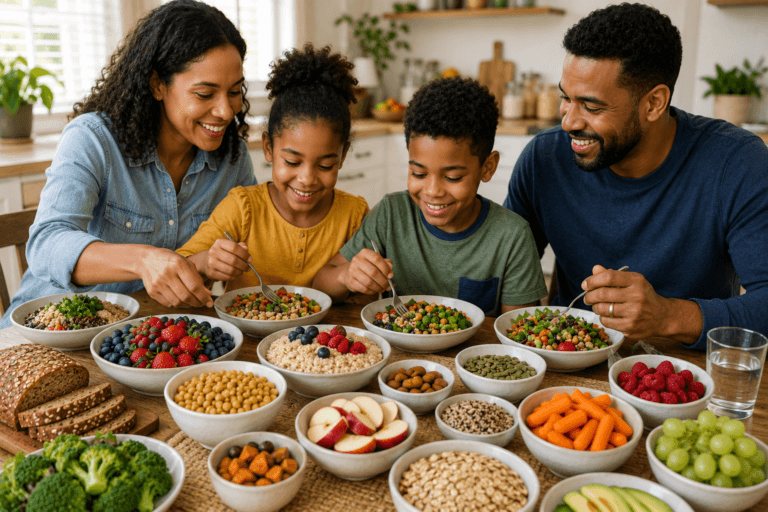
The healthiest snacks combine two or more food groups to provide a mix of protein, fiber, healthy fats, and complex carbohydrates. The ideas below are easy to prepare, kid-friendly, and suitable for most families.
A balanced snack = Protein + Fiber + Healthy Fat (when possible).
Examples: Apple + peanut butter · Yogurt + berries · Whole-grain crackers + cheese · Carrots + hummus
Healthy snacks do not have to be expensive or complicated. Many of the best options require only a few simple ingredients.
Fruit-Based Snacks
- Apple slices with peanut butter — Apples provide fiber while peanut butter contributes protein and healthy fats.
- Banana with plain Greek yogurt — A naturally sweet snack rich in potassium, calcium, and protein.
- Mixed berries — Blueberries, strawberries, raspberries, and blackberries provide vitamin C, fiber, and antioxidants.
- Orange segments with cheese cubes — Vitamin C paired with protein and calcium makes this a balanced option.
- Frozen grapes (for older children only) — A refreshing alternative to sugary frozen desserts. Always consider choking safety based on your child’s age.
Vegetable Snacks
- Carrot sticks with hummus — Crunchy vegetables paired with plant-based protein and fiber. Raw vegetables such as carrot sticks are among the foods to avoid or modify for young children — see the safety note above.
- Cucumber slices with yogurt dip — A refreshing snack that’s easy to prepare.
- Bell pepper strips with guacamole — Colorful vegetables combined with healthy fats from avocado.
- Cherry tomatoes with mozzarella — A simple snack rich in calcium and protein.
- Celery sticks with nut butter — A classic combination of fiber and healthy fats for children who can safely eat nut products.
Dairy Snacks
- Plain Greek yogurt topped with fresh fruit — Choose unsweetened yogurt and add naturally sweet fruit instead of flavored varieties high in added sugar.
- Cottage cheese with pineapple — Provides protein along with vitamin C.
- Cheese cubes with whole-grain crackers — A balanced combination of protein and complex carbohydrates.
- Homemade fruit smoothie — Blend milk or yogurt with fruit and oats for a filling snack. Limit fruit juice and avoid adding sugar.
- Kefir with berries — Kefir provides protein and contains live cultures that may support digestive health as part of a balanced diet.
Protein-Rich Snacks
- Hard-boiled egg — Simple, portable, and naturally rich in high-quality protein.
- Roasted chickpeas — Crunchy, high in fiber, and packed with plant protein.
- Turkey roll-ups — Lean turkey wrapped around cucumber or cheese slices makes an easy snack.
- Edamame — A nutritious source of plant protein and fiber for children who enjoy soy foods.
- Homemade trail mix — For older children, combine unsalted nuts, seeds, and a small amount of dried fruit. Avoid whole nuts for young children due to choking risk.
Whole-Grain Snacks
- Oatmeal topped with berries — Warm, filling, and naturally rich in fiber.
- Whole-grain toast with mashed avocado — Healthy fats paired with complex carbohydrates provide lasting energy.
- Brown rice cakes with cottage cheese — Light yet satisfying.
- Homemade popcorn — Air-popped popcorn can be a whole-grain snack for older children who can safely eat it. It should not be offered to young children because of choking risk.
- Whole-wheat pita with hummus — A balanced combination of whole grains, protein, and fiber.
Snacks to Limit
Healthy eating isn’t about banning certain foods forever. Instead, nutrition experts encourage families to build eating patterns where nutrient-rich foods make up most snacks, while foods high in added sugar, sodium, and saturated fat are enjoyed less often.
Foods to limit include:
- Sugary drinks and soda
- Candy and gummies
- Highly processed snack cakes
- Cookies with large amounts of added sugar
- Potato chips and similar salty snacks
- Fruit-flavored drinks that are not 100% juice
- Energy drinks (not recommended for children)
Choosing healthier options most of the time helps children develop balanced eating habits without making any single food feel “forbidden.”
Healthy School Lunchbox Snack Ideas
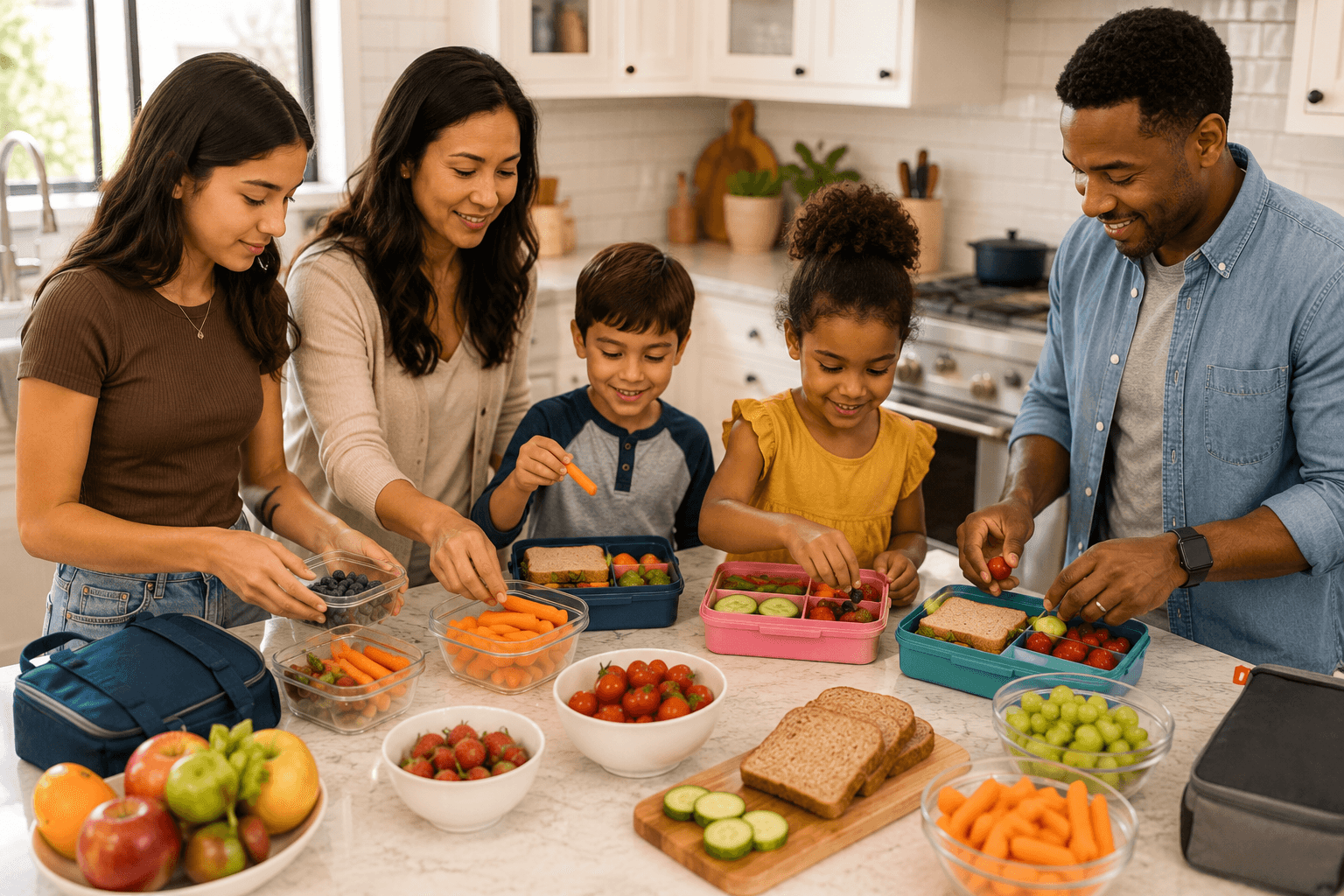
Many of the best snacks are portable and easy to pack for school.
- Apple slices with cheese cubes
- Whole-grain crackers with hummus
- Plain Greek yogurt with berries
- Carrot sticks and cucumber slices
- Whole-grain pita with hummus
- Hard-boiled eggs
- Banana with sunflower seed butter (if permitted)
- Cottage cheese with fresh fruit
- Homemade oatmeal muffins with little added sugar
- Unsalted roasted chickpeas
Packing a reusable water bottle is another simple way to encourage healthy hydration throughout the school day.
A Simple Portion Guide
Snack portions should generally match a child’s age, appetite, and activity level. Younger children usually need smaller portions than older children and teenagers.
- Preschoolers: about one small snack, such as a few crackers with cheese or a small piece of fruit.
- School-age children: a moderate snack, such as yogurt with fruit or vegetables with hummus, adjusted for activity level.
- Teens: larger snacks may be appropriate due to higher energy needs, especially around sports or physical activity.
These are general starting points, and individual needs can vary. A practical approach is to offer one source of protein or dairy together with one fruit, vegetable, or whole grain instead of serving multiple packaged snacks at once.
Children are naturally good at recognizing hunger and fullness when given regular opportunities to eat balanced meals and snacks. Parents can provide nutritious choices, while children decide how much to eat.
Choosing Healthy Packaged Snacks
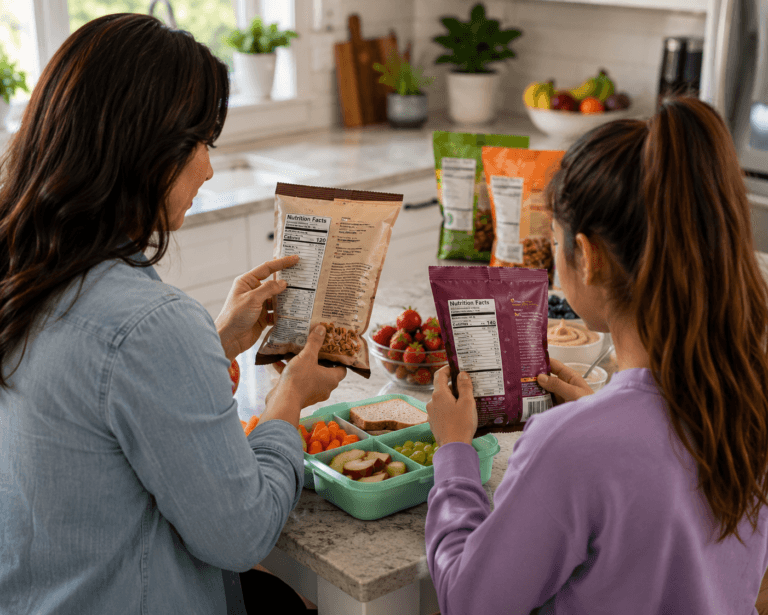
Not every packaged snack needs to be avoided, but reading the label helps parents make better choices when time is limited. For a deeper dive into evaluating marketing claims and ingredient quality, see our full guide on how to choose healthy snacks for kids.
What to look for on the label — choose snacks that:
- Contain whole-food ingredients you recognize.
- Provide fiber.
- Have little or no added sugar.
- Include protein when possible.
- Are lower in sodium.
For a closer look at decoding ingredient lists and Nutrition Facts panels, see our full guide on how to read nutrition labels for kids’ foods.
Common Mistakes Parents Make
- Offering snacks too close to mealtime.
- Using sweets as rewards.
- Keeping sugary snacks within easy reach while healthier foods are hidden.
- Believing that every product labeled “natural” is nutritious.
- Serving portions that are much larger than children need.
- Giving up after a child refuses a healthy food once or twice.
Research suggests that repeated, pressure-free exposure to healthy foods can gradually increase children’s willingness to try them. Patience and consistency are often more effective than forcing or bribing children to eat.
Practical Tips for Busy Families
- Wash and prepare fruits and vegetables in advance.
- Keep healthy snacks at eye level in the refrigerator.
- Prepare snack boxes for several days at once.
- Include children when shopping for healthy foods.
- Offer the same healthy foods in different ways instead of giving up quickly.
- Focus on building habits rather than achieving perfection.
Healthy Drinks for Kids
What children drink alongside their snack matters just as much as the food itself.
- Water should be the primary drink for most snacks.
- Plain milk can provide calcium, protein, and vitamin D.
- Limit sugary drinks, soda, sports drinks, and fruit drinks with added sugar.
- Whole fruit is generally preferred over juice because it contains fiber.
Keeping water easily accessible throughout the day encourages children to stay hydrated between meals and snacks.
Key Takeaways
- Healthy snacks help support children’s growth, learning, and daily energy needs.
- Choose snacks that combine protein, fiber, and healthy fats whenever possible.
- Whole foods such as fruit, vegetables, dairy, legumes, and whole grains are excellent everyday choices.
- Limit foods high in added sugar while keeping a balanced approach to eating.
- Small, consistent improvements are more sustainable than strict food rules.
Frequently Asked Questions
How many snacks should kids eat each day?
Many children benefit from one or two planned snacks each day, depending on their age, activity level, and meal schedule. Individual needs can vary.
What is the healthiest snack for children?
There isn’t a single healthiest snack. In general, combinations of fruit, vegetables, whole grains, dairy, legumes, or lean protein provide a good balance of nutrients.
Are packaged snacks always unhealthy?
No. Some packaged foods can be nutritious. Reading the Nutrition Facts label and ingredient list helps parents compare products and choose options lower in added sugar and higher in fiber.
Should children avoid all sweets?
No. Nutrition experts generally recommend focusing on healthy eating patterns overall rather than completely eliminating occasional treats.
How can I encourage my child to choose healthier snacks?
Keep nutritious foods easy to see and reach, involve children in choosing snacks, and offer healthy options regularly without pressure.
Continue Reading
- The Ultimate Guide to Kids’ Nutrition (Complete Guide)
- How to Read Nutrition Labels for Kids’ Foods
- Best Healthy School Lunch Ideas Kids Will Actually Eat
- Foods That Support a Healthy Immune System in Children
- What Science Says About Breakfast and Children’s Brain Performance