Healthy Breakfast Ideas for Kids
Estimated reading time: 10–12 minutes
Breakfast is often called the most important meal of the day—and for good reason. After a night of sleep, children need energy and nutrients to help fuel their growing bodies and active minds.
A balanced breakfast can support concentration at school, provide lasting energy for morning activities, and help children meet their daily nutrient needs. While no single meal determines a child’s overall health, establishing healthy breakfast habits can contribute to better eating patterns over time.
Busy mornings don’t have to mean skipping breakfast or relying on highly processed convenience foods. With a little planning, families can prepare quick, nutritious meals that children actually enjoy.
In this evidence-based guide, you’ll learn what makes a healthy breakfast, discover 25 easy breakfast ideas, and find practical tips for even the busiest school mornings. This article is part of our Complete Guide to Kids’ Nutrition.
Why Is Breakfast Important for Kids?
Children’s bodies and brains need energy after an overnight fast.
Eating breakfast may help provide energy for the morning, support learning and concentration at school, contribute to daily nutrient intake, help children meet their protein, fiber, calcium, and vitamin needs, and encourage healthy eating habits throughout the day.
Rather than focusing on perfection, aim to make breakfast a consistent part of your family’s routine whenever possible.
What Makes a Healthy Breakfast?
A balanced breakfast usually includes several important food groups.
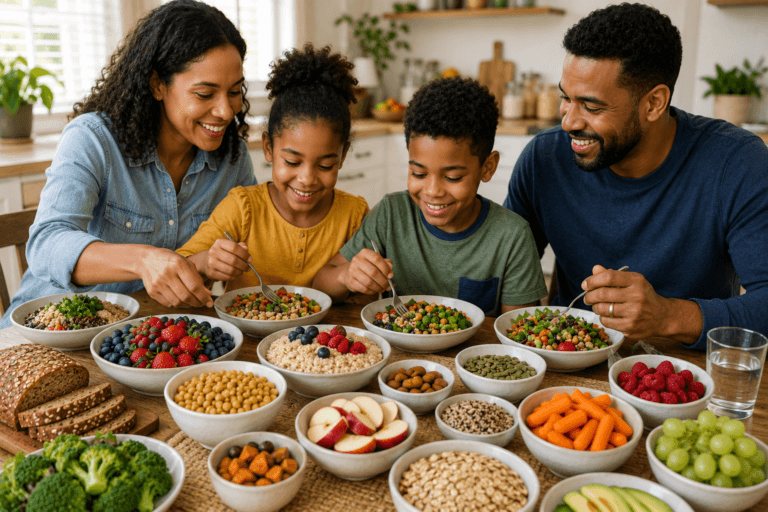
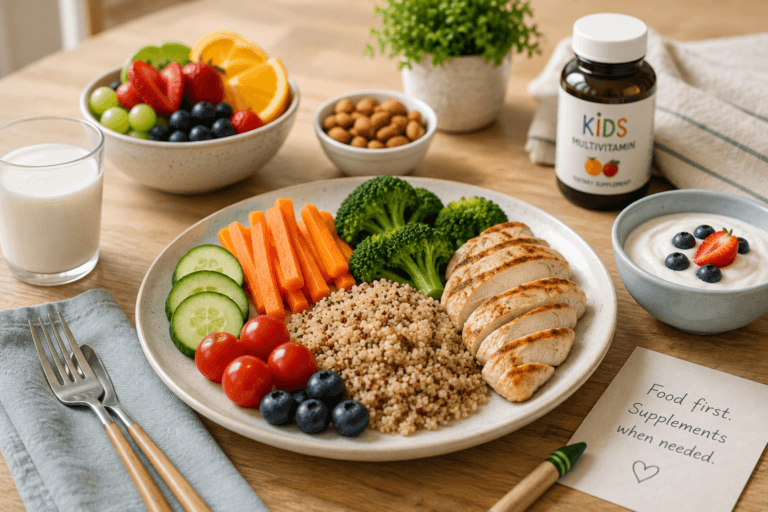
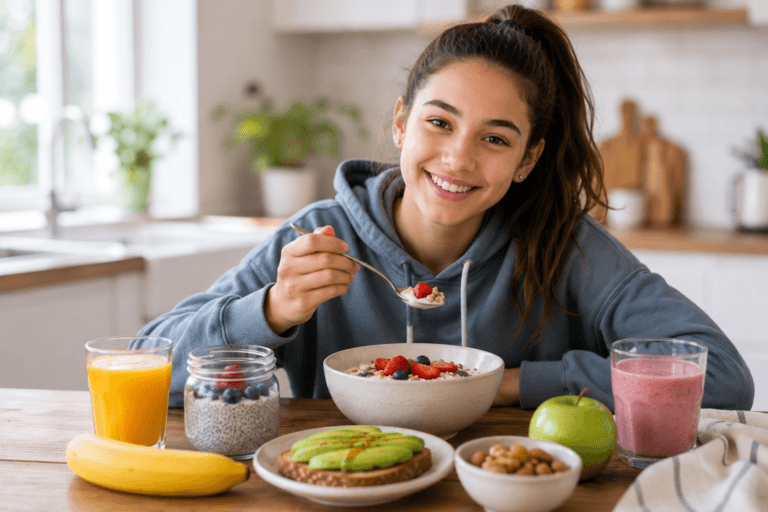
Try to include protein to support growth and help children stay full, whole grains for fiber and lasting energy, fruit for vitamins, minerals, and natural sweetness, healthy fats from foods like nuts, seeds, or avocado (when age-appropriate), and a healthy drink, such as water or milk — see Healthy Drinks for Kids.
Combining these foods creates a more satisfying and nutritious meal than relying on refined carbohydrates alone.
25 Healthy Breakfast Ideas for Kids
Quick Breakfasts
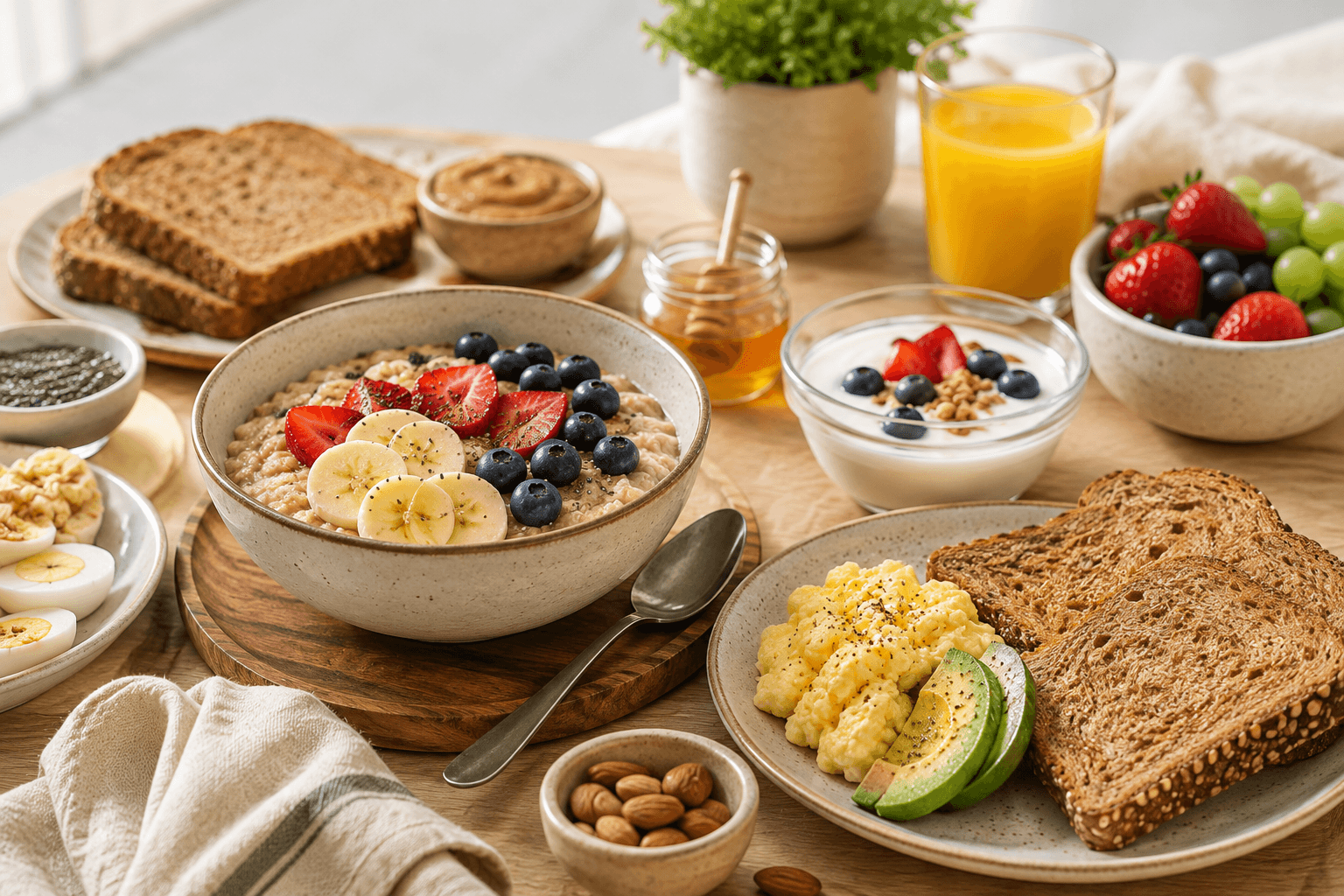
1. Oatmeal with Berries
Top warm oatmeal with fresh berries and a sprinkle of chia seeds.
2. Whole-Grain Toast with Peanut Butter and Banana
Choose natural peanut butter and sliced bananas for a simple, filling breakfast.
3. Greek Yogurt Parfait
Layer plain Greek yogurt with berries and low-sugar granola.
4. Scrambled Eggs with Whole-Grain Toast
A classic breakfast that provides high-quality protein and whole grains.
5. Cottage Cheese with Fresh Fruit
Serve cottage cheese with peaches, berries, or pineapple for a balanced meal.
6. Overnight Oats
Prepare oats the night before with milk, yogurt, oats, fruit, and chia seeds for a grab-and-go breakfast.
7. Whole-Grain Breakfast Burrito
Fill a whole-wheat tortilla with scrambled eggs, beans, and cheese.
8. Fruit and Yogurt Smoothie
Blend plain yogurt, milk, frozen berries, spinach, and oats into a nutritious smoothie.
9. Whole-Grain Waffles with Nut Butter
Top whole-grain waffles with almond or peanut butter and sliced strawberries.
10. Hard-Boiled Eggs and Whole-Grain Crackers
An easy option for busy mornings that combines protein with whole grains.
High-Protein Breakfast Ideas
For more protein-rich food ideas, see Best High-Protein Foods for Kids.
11. Vegetable Omelet
Add spinach, tomatoes, mushrooms, or bell peppers to scrambled eggs or an omelet.
12. Egg Muffins
Bake eggs with vegetables in muffin tins for easy meal prep.
13. Peanut Butter Apple Sandwiches
Spread peanut butter between apple slices for a fun, protein-rich breakfast (appropriate for your child’s age).
14. Plain Greek Yogurt with Chia Seeds
Top with fresh fruit for extra fiber and natural sweetness.
15. Breakfast Quesadilla
Fill a whole-wheat tortilla with eggs and cheese, then toast until lightly golden.
High-Fiber Breakfast Ideas
For more fiber-rich foods, see Best High-Fiber Foods for Kids.
16. Oatmeal with Pears
A warm bowl of oatmeal topped with diced pears and cinnamon.
17. Whole-Grain Cereal with Milk
Choose cereals high in fiber and low in added sugar.
18. Avocado Toast
Spread mashed avocado on whole-grain toast and add sliced tomatoes if desired.
19. Berry Smoothie Bowl
Blend frozen berries with yogurt and top with sliced fruit and oats.
20. Banana Oat Pancakes
Make pancakes using oats, banana, and eggs for a simple homemade breakfast.
Make-Ahead Breakfasts
21. Homemade Breakfast Muffins
Prepare whole-grain muffins with oats, fruit, and grated carrots or zucchini.
22. Chia Pudding
Mix chia seeds with milk the night before and top with fruit in the morning.
23. Egg and Veggie Breakfast Sandwich
Assemble ahead of time and reheat on busy mornings.
24. Freezer Breakfast Burritos
Prepare several burritos in advance using eggs, beans, vegetables, and cheese.
25. Homemade Energy Bites
Make oat-based energy bites with nut butter, oats, and seeds for older children as part of a balanced breakfast.
Breakfast Mistakes Parents Often Make
Even with the best intentions, some common habits can make breakfast less nutritious than it could be.
Avoid these mistakes when possible: skipping breakfast regularly, serving sugary cereals every morning, offering pastries as the main breakfast, relying only on fruit juice instead of whole fruit, forgetting to include a source of protein, choosing refined grains instead of whole grains, and serving oversized portions.
Remember, breakfast doesn’t have to be perfect. Small improvements made consistently can support healthier eating habits over time.
Healthy Breakfasts for Picky Eaters
If your child is selective about food, keep breakfast simple and pressure-free.
Try offering familiar foods alongside one new option, letting children choose between two healthy breakfasts, involving kids in preparing simple meals, keeping portions small and allowing second servings if they’re still hungry, and being patient—children may need multiple exposures before accepting new foods.
Positive mealtime experiences are more important than forcing children to finish every bite.
Sample One-Week Healthy Breakfast Plan
| Day | Breakfast |
|---|---|
| Monday | Oatmeal with berries and milk |
| Tuesday | Scrambled eggs with whole-grain toast and orange slices |
| Wednesday | Greek yogurt with granola and strawberries |
| Thursday | Whole-wheat toast with peanut butter and banana |
| Friday | Vegetable omelet with whole-grain toast |
| Saturday | Banana oat pancakes with blueberries |
| Sunday | Smoothie with yogurt, spinach, berries, and oats |
This sample plan provides a balance of protein, fiber, healthy carbohydrates, and important vitamins throughout the week.
Frequently Asked Questions
Is breakfast really the most important meal of the day?
Breakfast can be an important opportunity to provide children with energy and essential nutrients after an overnight fast. However, the overall quality of a child’s diet throughout the day matters most.
What is the healthiest breakfast for kids?
A healthy breakfast typically includes protein, whole grains, fruit, and a healthy beverage such as water or milk.
Are breakfast cereals healthy?
Some are. Choose cereals made with whole grains that are high in fiber and low in added sugar.
What if my child doesn’t feel hungry in the morning?
Some children have smaller appetites early in the day. Offer a light breakfast or pack a nutritious morning snack if appropriate.
Can kids eat eggs every day?
For most healthy children, eggs can be part of a balanced diet. If you have concerns about your child’s individual nutritional needs, consult your pediatrician.
Key Takeaways
- A balanced breakfast helps children start the day with energy and important nutrients.
- Include protein, whole grains, fruit, and a healthy drink whenever possible.
- Preparing breakfasts ahead of time can make busy mornings easier.
- Whole foods are generally a better choice than highly processed breakfast products.
- Healthy breakfast habits are built through consistency, not perfection.
Continue Reading
- The Ultimate Guide to Kids’ Nutrition (Complete Guide)
- Healthy Grocery List for Families
- Best High-Protein Foods for Kids by Age
- Best High-Fiber Foods for Kids
- Healthy Drinks for Kids: Best & Worst Choices
- Healthy Snacks for Kids: 25 Nutritious Snack Ideas Parents Will Love
- Best Healthy School Lunch Ideas Kids Will Actually Eat (Science-Based Guide)
- Are Kids’ Vitamins Really Necessary?
References
This article is based on recommendations from:
- American Academy of Pediatrics (AAP)
- U.S. Department of Agriculture (USDA)
- Centers for Disease Control and Prevention (CDC)
- Academy of Nutrition and Dietetics
- National Institutes of Health (NIH)
Because nutrition recommendations may change over time, consult your child’s pediatrician or a registered dietitian for personalized advice.