Why Your Child’s Lunch Comes Home Uneaten: 7 Reasons and What Parents Can Do
Quick Answer
A lunchbox that comes home full is not necessarily a sign that your child dislikes the food. The amount of seated time available, the order of recess and lunch, packaging, portion size, food familiarity, and the wider school-day environment can all affect how much a child eats. Before changing the entire menu, find out how much time your child actually has to sit and eat, remove unnecessary packaging friction, and change one thing at a time.
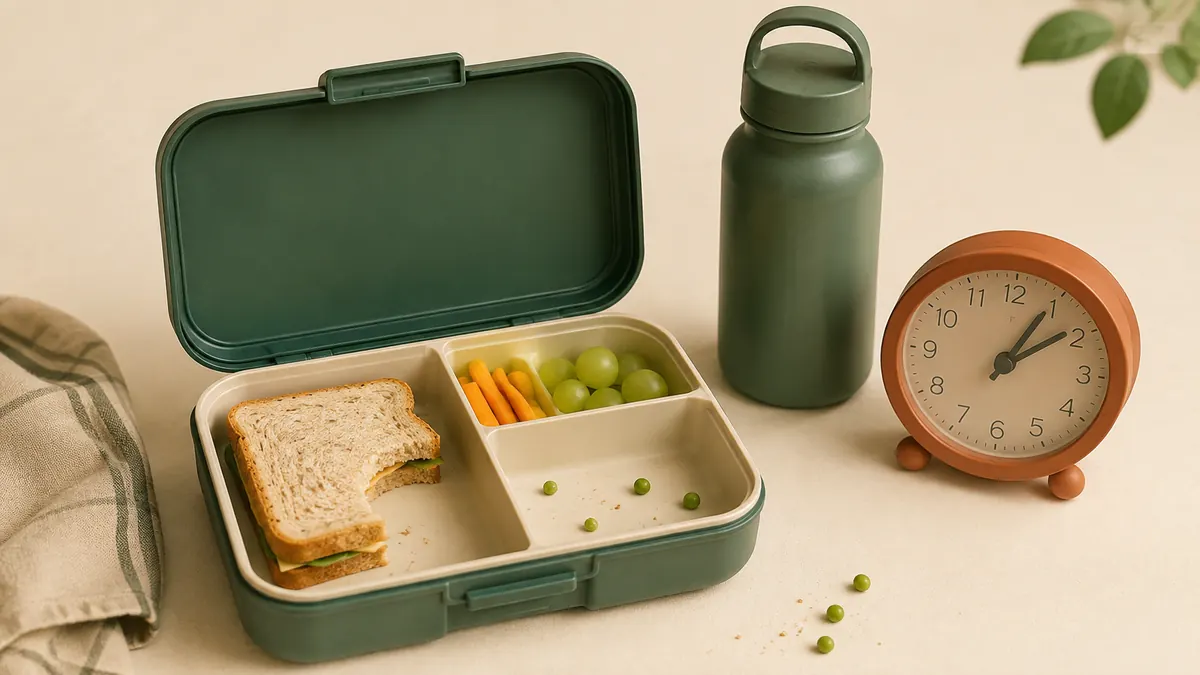
You packed a good lunch. It comes home at 3 p.m. almost exactly as it left — sandwich with one corner missing, fruit untouched, yogurt unopened. The obvious conclusion is that your child didn’t like it, and the obvious response is to pack something different tomorrow.
That conclusion may be wrong. School lunch happens inside a limited window, often with waiting, walking, socializing, and cleanup competing for the same minutes that children have to eat. What looks like food rejection can sometimes be a time or logistics problem instead.
This guide looks at seven possible reasons a school lunch comes home uneaten and what parents can realistically test before changing everything in the lunchbox. If you are looking for ideas about what to pack, see our guide to healthy school lunch ideas kids will actually eat. This article answers the other question: why isn’t the lunch you already packed being eaten? It is also part of our wider back-to-school guide for parents.
Start with the clock, not the lunchbox
The first thing worth checking is how many minutes your child actually spends sitting down with food in front of them. This is not necessarily the same as the length of the lunch period on the school timetable.
Waiting in line, walking to the cafeteria, finding a seat, socializing, and clearing the table can all reduce the time available for eating. The American Academy of Pediatrics and the Centers for Disease Control and Prevention support providing students with at least 20 minutes of seated eating time, which is specifically distinguished from the total length of the lunch period.
That distinction matters because research suggests that shorter eating time can affect some parts of a meal more than others. In a 2021 randomized crossover trial published in JAMA Network Open, researchers analysed 241 observed lunches from 38 children. When children were given 20 minutes of seated lunch time, they consumed significantly more fruit and vegetables and wasted less of those foods than when the same children were given 10 minutes. Consumption of the entrée and the beverage did not differ significantly between the two conditions.
Earlier school-based research found a similar pattern. In a study of 1,001 students in grades 3 to 8 in one urban school district, students who had fewer than 20 minutes to eat consumed 13% less of their entrée, 12% less of their vegetables, and 10% less of their milk than students who had at least 25 minutes. They were also less likely to select a fruit in the first place.
Key Facts
- 20 minutes means seated eating time — not the total length of the lunch period. Both the AAP and the CDC support that figure.
- A 2021 randomized crossover trial found more fruit and vegetable consumption and less waste with 20 minutes of seated time than with 10 minutes.
- A study of students in grades 3 to 8 found that those with fewer than 20 minutes consumed 13% less entrée, 12% less vegetables, and 10% less milk than those with at least 25 minutes.
- The time effect is not identical for every food, so a full lunchbox should not automatically be read as a taste preference.
Try this first: ask your child a specific question rather than “Did you have enough time?” Try “When you had to line up, were you still eating?” or “How long did you actually sit at the table?” If possible, ask the school how much seated eating time students typically receive.
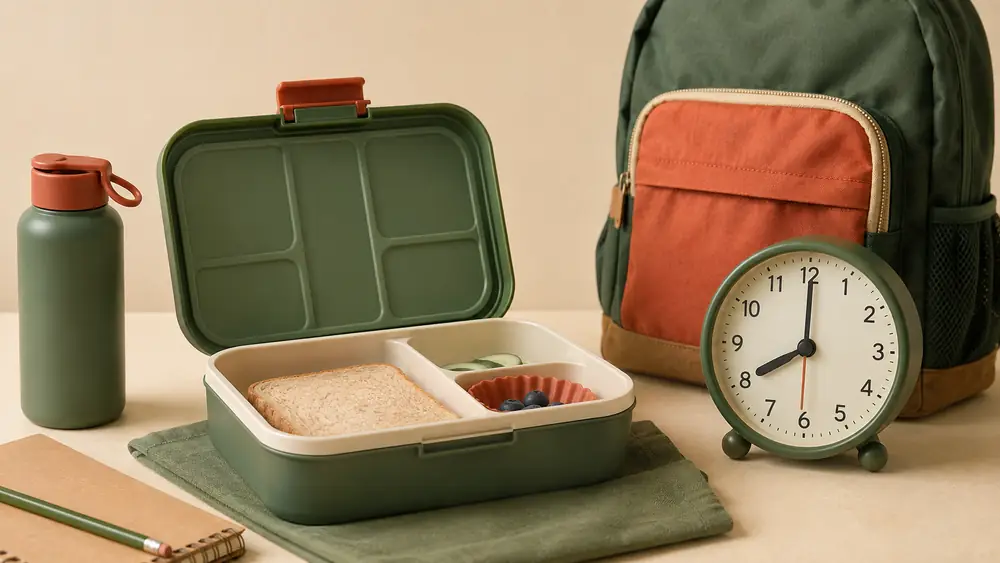
Seven reasons a lunchbox comes home full
These are practical possibilities to investigate, not a ranking of proven causes. Start with the ones you can actually observe or test.
1. There isn’t enough seated time to finish
This is the easiest factor to measure and one of the first worth checking. A school may describe lunch as a 25- or 30-minute period, but your child may have substantially less time once the trip to the cafeteria, the lunch line, finding a seat, and cleanup are included.
Research does not show that every food is affected equally by a shorter lunch. Under time pressure, fruit and vegetables appear to be especially vulnerable, in part because they often take longer to select, open, peel, or finish — though school-based research has also found lower consumption of entrées and milk when eating time is short.
What to do: pack for the time your child actually has. A smaller lunch that gets eaten can be more useful than a larger lunch that repeatedly comes home untouched. If your child consistently has very little seated eating time, that is a school-schedule issue worth discussing with the school rather than trying to solve entirely in the kitchen.
2. Recess is on the wrong side of lunch
For some children, the order of lunch and recess may influence how they approach the meal. If recess comes immediately after lunch, a child may feel pressure to finish quickly so they can get outside and play.
Research has not produced a perfectly uniform answer, but several studies have found benefits from scheduling recess before lunch. One study of Utah elementary schools reported substantially higher fruit and vegetable consumption after schools changed to recess before lunch. The CDC also lists scheduling recess before lunch, when possible, as one strategy schools can consider.
This should be treated as a scheduling factor rather than a universal rule. Findings across studies are not completely uniform, so changing recess order should be viewed as one possible intervention rather than a guaranteed solution.
What to do: find out which order your child’s school uses. If lunch comes immediately before recess and your child says they are rushing, you have identified a possible explanation that may be better addressed with the school than with another change to the lunchbox.
3. The packaging is eating the time
Practical observation — not a research finding: a lunch can be nutritionally reasonable and still be difficult for a child to open independently. Several containers, tight lids, foil seals, difficult wrappers, or fruit that needs peeling can create small delays that add up during a short lunch period.
This may matter especially for younger children who are still developing the hand strength and coordination needed to manage different containers quickly.
What to do: give your child the packed lunch at home and watch them open it without helping. Do not coach them. Simply notice where they struggle. Loosen the lid, peel the fruit, remove unnecessary wrapping, or switch to a container they can manage independently.
4. The portion is bigger than the appetite
A lunch can look reasonable to an adult and still feel like a lot to a child. Children’s appetites also vary from day to day, so one unusually small lunch does not necessarily mean anything is wrong.
The useful question is not “How much should my child eat?” but “How much does my child usually eat when they have enough time and are comfortable?”
What to do: pack slightly less for a week and see what changes. If you want age-based guidance, our guide to portion sizes for kids by age can help you think about realistic amounts. If your child is hungry after school, a nutritious after-school snack can be part of the day’s overall intake.
5. The easiest foods are being eaten first
A plate-waste study of home-packed lunches in a third-grade classroom found that children consumed about 67% of the calories from the solid foods they brought, leaving roughly a third uneaten. In the same study, sugar-sweetened beverages were consumed almost entirely.
That study cannot tell us that sweet foods always “crowd out” vegetables, and it was conducted in a single classroom. It does, however, illustrate why looking at what comes back is more useful than simply counting the number of foods in the lunchbox.
A larger observational study of lunches brought from home to elementary and intermediate schools in one Texas district found that about 90% contained desserts, snack chips, or sweetened beverages. That is not a criticism of parents — packed lunches are not held to the same nutrition standards as reimbursable school meals. It simply means that the contents of the box can influence which foods are easiest to choose and finish when time is limited.
What to do: if your child consistently drinks a sweetened beverage before touching the rest of the meal, try water or milk instead. You can also place the more filling foods where they are easiest to reach and make fruit and vegetables simple to eat.
6. The food is unfamiliar
Trying an unfamiliar food is different from eating a familiar one. A child may need time to look at it, smell it, taste it, and decide whether they want more. A busy cafeteria is not necessarily the easiest environment for that process.
Repeated-exposure research does support the idea that familiarity can increase acceptance of some foods. However, the strongest systematic-review evidence covers infants and toddlers, particularly children aged 4 to 24 months, and the number of exposures needed appears to increase with age. It should not be turned into a fixed rule such as “a school-age child needs 10 or 15 exposures.”
What to do: introduce genuinely new foods at home, where there is more time and less social pressure. Keep the school lunch mostly familiar while you experiment with new foods separately. Our guide to helping picky eaters try new foods covers that process in more detail.
7. Something about the school day is affecting appetite
Sometimes the lunchbox is telling you something about the school day rather than the food. A child who is anxious, uncomfortable with the cafeteria environment, worried about classmates, or adjusting to a new routine may eat differently.
This is especially worth exploring if the change was sudden or if it appears alongside stomachaches, reluctance to go to school, disrupted sleep, or a noticeable change in mood.
What to do: ask about lunch as a social experience rather than as a nutrition test. Who does your child sit with? Is the room loud? Do they feel rushed? Is there a particular part of lunch they dislike?
If the eating change appeared around the start of the school year, our guide to back-to-school anxiety in kids can help you look at the wider picture.
The food-safety part nobody wants to overlook
Appetite is only part of the lunchbox equation. Perishable food also needs to stay at a safe temperature from the time it leaves the refrigerator until lunchtime.
USDA guidance identifies 40°F to 140°F (4.4°C to 60°C) as the food-safety “danger zone,” where harmful bacteria multiply rapidly. Perishable food should not simply be placed in a regular paper bag and left unrefrigerated through the school morning.
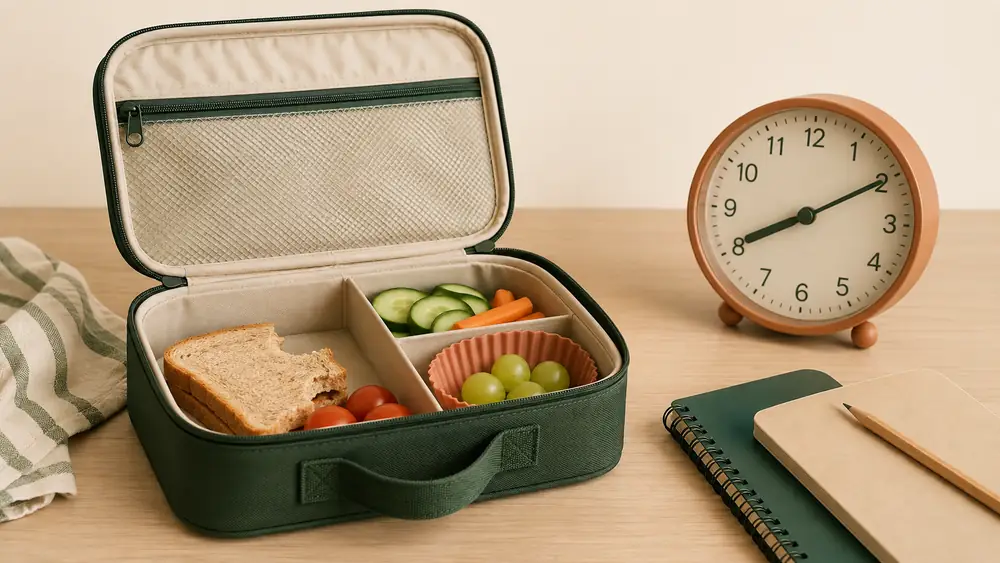
- Use an insulated lunch bag for perishable foods such as deli meat, eggs, cheese, or yogurt.
- Use at least two cold sources, such as two frozen gel packs, or a gel pack plus a frozen water bottle.
- Place the cold sources around the perishable foods rather than in one corner of the bag.
- For a hot lunch, use a clean insulated container: fill it with boiling water, let it stand a few minutes, empty it, then add the piping-hot food and keep it closed until lunchtime.
- If you prepare the lunch the night before, keep it refrigerated overnight and pack it cold in the morning.
- Discard leftover perishable food after lunch rather than returning it to the refrigerator for another day.
What to change first
Change one variable at a time. If you change the food, portion, packaging, and drink on the same day, you will not know which change actually helped.
- Week one — find the actual seated time. Ask your child how long they really have to eat. If possible, ask the school too.
- Week two — remove packaging friction. Open, peel, loosen, or simplify anything your child cannot manage quickly.
- Week three — adjust the portion and the drink. Try a slightly smaller portion and replace a sweetened drink with water or milk.
- Week four — reassess the food itself. If the lunch is still coming home largely untouched, you now have better information about whether taste, familiarity, or food preference is actually part of the problem.
Common mistakes parents make
Reading a full lunchbox as rejection. A full lunchbox tells you that the food was not eaten. It does not tell you why.
Packing more because less is coming back. If the eating window is short, increasing the amount of food may simply increase the amount that returns home.
Introducing unfamiliar foods in the lunchbox. A busy cafeteria may be a poor setting for a first attempt at something new. Try it at home first.
Turning pickup into a lunch inspection. Repeatedly asking whether your child finished everything can make lunch feel like a daily performance test. Look for patterns instead of judging one day’s leftovers.
Assuming the scheduled lunch period equals eating time. Public health guidance specifically distinguishes total lunch-period length from seated eating time, and that difference may be the first thing worth investigating.
When to ask more questions
Most uneaten lunches can be approached as a practical question about time, food preference, environment, or routine. But a persistent change in eating deserves more attention when it comes with other signs.
Consider speaking with your child’s pediatrician if your child is losing weight, has a concerning change in growth, is eating noticeably less across the whole day, has a rapidly shrinking list of accepted foods, or experiences pain, gagging, choking, or difficulty swallowing.
For the bigger picture of children’s nutrition, see our ultimate guide to kids’ nutrition. For the morning routine that leads into the school day, see our school morning routine guide.
Frequently asked questions
How long do children actually need to eat lunch?
The AAP and the CDC support at least 20 minutes of seated eating time. That means time after the child has received the meal and is seated with food in front of them. It is not necessarily the same as the total length of the lunch period.
Should I stop packing fruit and vegetables if they always come back?
No. Short eating times can particularly affect fruit and vegetable consumption. Instead of removing them, make smaller portions easier to eat: slice fruit, peel it where appropriate, and use containers your child can open independently.
Is it a problem if my child only eats the snack items?
It is worth looking at the overall pattern rather than one lunch. If the easiest or sweetest items are consistently the only foods eaten, try changing the drink and making the other foods easier to reach and eat. A very short lunch period may also be contributing.
Does it matter whether recess comes before or after lunch?
It can. Several studies have reported benefits when recess is scheduled before lunch, and the CDC lists recess before lunch as a strategy schools can consider. Findings are not completely uniform, so treat it as one possible factor rather than a guaranteed solution.
How long can a packed lunch safely sit at room temperature?
USDA advises keeping perishable food out of the 40°F to 140°F (4.4°C to 60°C) danger zone, and says perishable food should not be left unrefrigerated for more than two hours, or more than one hour when the temperature is above 90°F (32.2°C). For school lunches containing perishable foods, use an insulated bag with cold sources, or refrigerate the food if the school offers that option.
Should I pack a bigger lunch if my child comes home hungry?
Not automatically. First find out whether your child had enough time to eat. If the lunch period is short, a larger portion may simply create more leftovers. If your child is consistently hungry after school, look at the whole day’s intake and consider a balanced after-school snack.
What if my child suddenly stops eating lunch at school?
Look for what changed around the same time. Ask about lunch companions, noise, seating, recess timing, a new teacher or classroom, and whether your child feels worried about school. If the change persists or comes with pain, difficulty swallowing, weight loss, or eating much less at home, talk with your child’s pediatrician.
Sources
- Burg X, Metcalfe JJ, Ellison B, Prescott MP. Effects of Longer Seated Lunch Time on Food Consumption and Waste in Elementary and Middle School–age Children: A Randomized Clinical Trial. JAMA Network Open. 2021;4(6):e2114148. doi:10.1001/jamanetworkopen.2021.14148
- Cohen JFW, Jahn JL, Richardson S, Cluggish SA, Parker E, Rimm EB. Amount of Time to Eat Lunch Is Associated with Children’s Selection and Consumption of School Meal Entrée, Fruits, Vegetables, and Milk. Journal of the Academy of Nutrition and Dietetics. 2016;116(1):123–128. doi:10.1016/j.jand.2015.07.019
- Price J, Just DR. Lunch, recess and nutrition: Responding to time incentives in the cafeteria. Preventive Medicine. 2015;71:27–30. doi:10.1016/j.ypmed.2014.11.016
- Caruso ML, Cullen KW. Quality and Cost of Student Lunches Brought From Home. JAMA Pediatrics. 2015;169(1):86–90. doi:10.1001/jamapediatrics.2014.2220
- Thomas JR, Hanson D, Chinnan-Pothen A, Freaney C, Silverman J. Packed School Lunch Food Consumption: A Childhood Plate Waste Nutrient Analysis. Nutrients. 2023;15(5):1116.
- Spill MK, Johns K, Callahan EH, et al. Repeated exposure to food and food acceptability in infants and toddlers: a systematic review. American Journal of Clinical Nutrition. 2019;109(Suppl 7):978S–989S. doi:10.1093/ajcn/nqy308
- Centers for Disease Control and Prevention — school nutrition guidance on time to eat and on scheduling recess before lunch.
- American Academy of Pediatrics — guidance on adequate time to eat school meals.
- USDA Food Safety and Inspection Service — Keeping “Bag” Lunches Safe and “Danger Zone” (40°F–140°F).
This article is educational content based on established health recommendations and peer-reviewed research. It does not replace individual medical advice. Persistent refusal to eat, weight loss, or a rapidly shrinking range of accepted foods should be assessed by your child’s pediatrician.