Portion Sizes for Kids by Age
Estimated reading time: 10–12 minutes
Many parents wonder whether their child is eating too much, too little, or just the right amount. Portion sizes can be confusing because children’s appetites change as they grow, and nutritional needs vary by age, activity level, and stage of development.
The good news is that healthy portion sizes don’t require weighing every bite or counting every calorie. Most children are naturally able to regulate their appetite when offered a variety of nutritious foods in appropriate portions.
This evidence-based guide explains how portion sizes change with age, provides practical serving recommendations, and shares simple strategies to help parents build balanced meals without unnecessary stress. This article is part of our Complete Guide to Kids’ Nutrition.
Why Portion Sizes Matter
Serving appropriate portions helps children meet their energy and nutrient needs, support healthy growth and development, learn to recognize hunger and fullness cues, reduce unnecessary food waste, and develop healthy eating habits that can last into adulthood.
Remember that portion sizes are guidelines—not strict rules. Appetite naturally varies from day to day.
What Affects a Child’s Appetite?
Several factors influence how much children eat, including age and growth rate, physical activity level, recent illness, sleep quality, individual metabolism, growth spurts, and emotional state.
Some days your child may seem constantly hungry, while on other days they may eat much less. This variation is usually normal.
Daily Portion Size Guide by Age
| Age | General Portion Guidance |
|---|---|
| 1–3 years | Small portions offered several times throughout the day |
| 4–8 years | Moderate portions with a variety of food groups |
| 9–13 years | Larger portions to support steady growth and increasing activity |
| 14–18 years | Portions approach adult sizes depending on growth and activity level |
These are general guidelines. Individual needs vary from child to child.
Portion Guide by Food Group
| Food Group | Typical Serving Examples |
|---|---|
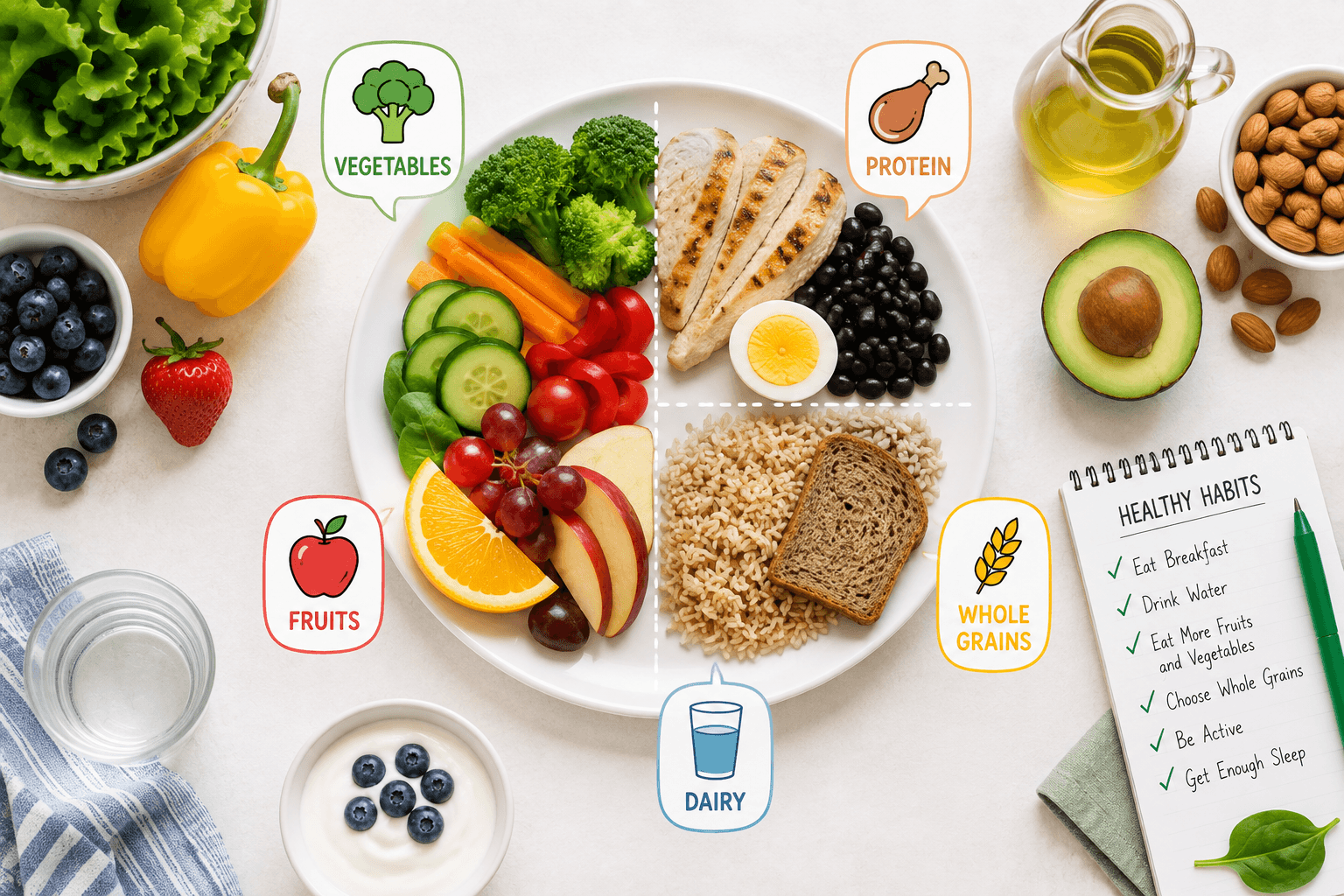
| Protein | Chicken, fish, eggs, beans, tofu, lentils — see Best High-Protein Foods for Kids |
| Vegetables | ½–1 cup depending on age |
| Fruit | ½–1 medium fruit or equivalent |
| Whole Grains | Whole-grain bread, oats, brown rice, whole-wheat pasta — see Best High-Fiber Foods for Kids |
| Dairy | Milk, yogurt, cheese according to age and dietary needs |
A balanced meal includes foods from multiple food groups rather than large amounts of a single food.
The Easy Hand Method
Parents don’t always need measuring cups.
A simple visual guide is: palm for a protein portion, fist for vegetables or fruit, cupped hand for whole grains, and thumb for healthy fats such as nut butter or olive oil.
As children grow, their hand size naturally increases, making this an easy way to estimate age-appropriate portions.
Signs Your Child Is Eating Enough
Healthy children generally grow along their expected growth curve, have enough energy for play and learning, eat a variety of foods over time, show normal hunger before meals, and stop eating when comfortably full.
Rather than focusing on one meal, look at eating patterns over several days.
Common Portion Size Mistakes
Many parents accidentally encourage children to “clean their plate,” serve adult-sized portions, use oversized bowls or plates, offer large portions of sugary snacks, and ignore children’s natural hunger and fullness cues.
Allow children to decide how much to eat from the healthy foods offered whenever possible.
Tips for Serving Healthy Portions
Healthy portions are about balance rather than perfection.
These practical strategies can help: start with smaller portions and offer more if your child is still hungry, serve meals on child-sized plates and bowls, let children decide when they feel comfortably full, include a variety of food groups at each meal, avoid using food as a reward or punishment, encourage eating slowly to help children recognize fullness, and model healthy eating habits by serving yourself balanced portions.
Healthy Snack Portion Ideas
Nutritious snacks can help bridge the gap between meals without replacing them — see more ideas in Healthy Snacks for Kids: 25 Nutritious Snack Ideas.
| Snack | Age-Appropriate Portion Example |
|---|---|
| Apple slices | ½–1 small apple |
| Plain Greek yogurt | ½–¾ cup |
| Baby carrots | Small handful |
| Whole-grain crackers | 4–8 crackers |
| Cheese | 1–2 small cubes or one stick |
| Hummus | 2–4 tablespoons |
Snack portions should be adjusted based on your child’s age, appetite, activity level, and the timing of their next meal.
Frequently Asked Questions
Should I make my child finish everything on the plate?
No. Encouraging children to pay attention to their hunger and fullness cues helps them develop a healthy relationship with food.
How do I know if my child is eating enough?
Growth, energy level, and overall development are better indicators than how much is eaten at a single meal. Your pediatrician can monitor your child’s growth over time.
What if my child is always hungry?
Children often eat more during growth spurts or periods of increased physical activity. Offer balanced meals and nutritious snacks, and discuss persistent excessive hunger with your pediatrician if you have concerns.
Can portion sizes vary from day to day?
Yes. Appetite naturally changes from one day to another and is influenced by activity, sleep, illness, and growth.
Are adult portion sizes appropriate for children?
Generally, no. Children usually need smaller portions than adults, with amounts increasing gradually as they grow.
Key Takeaways
- Portion sizes should grow gradually as children get older.
- Children’s appetites naturally vary from day to day.
- Offer balanced meals and let children respond to their own hunger and fullness cues.
- Child-sized portions help reduce food waste and overeating.
- Focus on long-term eating patterns rather than individual meals.
Continue Reading
- The Ultimate Guide to Kids’ Nutrition (Complete Guide)
- Healthy Grocery List for Families
- Weekly Healthy Meal Plan for Families
- Healthy Breakfast Ideas for Kids
- Healthy Dinner Ideas for Busy Families
- Best High-Protein Foods for Kids by Age
- Best High-Fiber Foods for Kids
- Healthy Snacks for Kids: 25 Nutritious Snack Ideas Parents Will Love
- Healthy Drinks for Kids: Best & Worst Choices
References
This article is based on guidance from:
- American Academy of Pediatrics (AAP)
- U.S. Department of Agriculture (USDA) — MyPlate
- Centers for Disease Control and Prevention (CDC)
- Academy of Nutrition and Dietetics
Because every child grows differently, parents should consult their child’s pediatrician or a registered dietitian for personalized nutrition advice when needed.