Build a Family Dinner Rotation You Can Repeat
Most families don’t need more recipes. They need fewer decisions.
A dinner rotation works from a small set of meals your family already accepts, and reuses them on a loop. You stop opening a blank page every Sunday, and dinner becomes something you maintain instead of something you reinvent.
You don’t need 30 new recipes. You need about 15 meals your family will actually eat.
Why a Dinner Rotation Works
Deciding what to cook is a separate task from cooking it, and it’s the one that quietly costs the most energy. A rotation removes that task by deciding once, in advance, instead of five times a week. Familiar meals also run faster: you already know the ingredients, the timing, and who eats what.
Build Your 15-Meal Bank
The system is one line: 5 dinner types × 3 meals each = 15 meals.
Those 15 meals are your bank. You rotate them. You don’t plan from zero.
The rule for what goes in: familiar and repeatable beats new and complicated. Don’t fill the bank with meals you hope will work. Fill it with meals that already do.
The 5 Dinner Types
Pick categories that match how your family already eats. These are examples — swap any of them.
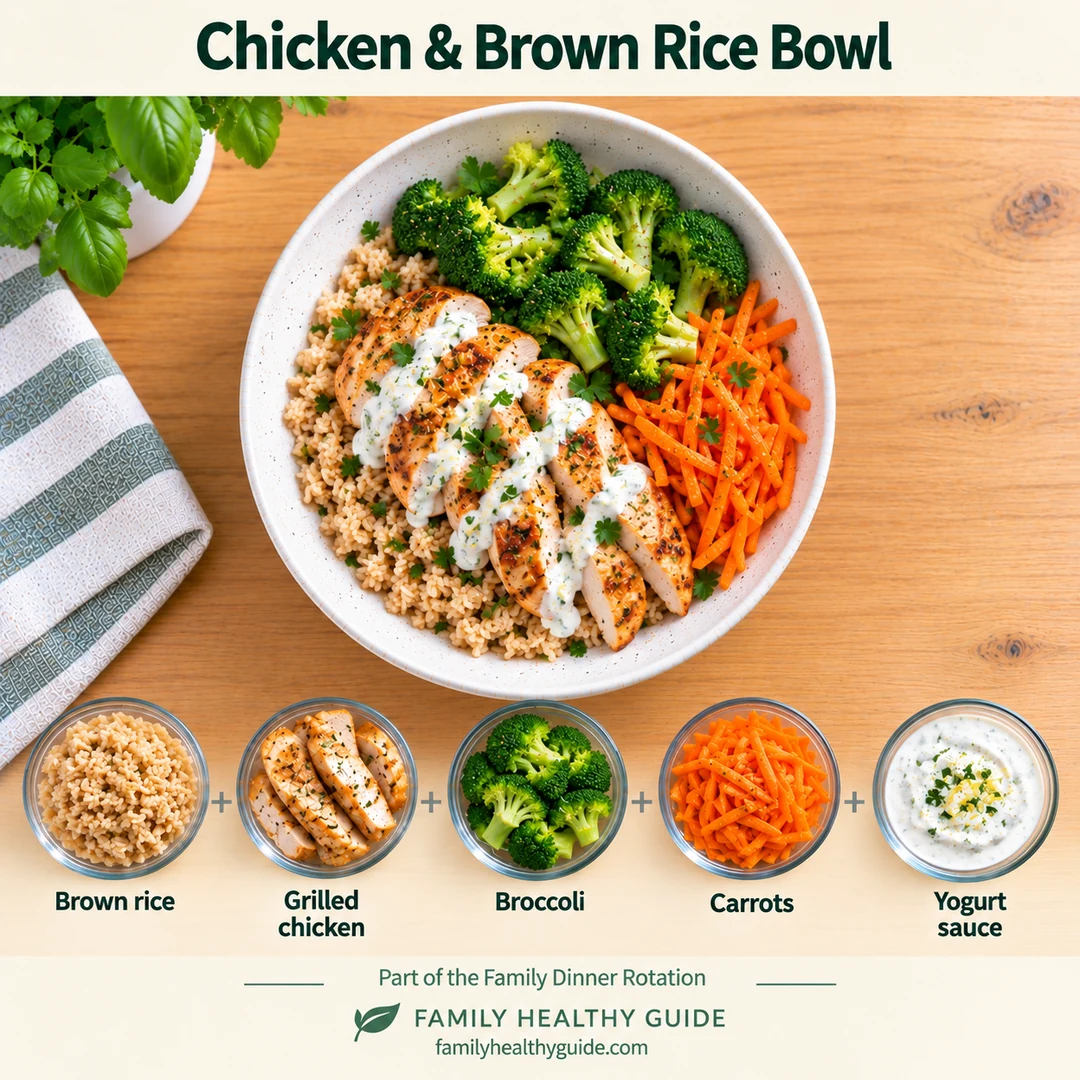
- Bowl Night — a grain, a protein, vegetables, a simple sauce.
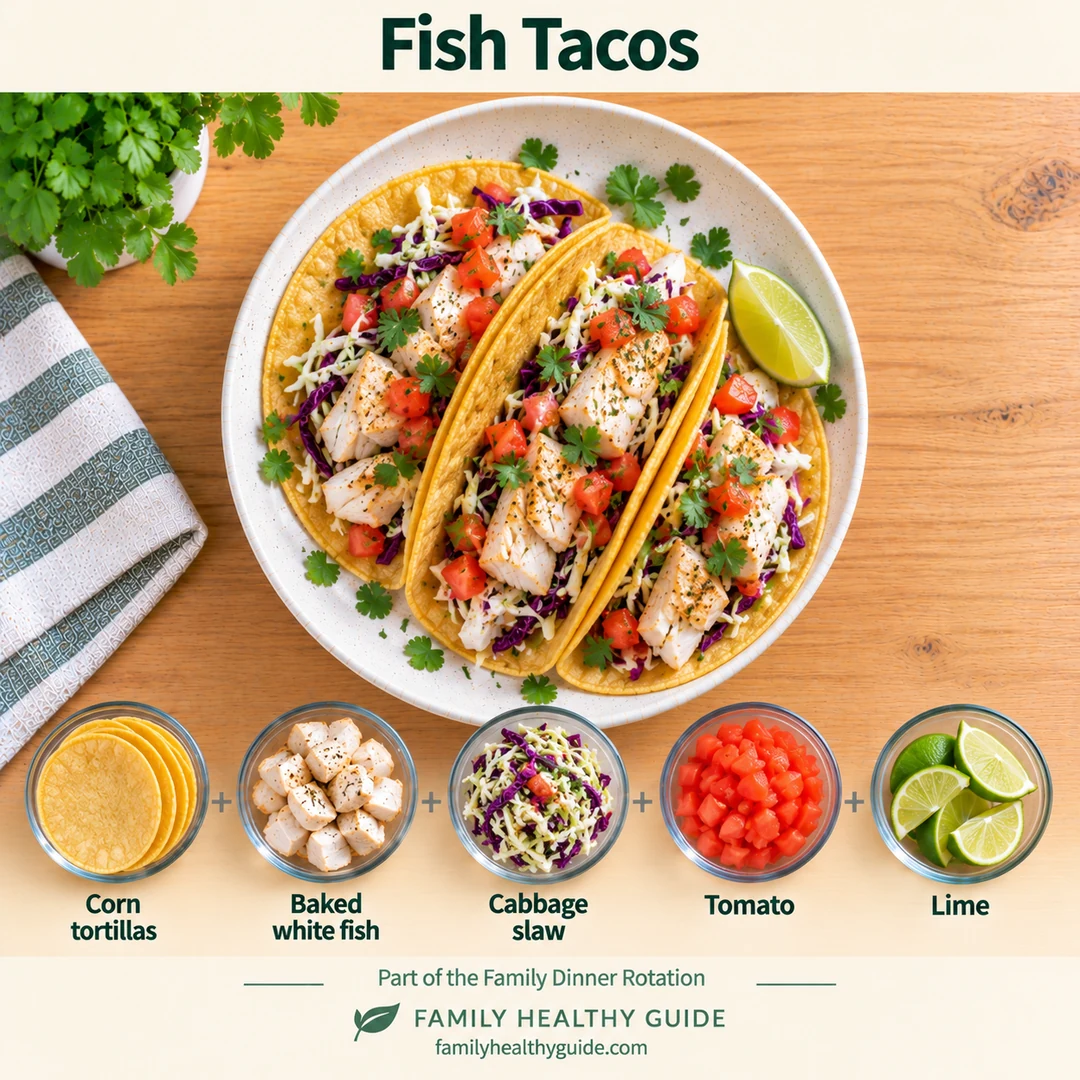
- Taco or Wrap Night — tacos, quesadillas, wraps, or build-your-own plates.
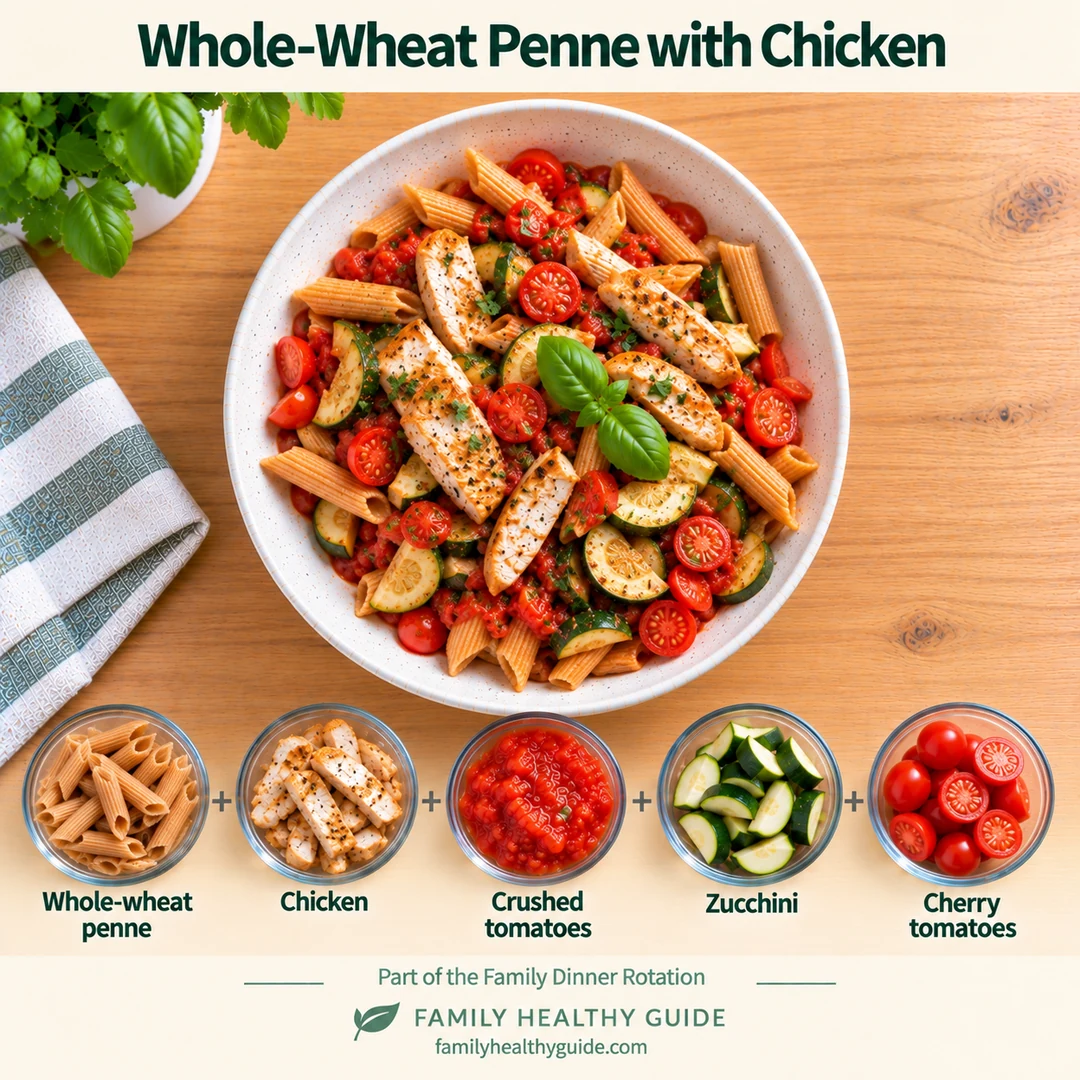
- Pasta Night — pasta, a sauce, a protein, an optional vegetable.
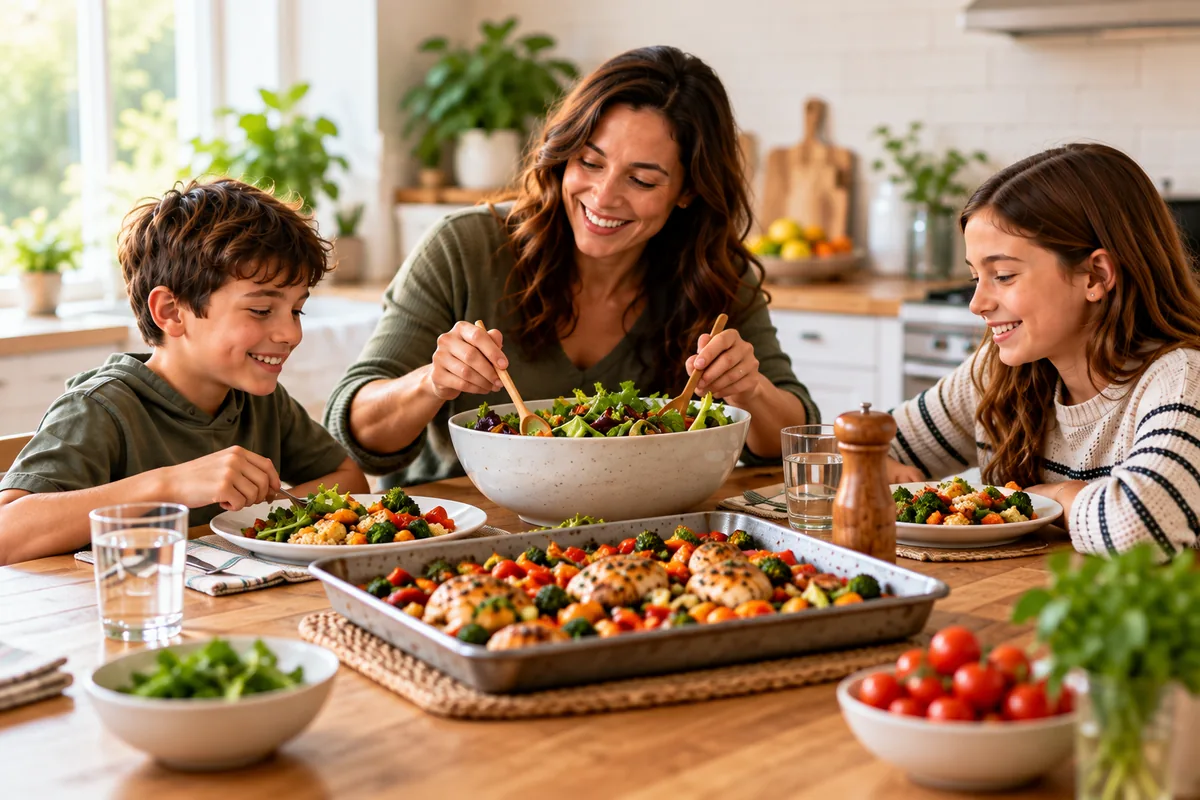
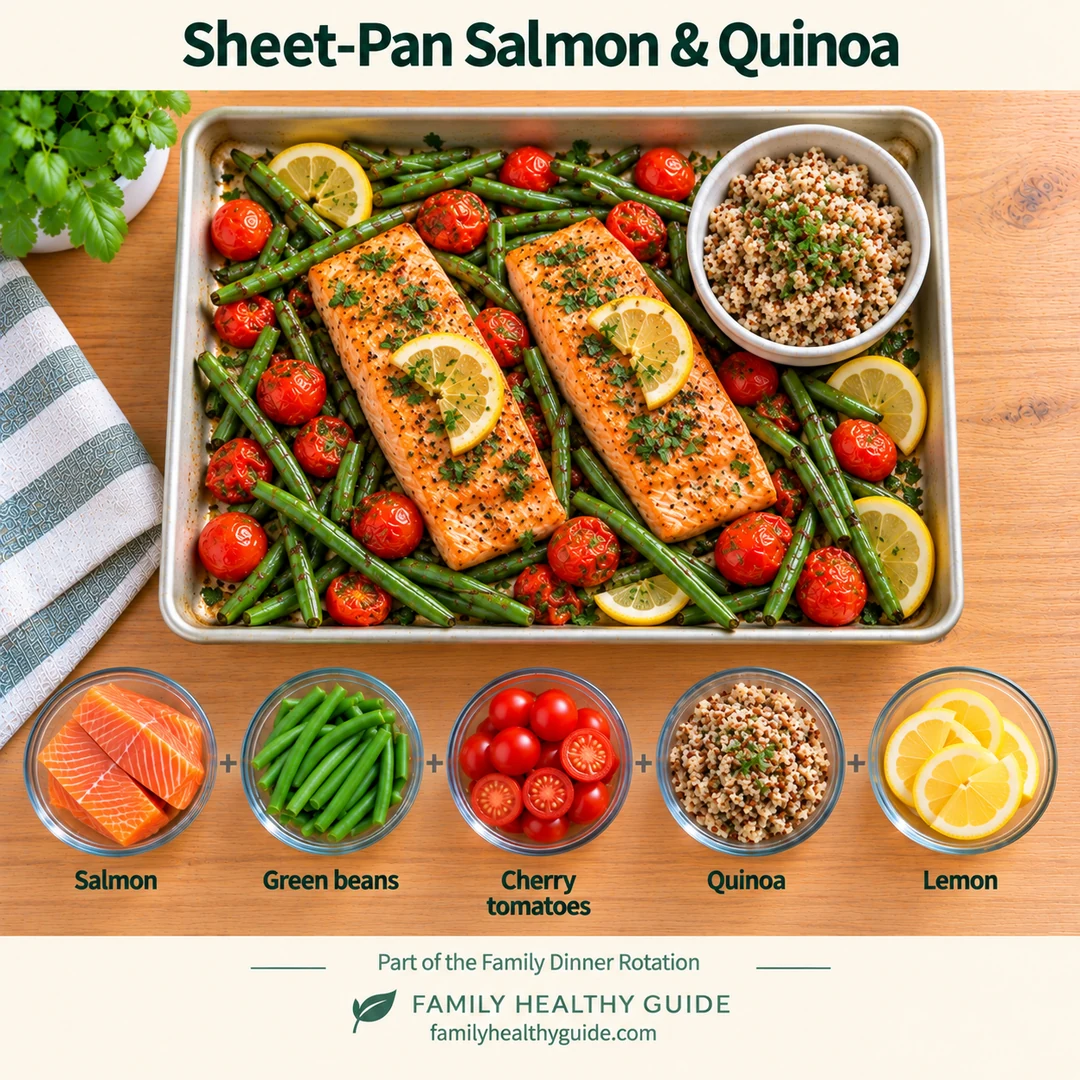
- Sheet-Pan Night — protein plus vegetables plus an easy carbohydrate, cooked together.
- Flexible Family Night — a big salad, something grilled, breakfast for dinner, or leftovers from lunch.
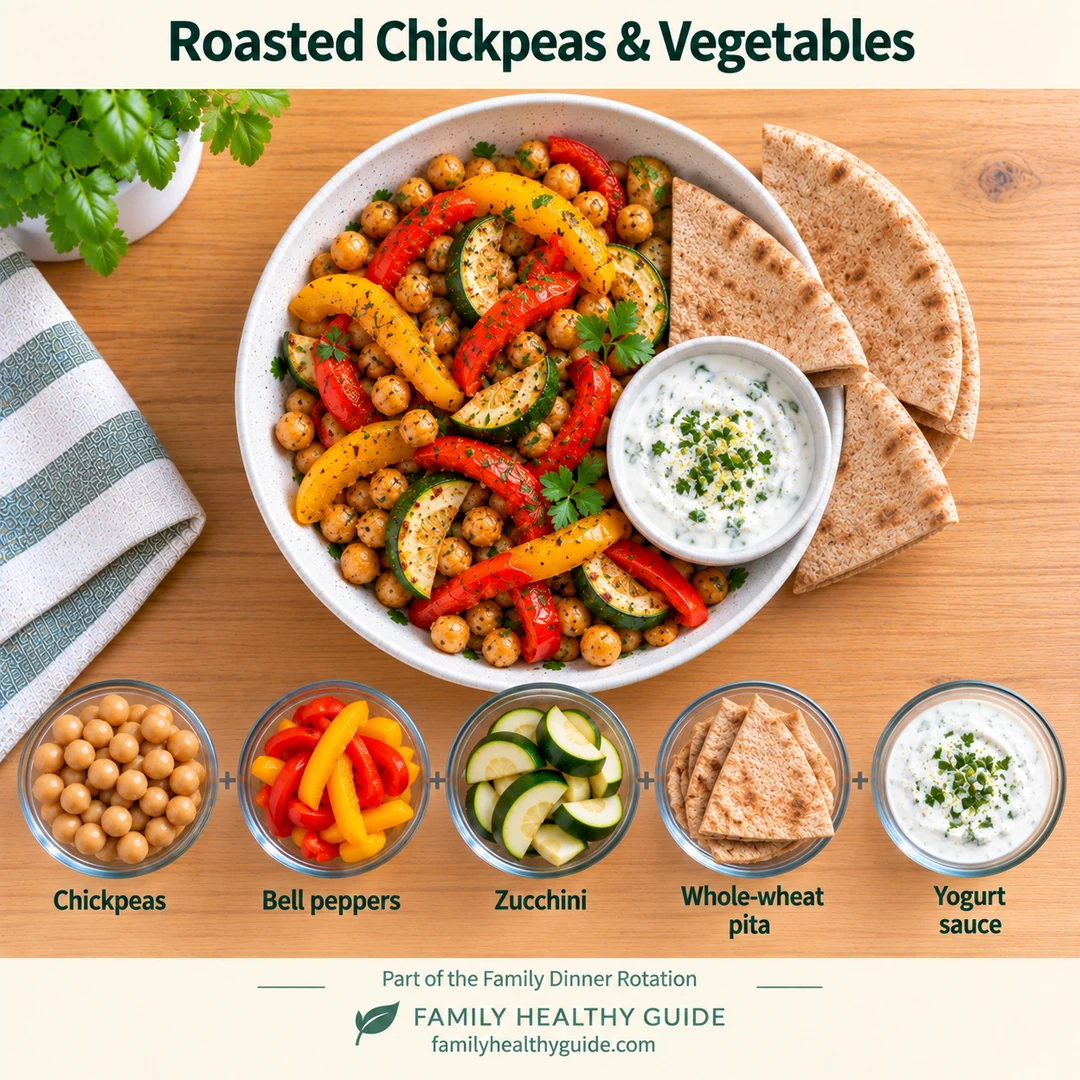
Examples only — these show what each dinner type looks like, not a recommended menu.
Friday can be your flexible night. The goal is a rotation your family can actually keep, not a perfect plan every week.
Your 15-Meal Bank
These examples are built around MyPlate principles: plenty of vegetables and fruit, whole grains, varied protein foods, and dairy or fortified soy alternatives when they fit the meal. This is an example bank — yours will look different, and that’s the point.
| Dinner type | Idea 1 | Idea 2 | Idea 3 |
|---|---|---|---|
| Bowl | Chicken & brown rice bowls — broccoli, shredded carrots | Turkey & black bean taco bowls — brown rice, tomatoes, corn, avocado | Salmon & brown rice bowls — cucumber, broccoli, carrots |
| Taco / Wrap | Fish tacos on corn tortillas — cabbage slaw, tomato, fruit on the side | Black bean & cheese quesadillas on whole-wheat tortillas — peppers, spinach | Turkey & hummus whole-wheat wraps — cucumber, spinach, carrot, fruit on the side |
| Pasta | Whole-wheat penne with chicken — zucchini, tomatoes, peppers | Lentil tomato pasta — spinach, mushrooms, side salad | Turkey meatballs with whole-wheat pasta — roasted zucchini, side salad |
| Sheet-Pan | Sheet-pan chicken with broccoli & peppers — served with brown rice | Sheet-pan salmon with green beans & tomatoes — served with quinoa | Sheet-pan chickpeas & vegetables — whole-wheat pita, yogurt sauce |
| Flexible | Garden salad with grilled chicken — mixed vegetables, chickpeas, whole-grain roll | Grilled fish or chicken with vegetables — brown rice on the side | Family leftover night — lunch leftovers, fruit and Greek yogurt |
Recipes for These Dinner Types
Two of these dinner types are written out in full on FHG, with the quantities, times, and steps taken from official U.S. government recipe sources:
- Sheet Pan Chicken and Vegetables with Sweet Potato, Broccoli & Red Pepper — a sheet-pan night, 45 minutes, 2 servings
- Shrimp and Broccoli Pasta — a pasta night, 20 minutes, 6 servings
- Slow Cooker Stuffed Peppers — a slow-cooker night, 10 minutes of prep, 6 servings
Fill this in and print it — this is the part that goes on the fridge.
My Family Dinner Rotation
1. My 15-Meal Bank
| Dinner type | Meal 1 | Meal 2 | Meal 3 |
|---|---|---|---|
| Bowl | |||
| Taco / Wrap | |||
| Pasta | |||
| Sheet-Pan | |||
| Flexible |
2. My 3-Week Rotation
| Week | Mon | Tue | Wed | Thu | Fri |
|---|---|---|---|---|---|
| Week 1 | 1 | 4 | 7 | 10 | 13 |
| Week 2 | 2 | 5 | 8 | 11 | 14 |
| Week 3 | 3 | 6 | 9 | 12 | 15 |
This Week
| Mon | Tue | Wed | Thu | Fri |
|---|---|---|---|---|
Turn the Bank Into a 3-Week Rotation
Number your 15 meals 1 to 15, then run them in order. Three weeks, then start again.
The rotation isn’t a rule that every meal has to happen exactly as written. It’s a starting point that removes the blank page. Swap any night. The structure survives.
The Keep / Replace Test
After dinner, the useful question isn’t was that healthy enough. It’s would we make this again?
Keep a meal if:
- someone in the family actually ate it
- it was reasonably easy to make
- the ingredients were easy to find
- you’d be willing to repeat it
If a meal fails repeatedly, replace it. Don’t force it into the rotation. A bank of 15 meals should get better through use, not stay fixed.
When Picky Eating Makes Dinner Hard
You don’t necessarily need to cook a second dinner.
A simpler approach is to build the family meal in layers: family meal + one familiar food + one optional food.
If dinner is a chicken bowl, the family eats the bowl. Your child gets a component they already accept — the rice, the chicken — and the vegetable is on the table without pressure to eat it.
The goal isn’t to get every child to eat every food. It’s to make family dinners predictable enough to repeat while leaving room for individual preferences.
For more help with picky eating and trying new foods, see our guide: Picky Eaters & Trying New Foods.
Your 10-Minute Weekly Reset
Once a week:
- Look at the next five meals.
- Check what you already have.
- Buy only what’s missing.
- Replace one meal if the family consistently rejected it.
That’s the whole maintenance job. You’re not building a new meal plan every week — you’re keeping one running.
What to Keep in the Pantry & Freezer
A short list, not a shopping system. These are the staples that make the five dinner types fast.
- Proteins: chicken, eggs, beans, canned or frozen fish, ground turkey
- Carbs: rice, pasta, tortillas, potatoes
- Produce: frozen vegetables, carrots, broccoli, tomatoes, cucumbers
- Extras: cheese, yogurt, hummus, a couple of simple sauces
The one buying rule worth following: choose ingredients that work across more than one dinner type. Tortillas cover taco night and wraps. Frozen vegetables cover bowls and sheet-pan nights.
Many of the same staples carry into lunchboxes — see Healthy School Lunch Ideas.
Why Repetition Can Help
Repeated exposure to a food can increase acceptance, but there’s no fixed number of exposures that works for every child. If repeating a food isn’t changing your child’s response, reassess rather than adding pressure.
Familiarity is useful. Pressure is not. That’s one reason this system doesn’t ask you to invent new meals constantly.
Print Your Rotation
Fill in your 15 meals and your week, then print the plan and put it where you decide dinner — the fridge, the inside of a cupboard door, wherever the question gets asked.
Looking for something broader? The 7-Day Healthy Family Reset covers breakfasts, lunches, dinners and snacks across a full week.