Head Lice at School: What Parents Need to Know, Check & Do
Quick Answer
Head lice are common, are not linked to hygiene, and do not spread disease. A child’s first infestation may cause no itching for weeks, so absence of itching is not proof they are clear — finding a live louse is the most reliable confirmation. Most children do not need to miss school: current guidance is that a child can finish the school day, be treated at home, and return. Extensive house cleaning is not necessary.
The note comes home in the backpack, or the text arrives from the school office: there has been a case of head lice in your child’s class. Within about ten seconds most parents have mentally started stripping beds, bagging stuffed animals, and cancelling the evening.
Almost none of that is necessary. Head lice are genuinely unpleasant and genuinely annoying to clear, but they are also one of the most over-reacted-to problems in school-age childhood — and a great deal of the standard advice parents receive is either outdated or was never accurate to begin with.
This guide covers what to check, what to do, and what you can safely skip. It is part of our back-to-school guide for parents.
First, what head lice actually are
Head lice are small wingless insects that live close to the scalp and feed on tiny amounts of blood. In the United States they are most common in children roughly aged 3 to 11, with an estimated 6 to 12 million infestations each year.
Two things are worth establishing before anything else, because they change how the whole situation feels.
They are not a hygiene problem. Head lice infest people across every socioeconomic level, regardless of how often hair is washed. Washing with ordinary soap and water does little to disturb them, because they grip the hair shaft with specialised claws. Rates are also no different between children with long hair and children with short hair.
They do not spread disease. Head lice are a nuisance rather than a health hazard. The main medical risk is secondary: scratching hard enough to break the skin can lead to a bacterial infection, which is worth watching for but is not the usual outcome.
Key Facts
- An estimated 6–12 million infestations occur each year in US children aged 3–11.
- With a first infestation, itching may not develop for 4 to 6 weeks — no itching does not mean no lice.
- Finding a live crawling louse is the most reliable confirmation. Nits alone suggest but do not confirm an active infestation.
- Lice cannot jump or fly. They crawl, and spread mainly through direct head-to-head contact.
- Head lice usually survive less than a day away from the scalp at room temperature.
- Current guidance: a child can finish the school day, be treated at home, and return. The AAP and the National Association of School Nurses both oppose “no-nit” exclusion policies.
Can your child have lice without itching?
Yes — and this is the single most useful thing in this article.
The itching associated with head lice is an allergic reaction to louse saliva, not a direct result of the bites themselves. That sensitivity has to develop, and with a first case of head lice it may not appear for 4 to 6 weeks.
So when a note comes home and you ask your child whether their head is itchy and they say no, that answer carries almost no information. A child can be carrying an established infestation and feel nothing at all. Check anyway.
Other signs that are worth noticing, though none of them confirm anything on their own:
- A tickling sensation, or a feeling of something moving in the hair
- Difficulty sleeping or unusual restlessness at night — lice are more active in the dark
- Irritability
- Small sores on the scalp or at the nape of the neck from scratching
How to check your child properly
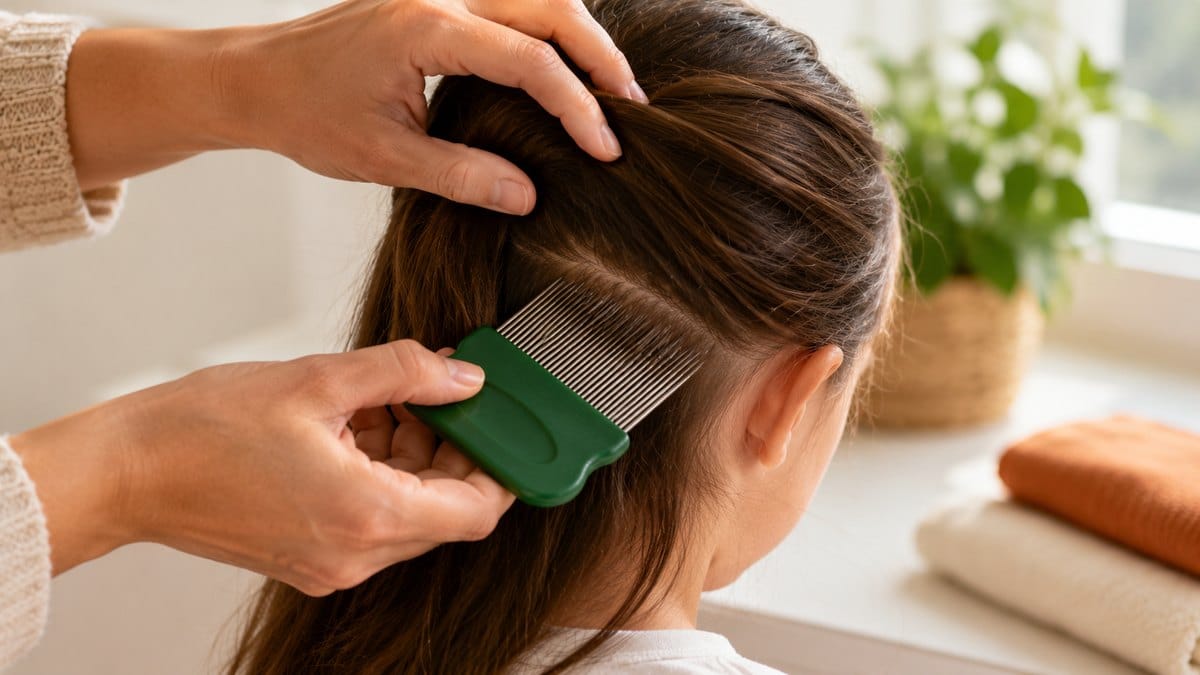
Do this in good light, with your child sitting still — near a window in daylight is easier than under a bathroom bulb. A magnifying glass genuinely helps. Work through the hair in small sections rather than sweeping through it.
Where to look first: behind the ears, and along the hairline at the nape of the neck. These are where lice and nits concentrate.
What confirms it, and what doesn’t
Finding a live crawling louse — an adult or a nymph — is the most reliable way to confirm an active infestation. It is also not easy: adult lice are small, they move fast, and they avoid light.
Nits — the eggs — are easier to see but much weaker evidence, and this is where most misdiagnosis happens:
- Nits within about ¼ inch of the scalp strongly suggest an active infestation, but do not confirm one.
- Nits further than ¼ inch from the scalp are usually either empty casings from eggs that already hatched, or eggs that will not hatch. They can persist in hair long after an infestation has been cleared.
Telling nits from dandruff
The test is simple and reliable: try to flick it off the hair. Dandruff, dried hair product, and general debris come away easily. Nits are cemented to individual hair shafts and will not budge — you have to slide them down the hair with a fingernail or a fine-toothed comb.
Nits look like tiny seeds, white to yellow-brown, roughly the size of a knot in a thread, and always attached to a hair rather than sitting loose on the scalp.
Does your child have to stay home from school?
In most cases, no — and this is worth understanding properly, because there is a lot of confused reporting about it.
The current guidance is that a child found to have head lice does not need to be sent home early. They can remain at school for the rest of the day, go home at the normal time, begin treatment, and return to class. Head lice do not transmit disease, so they are not a health hazard to other students.
Both the American Academy of Pediatrics and the National Association of School Nurses have also called for “no-nit” policies — requiring a child to be completely free of nits before returning — to be abandoned. Nits bond firmly to hair shafts and are very unlikely to transfer to another person, and many of them are not viable in the first place.
A point of confusion worth clearing up
In August 2024 a wave of news coverage reported that the CDC had “changed” or “updated” its head lice guidance to let children stay in school. Many articles online still describe it that way.
It was not a change. A CDC spokesperson stated that the guidance had been the same for roughly a decade, and that the confusion appears to have come from a redesign of the CDC website that moved the guidance higher up the page, making long-standing advice look new.
This matters practically. If your child’s school still operates a no-nit policy, it is not out of step with a recent rule change — it has been out of step with public health guidance for years. That is a reasonable thing to raise with a school nurse, calmly, with the AAP and NASN positions in hand.
One caveat: schools and districts set their own attendance policies. Guidance is guidance, not a rule schools are obliged to follow, so check what your school actually does rather than assuming.
How head lice actually spread
Lice cannot jump, hop, or fly. They have no wings. They crawl, quickly, and they cling hard.
That single fact reframes almost everything about transmission. Spread happens overwhelmingly through direct head-to-head contact — hair touching hair. In practice that means hugging, huddling over a phone, sharing a pillow at a sleepover, selfies, and close play. Within families and among close friends is where it usually travels.
Transmission through shared objects — hats, scarves, brushes, headphones, pillows — is possible but much less common. It is also time-limited: head lice usually survive less than a day away from the scalp at room temperature, because they need to feed. An item that has not been near an infested head very recently is not a realistic source.
Pets do not carry or spread head lice. Dogs, cats, and other animals are not part of this at all.
What you actually need to clean at home
Far less than you think. The CDC states directly that spending significant time and money on housecleaning is not necessary to prevent reinfestation, and that insecticide sprays and fogs should not be used — they add chemical exposure without adding benefit.
The evidence behind that is more striking than most parents expect. The AAP clinical report cites a study in which 118 classroom carpets were examined and no lice were found, despite more than 14,000 live lice being found on the heads of 466 children using those same classrooms. A second study found live lice on only 4% of pillowcases used by infested volunteers. Direct head-to-head contact matters far more than the environment.
What is reasonable:
- Wash bedding, hats, and clothing used by the infested person in the two days before treatment, in hot water, and dry on a hot cycle.
- Soak combs and brushes in hot water for a few minutes.
- Vacuum the floor and furniture where the person has recently been sitting or lying.
- Items you cannot wash can be sealed in a bag for a couple of days. You do not need to seal everything in the house for weeks.
What you can skip: bagging every soft toy in the house, washing every item of clothing everyone owns, professional carpet cleaning, and any kind of insecticide spray.
What about treatment?
Treatments fall into two groups: over-the-counter products, and prescription products for when those fail. This section is an overview, not a treatment plan — the right choice depends on your child’s age, what has already been tried, and local resistance patterns, which is a conversation for your pediatrician or pharmacist.
Over-the-counter. The FDA-approved OTC options contain either permethrin 1% or pyrethrins combined with piperonyl butoxide. Both kill live lice. Neither of these OTC options reliably kills eggs, so a second treatment is generally needed to catch newly hatched lice before they can lay their own. Not every product works this way — some prescription treatments require only one application — so follow the instructions for the specific product rather than assuming a general rule.
Resistance is real. Lice have developed resistance to permethrin and pyrethrins in many areas, though how widespread it is has not been well measured. If a full course including retreatment does not work, that is a reason to speak to your pediatrician rather than to repeat the same product a third time.
Prescription options exist for resistant cases and include benzyl alcohol, malathion, spinosad, and topical ivermectin. These are prescribed based on age and circumstances.
Two practical points that prevent unnecessary retreatment:
- Itching can continue for several days after treatment as the scalp irritation settles. By itself, that does not prove treatment failed.
- Remaining nits are not evidence of failure. Successful treatment kills crawling lice; nits can stay attached to hair afterwards.
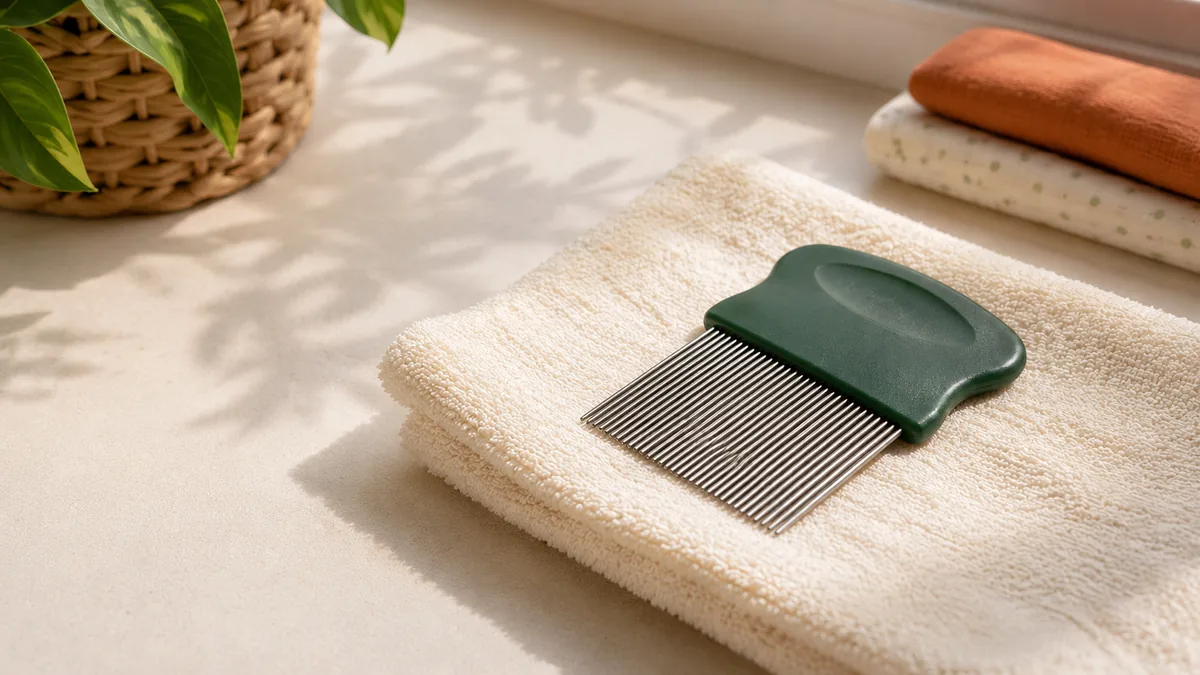
Combing with a fine-toothed nit comb is a useful complement to treatment and a good way to monitor whether live lice are still appearing.
Does hair type affect the risk?
Head lice can affect anyone, but studies have found differences in infestation rates among children with different hair characteristics. Head lice are reported less often in Black children, and one proposed explanation is that the shape and texture of tightly curled hair make it harder for lice to grip the hair shaft and move through it.
This does not mean Black children cannot get head lice. Any child can become infested after close head-to-head contact, and the same checking and treatment guidance applies.
The conversation with your child, and with the school
How this is handled socially matters more than most parents expect. Exclusion and public identification can affect a child’s emotional and social wellbeing, and the stigma often does more damage than the lice.
With your child: keep it matter-of-fact. Lice are common, they happen to millions of children a year, and they have nothing to do with being clean or unclean. A child who understands that is far less likely to hide symptoms next time — which is exactly the behaviour you want.
With the school: tell them. It lets them notify other families so children can be checked, which is what actually limits spread. Ask what their policy is, and if it requires exclusion until no nits remain, that is worth a polite conversation with the school nurse.
What not to do: try to work out who gave it to whom. It is not knowable, it is not useful, and it turns a routine problem into a social one. If your child is already anxious about school, this kind of episode can make it worse — our guide to back-to-school anxiety in kids covers the wider signs.
Parent checklist
- Check, regardless of itching. Good light, small sections, behind the ears and the nape of the neck.
- Confirm with a live louse where you can. Nits close to the scalp raise suspicion; distant nits usually mean an old or cleared infestation.
- Check the rest of the household. Close contacts are the likely route.
- Treat with an appropriate product and follow the label, including retreatment timing.
- Tell the school and ask about their policy.
- Clean selectively — recent bedding, clothing, hats, brushes. Skip the deep clean and the sprays.
- Recheck according to the product instructions, and speak to your pediatrician if live lice are still appearing after a full course.
When to call your pediatrician
Speak to your child’s pediatrician if live lice are still present after completing a full course of treatment including retreatment, if the scalp shows signs of bacterial infection such as spreading redness, swelling, pus, or crusting, if your child is very young, or if you are unsure whether what you are looking at is lice at all. Diagnosis is genuinely difficult, and a school nurse or clinician who checks heads regularly will be faster and more accurate than a worried parent at 9pm.
Frequently asked questions
Can my child have head lice without itching?
Yes. Itching is an allergic reaction to louse saliva and the sensitivity has to develop. With a first case of head lice it may not appear for 4 to 6 weeks, so a child can have an established infestation and feel nothing. Check the scalp rather than relying on whether your child reports itching.
Does my child have to stay home from school with head lice?
Usually not. Current guidance is that a child does not need to be sent home early — they can finish the school day, be treated at home, and return to class. Head lice do not transmit disease, and the AAP and the National Association of School Nurses both oppose “no-nit” exclusion policies. Individual schools set their own attendance rules, so check yours.
How do I tell nits from dandruff?
Try to flick it off. Dandruff, hair product residue and debris come away easily; nits are cemented to individual hair shafts and have to be slid down the hair with a fingernail or comb. Nits look like tiny white or yellow-brown seeds attached to a hair.
Can head lice jump from one child to another?
No. Lice have no wings and cannot jump, hop or fly — they crawl. Spread happens mainly through direct head-to-head contact. Shared hats, brushes or pillows can transmit lice but much less commonly, and only if used very recently.
Do I need to deep-clean my house?
No. The CDC states that extensive housecleaning is not necessary, and that insecticide sprays and fogs should not be used. Wash bedding, hats and clothing used in the two days before treatment in hot water, soak combs and brushes, and vacuum where the person has been. Head lice usually survive less than a day away from the scalp.
Why didn’t the treatment work?
Common reasons include skipping a needed second treatment, applying the product incorrectly, or resistance, which has been documented for permethrin and pyrethrins. Note that itching afterwards and remaining nits are not by themselves evidence of failure. If live lice are still appearing after a full course, speak to your pediatrician about an alternative rather than repeating the same product.
Are head lice a sign of poor hygiene?
No. Head lice affect people across all socioeconomic levels regardless of how often hair is washed, and rates are no different for long versus short hair. Lice grip the hair shaft with specialised claws, and ordinary washing does little to disturb them.
Sources
- Centers for Disease Control and Prevention — head lice: about, clinical care, and treatment guidance.
- American Academy of Pediatrics, Council on School Health and Committee on Infectious Diseases — Head Lice, clinical report, Pediatrics.
- American Academy of Pediatrics — HealthyChildren.org, Head Lice: What Parents Need to Know.
- National Association of School Nurses — position on head lice management and school exclusion.
- California Department of Public Health — Guidance on Head Lice Prevention and Control for K–12 Schools.
- Mayo Clinic — head lice: symptoms and causes.
- Reporting on CDC clarification that its school head lice guidance was unchanged, following August 2024 coverage.
This article is educational content based on established public health guidance. It is not a treatment plan and does not replace individual medical advice. Talk to your child’s pediatrician or pharmacist about which treatment is appropriate for your child, and if live lice persist after a full course of treatment.