Why Do Teenagers Get Acne? The Science Behind Hormones, Stress, and Skin
If you’re the parent of a teenager with acne, you’ve probably watched them stare at the mirror longer than they’d like to admit. You’ve probably also tried to help — and felt like nothing you said landed quite right.
That’s because most of what we’ve been told about teenage acne is incomplete. Modern dermatology tells a far more complex — and more hopeful — story.
🔍 Quick Answer
Teenagers get acne because puberty increases androgen hormones, which directly stimulate oil production in the skin. Stress, poor sleep, certain dietary patterns, and genetics can significantly worsen it. The good news: evidence-based treatments can reduce acne in most teens — starting with understanding the biology behind it.
1. What Is Acne?
Acne is a chronic inflammatory condition of the hair follicles and sebaceous (oil) glands. It appears when four things happen simultaneously:
- Excess sebum production — the skin produces too much oil
- Dead skin cell buildup — pores become blocked
- Bacterial overgrowth — Cutibacterium acnes bacteria multiply
- Inflammation — the immune system responds
In teenagers, all four of these factors are activated at the same time — primarily because of one powerful trigger: puberty.
2. Hormones and Puberty
During puberty, the brain’s hypothalamus signals the pituitary gland to release hormones that trigger the production of androgens — including testosterone — in both boys and girls.
These androgens directly stimulate the sebaceous glands to produce more sebum. More oil means more blocked pores. More blocked pores mean more bacteria. More bacteria mean more inflammation. That’s acne.
This is why acne typically peaks between ages 14 and 19, and why it often improves in the early 20s as hormone levels stabilize.
What this means for parents: Your teenager’s acne is not their fault. It’s not poor hygiene. It’s the same hormonal system driving their growth, brain development, and emotional maturation.
3. Stress and Acne
Here’s what most parents don’t know: stress makes acne significantly worse — and the mechanism is direct.
When a teenager experiences stress — from school pressure, social anxiety, or sleep deprivation — the brain activates the HPA axis and releases cortisol, the primary stress hormone.
Cortisol does two things that directly worsen acne:
- It increases sebum production by stimulating the sebaceous glands
- It amplifies inflammation throughout the body, including in the skin
This creates a painful loop many teens experience: acne causes embarrassment → embarrassment causes stress → stress causes more acne.
A study published in the Archives of Dermatology found that acne severity increased significantly during exam periods — not because of diet changes, but because of elevated cortisol. (Chiu et al., 2003)
Sleep matters too. The average American teenager gets only 6.5–7 hours of sleep per night — well below the 8–10 hours recommended. Sleep deprivation raises cortisol, disrupts skin repair, and weakens the immune response against C. acnes bacteria.
Practical takeaway: Helping your teenager manage stress and prioritize sleep isn’t just good for their mental health — it’s an active acne treatment.
4. The Gut-Skin Connection
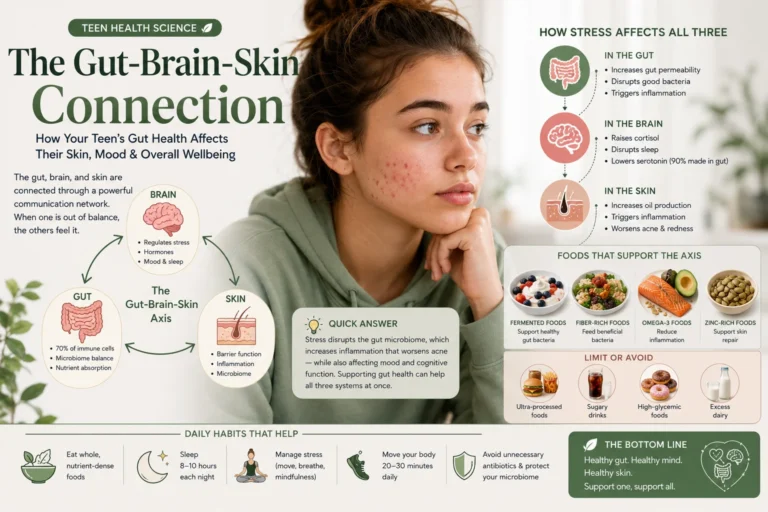
One of the most exciting areas of current research involves the gut-skin axis — the relationship between digestive microbiome health and skin inflammation.
Key findings:
- High-glycemic diets (white bread, sugary drinks) increase insulin and IGF-1, which directly stimulate sebum production (Smith et al., 2007)
- Dairy consumption, particularly skim milk, has been linked to acne in multiple studies (Adebamowo et al., 2005)
- Probiotics have shown modest but real benefits in reducing acne severity in clinical trials
Diet alone rarely causes acne — but it can meaningfully amplify it.
5. What Actually Works
For Mild to Moderate Acne
| Approach | Evidence Level | Notes |
|---|---|---|
| Benzoyl peroxide (2.5–5%) | ⭐⭐⭐⭐⭐ Strong | Kills C. acnes, reduces inflammation |
| Salicylic acid (0.5–2%) | ⭐⭐⭐⭐ Good | Unclogs pores, gentle exfoliation |
| Niacinamide (4–10%) | ⭐⭐⭐⭐ Good | Reduces sebum, calms inflammation |
| Low-glycemic diet | ⭐⭐⭐ Moderate | Reduces insulin spikes |
| Stress management | ⭐⭐⭐ Moderate | Lowers cortisol directly |
| Consistent sleep (8–10h) | ⭐⭐⭐ Moderate | Supports skin repair and immunity |
For Moderate to Severe Acne
A dermatologist visit is essential. Options include topical retinoids, antibiotics, hormonal therapy (for girls), or isotretinoin for severe cases.
What Doesn’t Work
- Toothpaste on pimples — can cause chemical burns
- Excessive face washing — strips the skin barrier, worsens inflammation
- Sun exposure — temporarily masks redness, causes long-term damage
- “Miracle” products without peer-reviewed backing — skip them
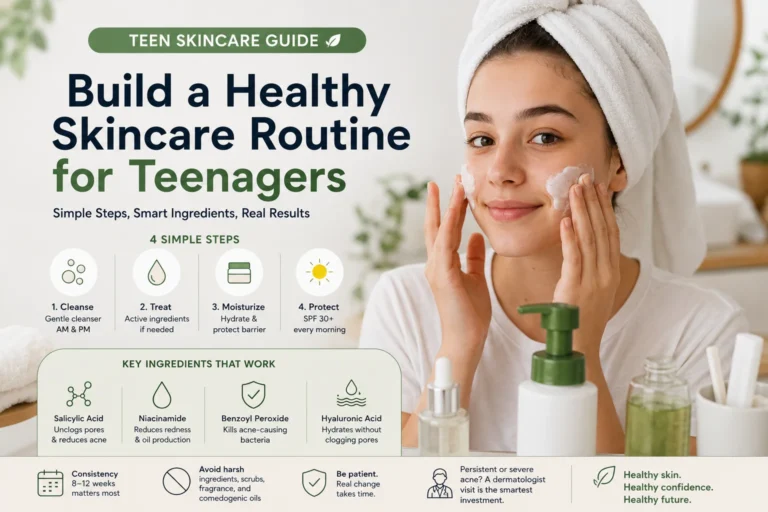
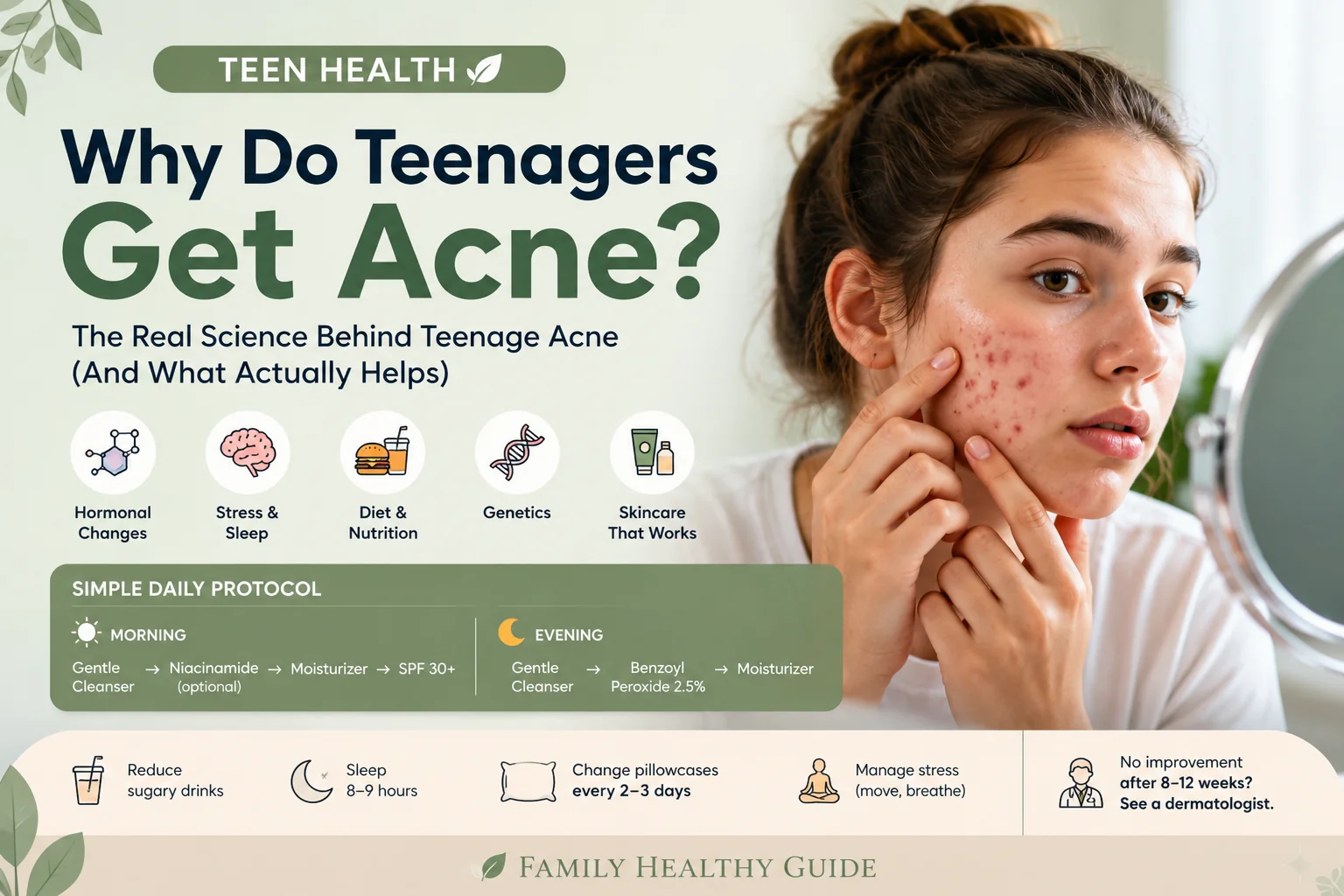
Simple Daily Protocol
Morning: Gentle cleanser → Niacinamide (optional) → Moisturizer → SPF 30+
Evening: Gentle cleanser → Benzoyl peroxide 2.5% → Moisturizer
Weekly habits: Reduce sugary drinks, prioritize 8–9 hours sleep, change pillowcases every 2–3 days, manage stress through movement or breathing exercises.
No improvement after 8–12 weeks? See a board-certified dermatologist.
✅ Key Takeaways
The Bottom Line
Teenage acne is not a sign of poor hygiene or personal failure. It is a biological response to puberty, shaped by hormones, genetics, stress, sleep, and lifestyle factors. The encouraging news is that modern dermatology offers effective, evidence-based treatments that can help most teens achieve healthier skin — and greater confidence.
Understanding why this is happening to their body is the first step toward real change.
6. Frequently Asked Questions
Why do teenagers get acne during puberty?
Puberty triggers a rise in androgen hormones, which stimulate the sebaceous glands to produce more oil. Excess oil, combined with dead skin cells and bacteria, leads to clogged pores and inflammation.
At what age is teenage acne the worst?
Acne typically peaks between ages 14 and 19. Most teens see improvement in their early 20s as hormones stabilize, though some experience it into adulthood.
Can stress cause acne in teenagers?
Yes — directly. Stress raises cortisol, which increases sebum production and triggers skin inflammation. Stress management is a legitimate, science-backed part of acne treatment.
Does diet affect teenage acne?
High-glycemic foods and dairy may worsen acne in some individuals by elevating insulin and IGF-1 levels. Diet alone rarely causes acne, but it can amplify it.
When should a teenager see a dermatologist?
If over-the-counter treatments haven’t worked after 8–12 weeks, or if acne is severe, painful, or causing significant emotional distress, see a board-certified dermatologist.
Is teenage acne genetic?
Yes. If one or both parents had significant acne during adolescence, their children are more likely to experience it — though lifestyle factors remain highly influential.
Scientific References
- Chiu, A., Chon, S.Y., & Kimball, A.B. (2003). The response of skin disease to stress. Archives of Dermatology, 139(7), 897–900.
- Smith, R.N., et al. (2007). High-protein, low glycemic–load diet and acne. Journal of the Academy of Nutrition and Dietetics, 107(6), 924–934.
- Adebamowo, C.A., et al. (2005). High school dietary dairy intake and teenage acne. Journal of the American Academy of Dermatology, 52(2), 207–214.
- Tan, J.K.L., et al. (2001). Prevalence and severity of acne. JAMA Dermatology, 137(5), 573–577.
- Zouboulis, C.C., & Jourdan, E. (2022). Sebaceous gland activity and acne. Journal of Investigative Dermatology, 142(3), 777–784.
At Family Healthy Guide, we believe understanding the science behind your child’s health empowers better decisions. This article is for informational purposes only. Always consult a qualified dermatologist for personalized medical advice.