15 Healthy Eating Habits for Kids
Estimated reading time: 10–12 minutes
Raising a healthy eater isn’t about a single perfect meal — it’s about the small habits that repeat, day after day, year after year. The good news is that healthy eating habits are learnable, and the earlier they’re established, the more naturally they tend to stick.
This guide brings together the everyday healthy eating routines for kids — not recipes or meal plans — that support a lifelong healthy relationship with food. Think of it as the behavioral foundation underneath everything else in a family’s approach to nutrition.
In this evidence-based guide, you’ll find 15 simple, science-backed food habits that help children build healthy nutrition patterns they can carry into adulthood. This article is part of our Complete Guide to Kids’ Nutrition.
Quick Summary: Healthy eating habits are built through small, consistent daily choices rather than perfect meals. Simple routines—such as eating breakfast, drinking water, offering a variety of foods, and enjoying family meals—help children develop lifelong healthy relationships with food.
Why Healthy Eating Habits Matter
Nutrition science shows that what children eat matters, but so does how they learn to eat. Children who grow up around consistent, low-pressure, varied eating experiences are more likely to try new foods over time, regulate their own hunger and fullness, maintain a healthier relationship with food into adolescence and adulthood, and enjoy family meals rather than dread them.
Habits, not willpower, are what make healthy family eating habits sustainable for busy households.
15 Healthy Eating Habits for Kids
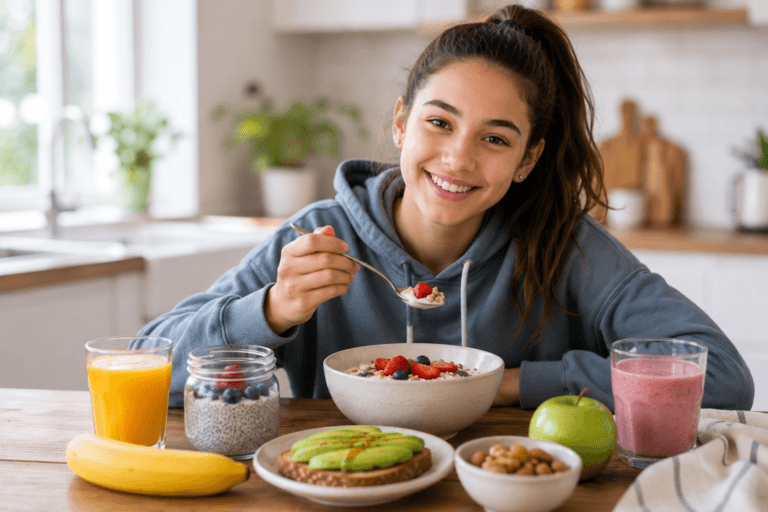
1. Eat Breakfast Regularly
A consistent breakfast habit supports energy and concentration through the morning. See Healthy Breakfast Ideas for Kids for quick, balanced options.
2. Drink More Water
Make water the default beverage at home, and keep it visible and accessible throughout the day. See Healthy Drinks for Kids for a full breakdown of what to serve and what to limit.
3. Eat Fruits and Vegetables Every Day
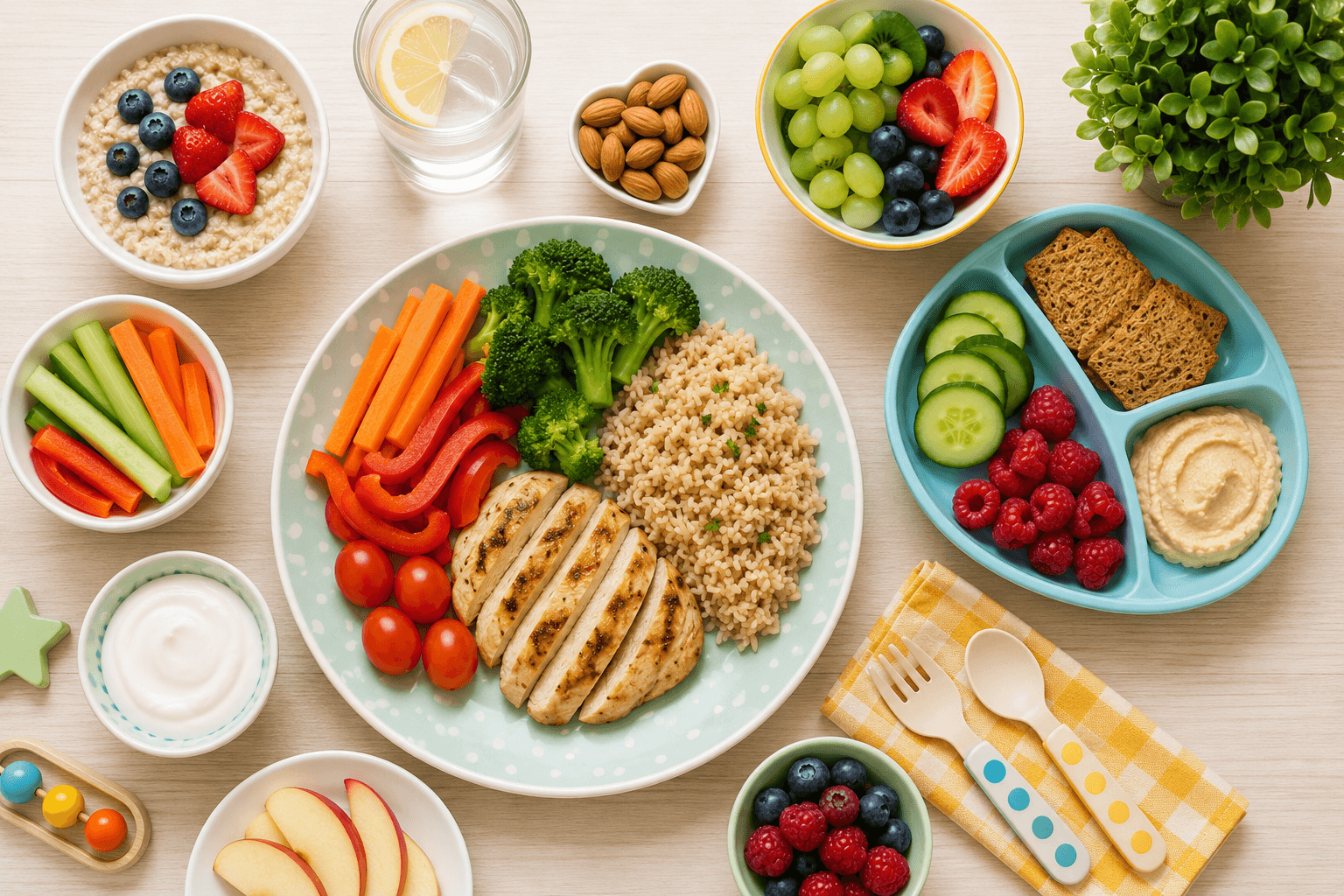
Aim for variety and color rather than perfection. Different colors often provide different vitamins, minerals, and plant compounds, so offering a variety of colorful fruits and vegetables throughout the week helps create a more balanced diet.
4. Choose Whole Grains
Swapping refined grains for whole grains most of the time adds fiber and supports steady energy. See Best High-Fiber Foods for Kids.
5. Include Protein at Every Meal
Protein helps children feel satisfied and supports steady growth. See Best High-Protein Foods for Kids.
6. Limit Sugary Drinks
Sodas, sweetened juices, and flavored drinks add sugar without much nutritional value. Reserve them for occasional treats rather than daily habits.
7. Read Nutrition Labels
Teaching kids (and parents) to glance at ingredient lists and sugar content builds lifelong label literacy. See How to Read Nutrition Labels for Kids’ Foods and Hidden Sugar in Kids’ Food.
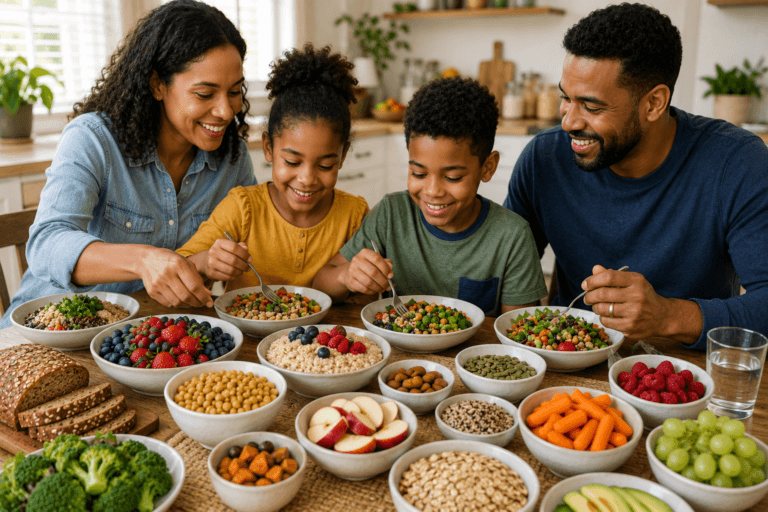
8. Eat Together as a Family
Shared meals are linked to better diet quality and stronger family connection. See Healthy Dinner Ideas for Busy Families.
9. Listen to Hunger and Fullness Cues
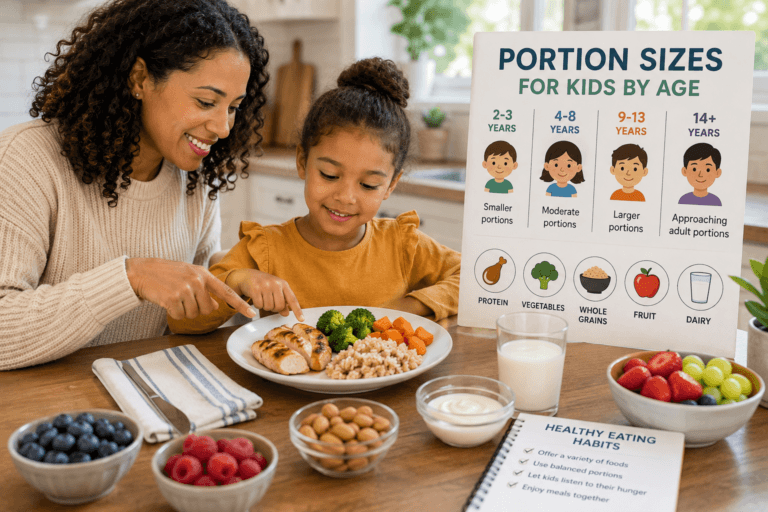
Avoid pressuring children to finish every bite. Let them learn to recognize when they’re full. See Portion Sizes for Kids by Age.
10. Try New Foods
Repeated, low-pressure exposure — not force — is what helps picky eaters gradually expand their diet.
11. Help Prepare Meals
Involving kids in grocery shopping, washing produce, or simple prep tasks builds ownership and curiosity about food. See Healthy Grocery List for Families.
12. Eat Slowly
Slower eating gives the body time to register fullness and makes mealtimes calmer.
13. Choose Healthy Snacks
Keep a rotation of easy, nutritious snacks on hand for between-meal hunger. See Healthy Snacks for Kids: 25 Nutritious Snack Ideas.
14. Keep Healthy Foods Visible
Store fruit on the counter and cut vegetables at eye level in the fridge — children are more likely to reach for what’s easiest to see and grab.
15. Build Consistency, Not Perfection
No single meal or day defines a child’s health. What matters is the overall pattern built through repeated, sustainable habits — see our full Weekly Healthy Meal Plan for Families for a practical framework.
15 Habits at a Glance
| Habit | Why It Matters |
|---|---|
| Eat breakfast regularly | Supports energy and focus |
| Drink more water | Healthiest default beverage |
| Eat fruits & vegetables daily | Fiber, vitamins, antioxidants |
| Choose whole grains | Steady energy, more fiber |
| Include protein at meals | Growth and satiety |
| Limit sugary drinks | Reduces added sugar intake |
| Read nutrition labels | Builds lifelong label literacy |
| Eat together as a family | Better diet quality, connection |
| Listen to hunger/fullness cues | Healthy relationship with food |
| Try new foods | Expands diet over time |
| Help prepare meals | Builds ownership and curiosity |
| Eat slowly | Supports natural fullness cues |
| Choose healthy snacks | Fills nutrition gaps between meals |
| Keep healthy foods visible | Makes the easy choice the healthy choice |
| Build consistency, not perfection | Long-term sustainability |
Turn Habits Into Action
| Daily Habit | Simple Family Action |
|---|---|
| Drink more water | Keep a reusable water bottle nearby |
| Eat fruit | Serve fruit with breakfast |
| Eat vegetables | Include one vegetable at dinner |
| Healthy snacks | Prepare snack boxes in advance |
| Family meals | Eat together at least 3 times per week |
Building One Habit at a Time
Trying to change everything at once often feels overwhelming. Instead, choose one healthy habit to practice each week. Once it becomes part of your family’s routine, introduce the next habit. Small, consistent changes are more sustainable than dramatic lifestyle overhauls.
Common Mistakes Parents Make
Common mistakes include turning mealtime into a battle over “clean plates,” labeling foods as strictly “good” or “bad,” offering healthy food only once and giving up after one refusal, using dessert as a reward or withholding it as punishment, and expecting immediate results instead of gradual habit change.
Frequently Asked Questions
How long does it take to build a new eating habit?
Habits vary by child and family, but consistent repetition over several weeks tends to make a new behavior feel automatic.
What if my child refuses most healthy foods?
Continue offering a variety without pressure. Many children need 10 or more exposures to a new food before accepting it.
Should treats be completely off-limits?
No. Occasional treats can be part of a balanced approach to eating and may reduce the likelihood of a child fixating on restricted foods.
Do these habits apply to picky eaters too?
Yes. These habits work especially well for picky eaters because they emphasize low-pressure exposure and consistency over forcing specific foods.
Is it too late to start building these habits with an older child?
No. Healthy eating habits can be introduced at any age, though younger children may adapt to new routines more quickly.
Key Takeaways
- Healthy eating is built through repeated daily habits, not a single perfect meal.
- Small, consistent choices — like keeping water visible or eating breakfast regularly — add up over time.
- Involving children in food prep and allowing them to listen to their own hunger cues builds a healthier long-term relationship with food.
- Progress matters more than perfection.
Continue Reading
- The Ultimate Guide to Kids’ Nutrition (Complete Guide)
- Healthy Breakfast Ideas for Kids
- Healthy Dinner Ideas for Busy Families
- Weekly Healthy Meal Plan for Families
- Healthy Grocery List for Families
- Portion Sizes for Kids by Age
- Healthy Snacks for Kids: 25 Nutritious Snack Ideas
- Healthy Drinks for Kids: Best & Worst Choices
Healthy eating habits look different for every family. These recommendations are intended for generally healthy children and should not replace individualized advice from your child’s healthcare provider.