Nightmares vs. Night Terrors: What’s the Difference? (Science-Based Guide)
Estimated reading time: 15–19 minutes
Your child sits up screaming in the middle of the night — eyes open, apparently awake, but not responding to you. Or your child wakes up crying, describing a scary dream in detail and reaching for a hug. These look similar in the moment, but nightmares and night terrors are different experiences with different causes, and knowing which one your child is having changes how you should respond.
This article is part of our complete Ultimate Guide to Healthy Sleep for Kids. Nightmares and night terrors are two of the causes covered in our guide to Why Kids Wake Up at Night — this article goes deeper into telling them apart.
Table of Contents
Quick Comparison · What Are Nightmares? · What Are Night Terrors? · Why They Happen · What Parents Should Do · When to Call a Pediatrician · FAQ
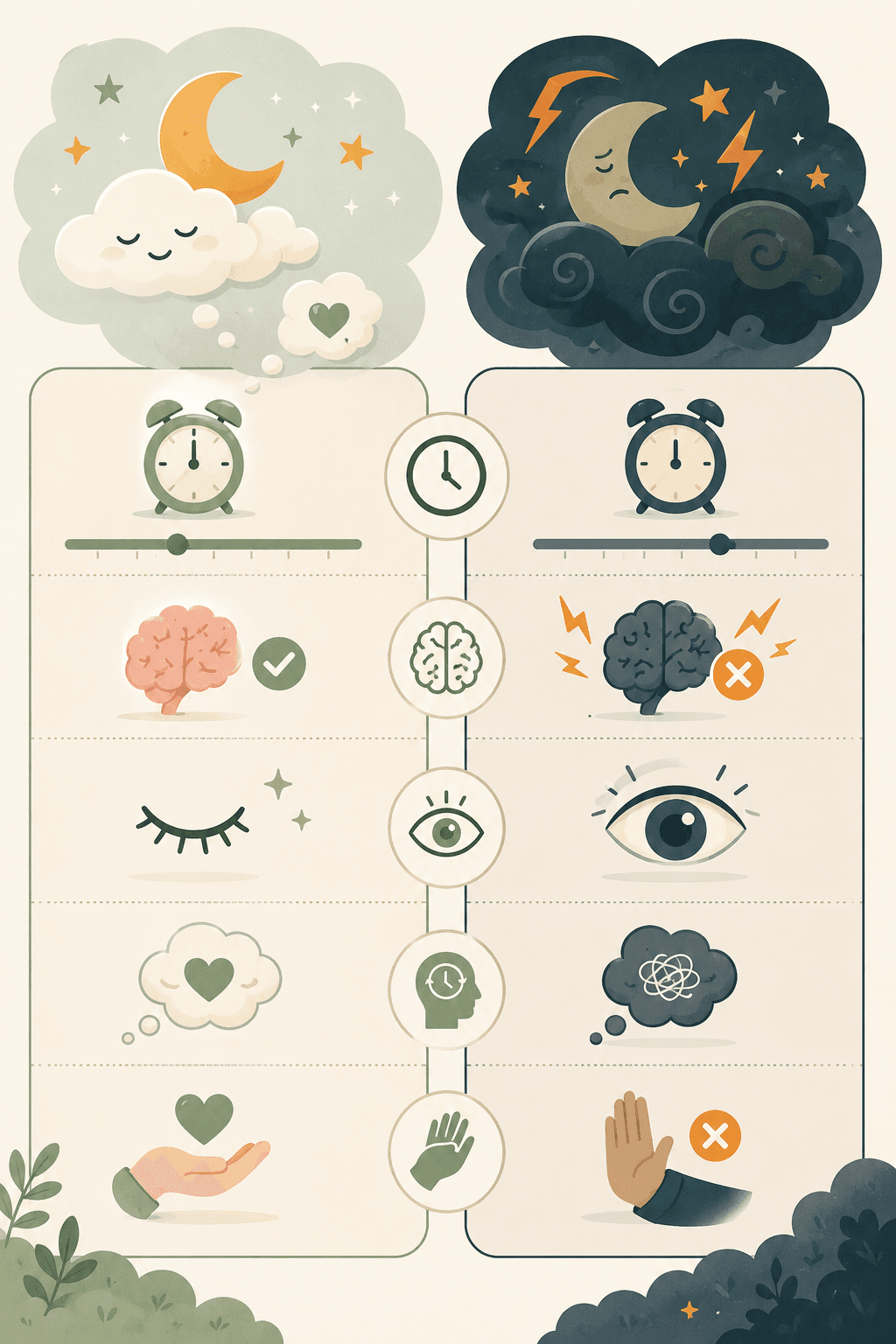
Quick Comparison: Nightmare vs. Night Terror
| Nightmare | Night Terror | |
|---|---|---|
| Sleep stage | REM sleep | Deep non-REM sleep |
| Timing | Second half of the night | First third of the night |
| Is the child awake? | Yes, fully awake and aware | No, remains asleep despite appearing awake |
| Do they remember it? | Yes, often in detail | No, rarely any memory the next day |
| Typical age | Can begin by 6 months; peaks ages 3–12 | Ages 3–7; usually subsides by age 10 |
| How common | Very common in childhood | Less common than nightmares; estimates vary widely |
| Best parent response | Comfort, reassure, talk about it | Ensure safety, avoid waking them, wait it out |
What Are Nightmares?
A nightmare is a frightening dream that occurs during REM sleep, most often in the second half of the night when dreaming is most intense. According to the American Academy of Pediatrics, children can begin having nightmares as early as 6 months of age, with occurrence peaking between ages 3 and 12.
During a nightmare, a child fully wakes up, is often visibly frightened, and can typically describe what happened in the dream. They usually seek comfort and may have some difficulty falling back asleep afterward.
🔬 Science Says
According to the Sleep Foundation, nightmares occur during REM sleep — the stage when the brain is nearly as active as it is while awake — which explains why children can recall nightmares vividly and describe specific storylines or characters.
What Are Night Terrors?
A night terror (also called a sleep terror) is a sudden partial arousal from deep, non-REM sleep, typically occurring in the first third of the night. Unlike a nightmare, a night terror is not connected to a remembered dream.
During an episode, a child may sit up, scream, thrash, sweat, or appear terrified — despite remaining asleep and unaware of what’s happening. They’re often difficult to console and may not recognize a parent trying to help. Episodes typically last a few minutes to around 20 minutes and resolve on their own, and children rarely have any memory of the event the next morning.
🔬 Science Says
Per the Mayo Clinic, sleep terrors happen in children between the ages of 1 and 12, occur much less often in adults, and most children outgrow them by their teenage years.
Why They Happen
Nightmares often reflect normal cognitive and emotional development — a growing imagination, new fears, or processing something stressful or unfamiliar the child encountered during the day.
Night terrors stem from the brain’s sleep architecture rather than dream content. Clinical reviews in StatPearls note strong correlations with fever or illness, lack of sleep and exhaustion, excessive physical activity, and emotional stress.
Neither nightmares nor night terrors indicate a psychological problem in most children — both are considered normal, common parts of childhood sleep.
What Parents Should Do During Each
During a nightmare:
- Go to your child and offer comfort right away
- Reassure them that you’re there and they’re safe
- Let them describe the dream if they want to
- Check for anything in the room that may have contributed (shadows, a scary show watched earlier)
- Allow a comfort object or a nightlight if it helps them settle back down
During a night terror:
- Focus on safety rather than trying to wake or console them
- Avoid shaking or shouting at your child — this doesn’t shorten the episode and can prolong distress
- Stay nearby and gently guide them if needed to prevent injury
- Wait calmly for the episode to pass; it usually resolves within a few minutes
- Don’t expect your child to remember it — there’s no need to bring it up unless they ask
For both, protecting a consistent, well-rested sleep schedule is one of the most effective preventive steps — see our Sleep Hygiene for Kids guide for the full set of habits that support this.
When to Call a Pediatrician
Most nightmares and night terrors don’t require medical attention. It’s worth a conversation with your child’s pediatrician if you notice:
- Very frequent nightmares that disrupt sleep or cause your child to fear going to bed
- Night terrors that happen very frequently, are unusually prolonged, or seem to put your child at risk of injury
- Episodes that continue well into the school-age years or beyond without decreasing
- Any signs of loud snoring or breathing pauses alongside the episodes, which can sometimes trigger arousal-based parasomnias
- Significant anxiety around bedtime that doesn’t improve with reassurance and routine
Frequently Asked Questions
What is the main difference between a nightmare and a night terror?
A nightmare fully wakes a child, who is frightened and can usually describe the dream. A night terror happens while a child remains asleep and unaware, and they typically have no memory of it afterward.
Should I wake my child during a night terror?
No. Waking a child during a night terror doesn’t shorten the episode and can increase distress. It’s better to ensure their safety and wait calmly for it to pass.
Are night terrors dangerous?
Night terrors are generally not dangerous or harmful in themselves, though supervision is important to prevent injury if a child moves around during an episode.
At what age do nightmares and night terrors stop?
Nightmares can occur at any age but often become less frequent after early childhood. Night terrors are most common in childhood and are usually outgrown by adolescence.
Can overtiredness cause night terrors?
Yes, lack of sleep and exhaustion are among the most commonly reported correlations with night terrors, along with fever or illness, excessive physical activity, and emotional stress.
Key Takeaways
- Nightmares happen during REM sleep and fully wake a child, who remembers and can describe the dream.
- Night terrors happen during deep non-REM sleep; the child remains asleep, appears distressed, and has no memory of it afterward.
- Comfort and reassurance help with nightmares; safety and patience are the best response to night terrors.
- Both are common and usually outgrown — persistent or unusually frequent episodes are worth discussing with a pediatrician.
For more on nighttime sleep disruptions, see our guide on Why Kids Wake Up at Night, strengthen your child’s overall sleep routine with Sleep Hygiene for Kids, or explore our complete Ultimate Guide to Healthy Sleep for Kids.
References
- American Academy of Pediatrics / HealthyChildren.org. Nightmares, Night Terrors & Sleepwalking in Children. healthychildren.org
- Mayo Clinic. Sleep Terrors (Night Terrors): Symptoms and Causes. mayoclinic.org
- Sleep Foundation. Nightmares in Children: Causes & Help. sleepfoundation.org
- Van Horn NL, Street M. Night Terrors. StatPearls [Internet]. National Center for Biotechnology Information (NCBI Bookshelf, NIH). ncbi.nlm.nih.gov
- Paruthi S, Brooks LJ, D’Ambrosio C, et al. Recommended Amount of Sleep for Pediatric Populations: A Consensus Statement of the American Academy of Sleep Medicine. J Clin Sleep Med. 2016;12(6):785–786. aasm.org
- Centers for Disease Control and Prevention. About Sleep. cdc.gov
This article is for informational purposes only and does not replace personalized medical advice. Consult your child’s pediatrician for guidance specific to your child’s sleep concerns.