Back-to-School Anxiety in Kids: Signs & How to Help
Estimated reading time: 10–12 minutes
The start of a new school year brings excitement, opportunities, and fresh beginnings. Yet for many children, it also brings uncertainty. Questions about new teachers, unfamiliar classmates, changing routines, academic expectations, and social situations can trigger feelings of worry that are stronger than many parents realize.
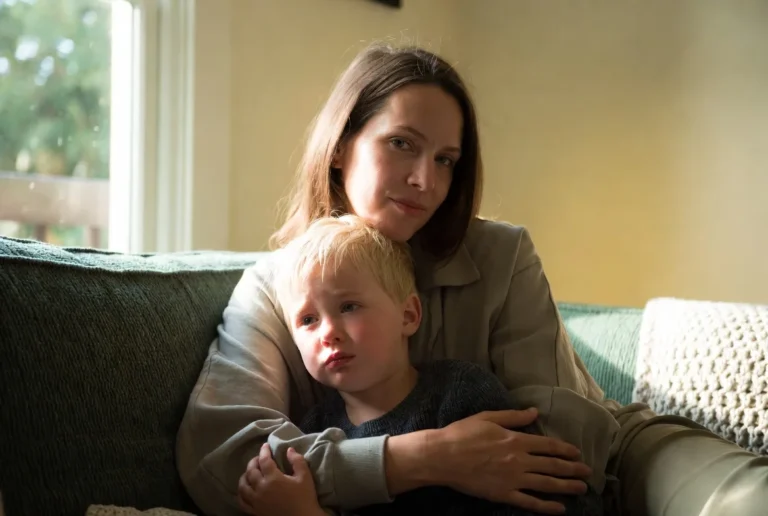
If your child has complained of a stomachache before school, struggled to fall asleep the night before the first day, or suddenly begged to stay home, you’re not alone. These reactions are common and, in many cases, are part of a normal adjustment process.
Back-to-school anxiety affects children of all ages—from preschoolers entering the classroom for the first time to teenagers facing new academic and social challenges. While some nervousness is expected during periods of transition, persistent anxiety can interfere with learning, sleep, friendships, and overall well-being if left unaddressed.
The good news is that parents can make a meaningful difference. Research consistently shows that calm, supportive parenting, predictable routines, and healthy coping strategies help children build resilience and adapt more confidently to school transitions. For a deeper look at how stress affects a child’s developing brain, see our science-based guide on how stress affects your child’s brain.
In this evidence-based guide, you’ll learn how to recognize the signs of back-to-school anxiety, understand why it happens, and discover practical, science-backed strategies that help children feel safe, confident, and ready for a successful school year.
What Is Back-to-School Anxiety?
Back-to-school anxiety refers to the feelings of fear, worry, or emotional distress that some children experience before or during the first weeks of a new school year.
It is not a medical diagnosis. Instead, it is considered a common emotional response to change. Just as adults may feel nervous before starting a new job, children can feel overwhelmed when facing unfamiliar teachers, classmates, routines, and expectations.
For most children, these feelings are temporary and gradually decrease once school becomes familiar again. However, when anxiety is intense, lasts for several weeks, or begins affecting daily functioning, additional support may be needed.
Is School Anxiety Normal?
Yes. In fact, child psychologists consider mild school-related anxiety a normal developmental response.
Children thrive on routines and predictability. During summer vacation, daily schedules often become more relaxed. Bedtimes shift later, mornings become slower, and school-related responsibilities disappear.
Returning to structured schedules requires children to readjust physically, emotionally, and socially—all at the same time.
Many children worry about questions like:
- Will I make new friends?
- What if my teacher doesn’t like me?
- What if my classes are too difficult?
- What if I get lost?
- What if something embarrassing happens?
These worries are usually temporary and improve as children become comfortable with their new environment.
Common Signs of Back-to-School Anxiety
Children don’t always have the words to explain their emotions. Instead, anxiety often appears through changes in their body, behavior, or mood. Rather than one obvious symptom, watch for patterns across these categories:
| Category | Common Signs |
|---|---|
| Physical | Stomachaches, headaches, nausea, loss of appetite, difficulty sleeping, nightmares, fatigue, increased crying before school |
| Emotional | Excessive worrying, irritability, frequent sadness, fearfulness, low confidence, mood swings, increased clinginess |
| Behavioral | Refusing to get dressed for school, asking to stay home repeatedly, complaining of illness only on school days, avoiding conversations about school, difficulty concentrating, seeking constant reassurance, withdrawing from friends or activities |
These symptoms are real—not “made up.” Stress activates the body’s natural fight-or-flight response, which can affect digestion, sleep, heart rate, and muscle tension. These behaviors are often a child’s way of communicating stress rather than misbehavior. Anxiety also looks different at different ages — see our guide to signs of anxiety in children by age for what to watch for from preschool through the teenage years.
Why Do Kids Feel Anxious About Going Back to School?
There isn’t one single cause. Instead, school anxiety usually develops from several factors happening at once.
| Cause | Description |
|---|---|
| Fear of the Unknown | A new classroom, unfamiliar teacher, different classmates, or even a different school building can create uncertainty that fuels anxiety. |
| Separation From Parents | Younger children often experience separation anxiety after spending weeks or months at home. Even older children may temporarily become more attached after long vacations. |
| Academic Pressure | Many students worry about homework, tests, grades, reading aloud, math, and keeping up with classmates. Perfectionistic children may feel especially overwhelmed. |
| Social Challenges | Children may worry about making friends, losing old friendships, being accepted, sitting alone at lunch, group activities, or bullying. |
| Changes in Routine | Returning to early mornings and busy schedules after a relaxed summer requires physical and emotional adjustment, which can temporarily increase stress. |
Which Children Are More Likely to Experience School Anxiety?
Although any child can feel nervous about returning to school, some children are more likely to experience stronger or longer-lasting anxiety.
These include children who are starting preschool, kindergarten, middle school, or high school; have recently moved to a new neighborhood or school; tend to be shy or slow to warm up in new situations; have experienced bullying or social difficulties in the past; live with learning differences, ADHD, or autism spectrum disorder; have previously been diagnosed with an anxiety disorder; or have experienced major life changes, such as divorce, the loss of a loved one, or a family move.
Being in one of these groups does not mean a child will struggle. It simply means they may benefit from extra preparation and reassurance before school begins.
What Parents Should Avoid Saying
Parents naturally want to make their children feel better, but some well-intentioned phrases can unintentionally increase anxiety.
| Instead of Saying | Try Responding With |
|---|---|
| “There’s nothing to worry about.” | “I can see you’re feeling worried.” |
| “Stop crying.” | “It’s okay to feel nervous about something new.” |
| “You’re being dramatic.” | “Let’s talk about what’s making you anxious.” |
| “Big kids don’t get scared.” | “We’ll figure this out together.” |
| “You’ll be fine.” | “I’m proud of you for telling me how you feel.” |
When children feel heard rather than dismissed, they are more likely to develop healthy coping skills.
10 Science-Based Ways to Help Your Child
1. Talk About Their Feelings
Choose a calm moment to ask open-ended questions, such as “What are you looking forward to?”, “Is there anything you’re worried about?”, or “What do you think the first day will be like?” Listen without interrupting or immediately trying to solve the problem.
2. Rebuild School Routines Early
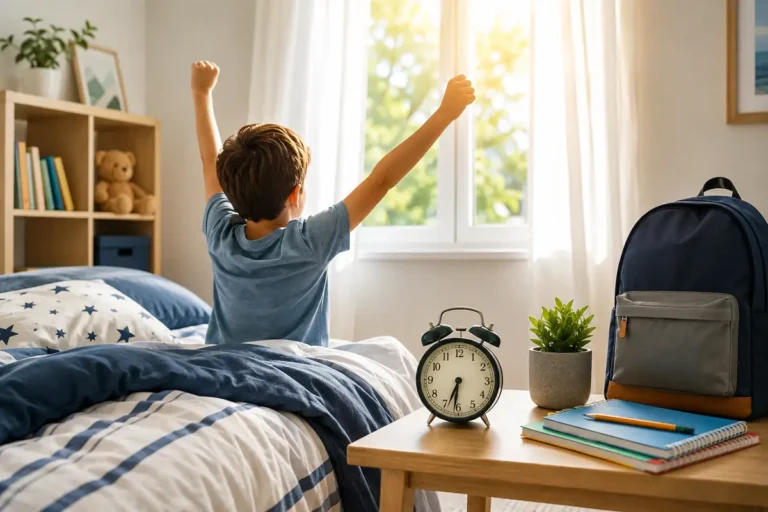
Begin adjusting routines one to two weeks before school starts. Gradually move bedtime earlier, wake up at the school-time schedule, eat breakfast at the usual time, and limit late-night screen use. Predictable routines help children feel secure.
3. Visit the School Before the First Day
If possible, walk around the school together. Show your child the classroom, the playground, the cafeteria, the school entrance, and where you’ll say goodbye. Familiarity reduces uncertainty, one of the biggest drivers of anxiety.
4. Practice the Morning Routine
Young children especially benefit from practicing. Try a “school morning rehearsal” that includes getting dressed, packing the backpack, eating breakfast, and leaving the house on time. This helps the first real morning feel familiar instead of overwhelming.
5. Encourage Healthy Sleep
Sleep and anxiety influence each other. Children who don’t get enough sleep often experience stronger emotional reactions and more difficulty coping with stress. Aim for age-appropriate sleep and maintain consistent bedtimes—even on weekends when school is approaching. For a full step-by-step guide, see The Best Bedtime Routine for Children.
6. Stay Calm Yourself
Children often look to adults to judge whether a situation is safe. If parents appear highly stressed or repeatedly ask, “Are you okay?” children may interpret school as something to fear. Model calm, confident behavior while acknowledging your child’s emotions.
7. Praise Effort, Not Perfection
Instead of focusing only on grades or performance, celebrate courage—walking into school, introducing themselves to a classmate, trying something new, or asking a teacher for help. Building confidence is often more valuable than achieving perfect results.
8. Teach Simple Relaxation Skills
Simple techniques can help children calm their bodies, including slow belly breathing, counting to five while inhaling and exhaling, progressive muscle relaxation, and imagining a safe, peaceful place. Practice these skills at home before they’re needed at school.
9. Keep Goodbyes Short and Positive
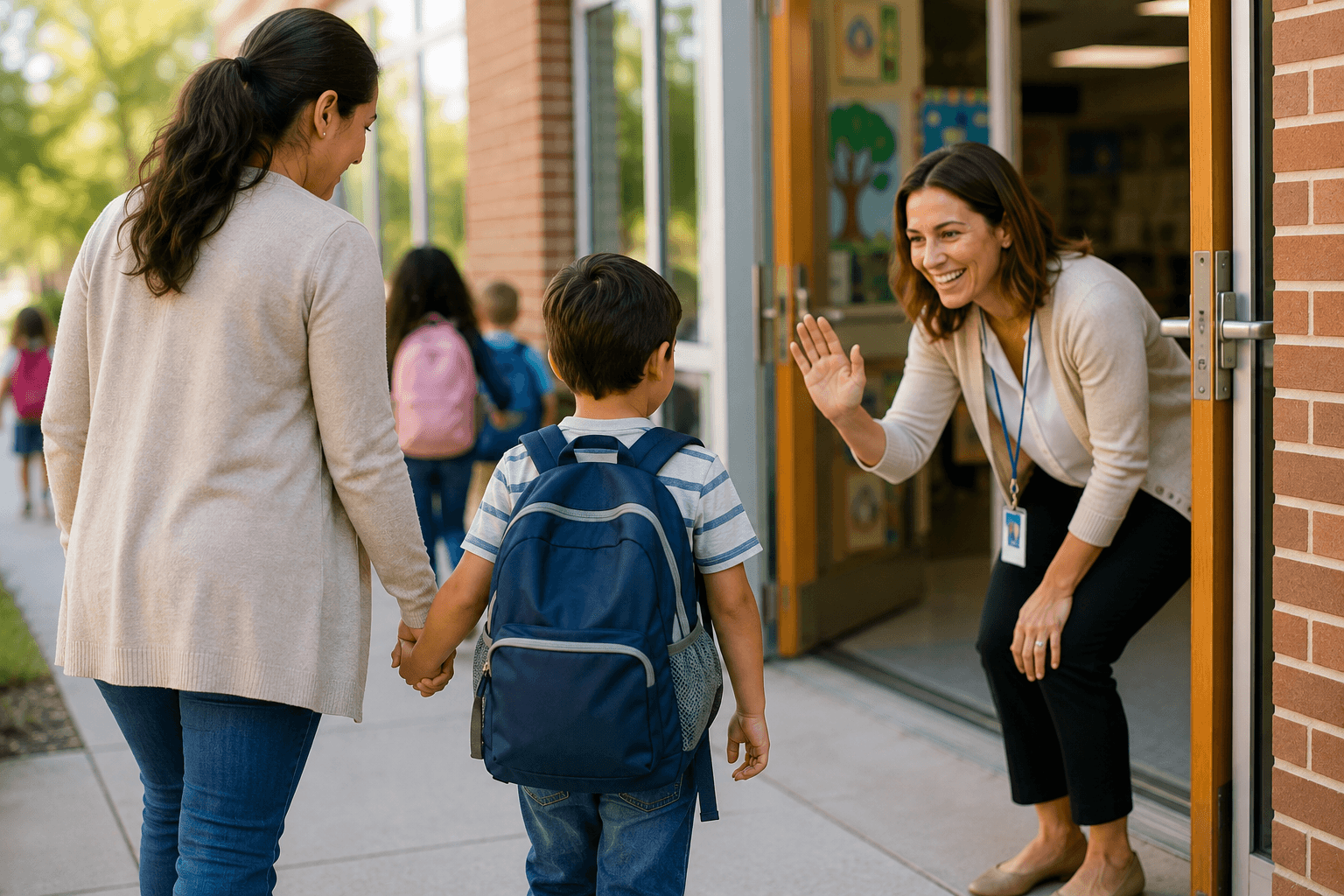
Long, emotional goodbyes can unintentionally reinforce anxiety. Instead, give a hug, smile, offer a reassuring phrase such as “I’ll see you after school,” and leave confidently. Consistency helps children adjust more quickly.
10. Celebrate Small Wins
At the end of each school day, ask questions that encourage reflection rather than focusing only on academics, such as “What made you smile today?”, “Did anything surprise you?”, or “What’s one thing you’re proud of today?” Recognizing progress helps children build resilience over time.
Creating a Calm Back-to-School Routine
A predictable routine can make school mornings less stressful for everyone.
The evening before: Pack the backpack, choose clothes for the next day, prepare lunch if possible, set a consistent bedtime, and avoid stimulating screen time before bed. A well-planned lunch also helps mornings run smoothly — see our guide on Best Healthy School Lunch Ideas Kids Will Actually Eat.
In the morning: Wake up with enough time to avoid rushing, eat a balanced breakfast, leave home a few minutes early, and offer calm encouragement rather than repeated reminders. For quick, nutritious options, see Healthy Snacks for Kids: 25 Nutritious Snack Ideas.
Small, consistent habits create a sense of security that supports emotional well-being. Building broader daily habits also helps — see 10 Simple Healthy Habits for Kids That Science Actually Supports.
When Should Parents Seek Professional Help?
While temporary anxiety is common, professional support may be helpful if your child refuses school for several weeks, experiences severe panic symptoms, has frequent physical complaints without a medical cause, shows persistent sadness or withdrawal, stops enjoying activities they previously loved, or has anxiety that interferes with sleep, learning, friendships, or family life.
Early support can prevent anxiety from becoming more severe and help children develop healthy coping skills.
Key Takeaways
- Mild back-to-school anxiety is common and usually temporary.
- Children may express anxiety through physical symptoms, emotions, or behavior.
- Listening with empathy is more effective than dismissing fears.
- Predictable routines, healthy sleep, and gradual preparation can significantly reduce anxiety.
- Most children adjust within the first few weeks, but persistent anxiety deserves professional attention.
Frequently Asked Questions
Is back-to-school anxiety normal?
Yes. Mild anxiety about returning to school is common and usually improves as children adjust to new routines and environments.
What are the signs of school anxiety?
Common signs include stomachaches, headaches, trouble sleeping, excessive worrying, clinginess, irritability, and refusing to attend school.
How can parents help children with school anxiety?
Parents can listen without judgment, establish consistent routines, encourage healthy sleep, practice relaxation techniques, and communicate positively about school.
How long does back-to-school anxiety usually last?
For most children, it improves within the first few days or weeks as they become familiar with their new routine.
Should I let my child stay home if they’re anxious?
Occasionally staying home because of genuine illness is appropriate, but avoiding school due to anxiety can unintentionally reinforce fear. If anxiety is severe or persistent, speak with your child’s healthcare provider or school counselor.
Can school anxiety cause stomachaches?
Yes. Anxiety often causes real physical symptoms, including stomachaches, headaches, nausea, and changes in appetite.
Is back-to-school anxiety more common in younger children?
It is especially common during major transitions, such as starting preschool or kindergarten. However, older children and teenagers can also experience significant anxiety related to academics, friendships, or social pressures.
When should I seek professional help?
If anxiety persists for several weeks, causes frequent school refusal, or significantly interferes with your child’s daily life, consult your pediatrician or a qualified mental health professional.
Final Thoughts
A new school year is a major transition, and it’s completely normal for children to feel uncertain at first. While parents cannot remove every challenge their child will face, they can provide something even more valuable: a sense of safety, understanding, and confidence.
Listening without judgment, maintaining predictable routines, encouraging healthy habits, and celebrating small victories can help children develop resilience that extends far beyond the classroom.
Remember, the goal isn’t to eliminate all anxiety. A small amount of nervousness is a natural part of growth. The goal is to help children learn that they are capable of facing new situations with courage and support.
With patience, consistency, and compassion, most children settle into their new school routine and begin to enjoy the friendships, learning opportunities, and experiences that a new school year brings.
Continue Reading
- The Parent’s Guide to Children’s Emotional Health
- Signs of Anxiety in Children by Age: What Parents Should Look For
- How Stress Affects Your Child’s Brain: What Every Parent Should Know
- The Best Bedtime Routine for Children — What Neuroscience Actually Recommends
- Exercise & Teen Mental Health
- Healthy Snacks for Kids: 25 Nutritious Snack Ideas Parents Will Love
- Best Healthy School Lunch Ideas Kids Will Actually Eat (Science-Based Guide)
- How to Read Nutrition Labels for Kids’ Foods
- 10 Simple Healthy Habits for Kids That Science Actually Supports
References
The recommendations in this article are based on guidance and research from trusted health and child development organizations, including:
- American Academy of Pediatrics (AAP)
- Centers for Disease Control and Prevention (CDC)
- National Institute of Mental Health (NIMH)
- American Psychological Association (APA)
- Child Mind Institute
Because recommendations may evolve over time, parents are encouraged to consult their child’s pediatrician or a qualified mental health professional if anxiety significantly interferes with daily life.