Weekly Healthy Meal Plan for Families
Estimated reading time: 12–15 minutes
Planning healthy family meals can feel overwhelming, especially when balancing work, school, extracurricular activities, and busy schedules. Without a plan, it’s easy to rely on takeout, highly processed convenience foods, or last-minute meals that may not provide the nutrients children need.
A simple weekly meal plan can make healthy eating easier. It helps families save time, reduce food waste, manage grocery costs, and ensure that balanced meals are available throughout the week.
Meal planning doesn’t require complicated recipes or hours in the kitchen. With a few practical strategies, parents can prepare nutritious breakfasts, lunches, dinners, and snacks that fit into everyday family life.
In this evidence-based guide, you’ll learn how to build a balanced weekly meal plan, discover a complete 7-day family menu, and find meal prep tips that make healthy eating more manageable. This article is part of our Complete Guide to Kids’ Nutrition.
Why Meal Planning Matters
Planning meals ahead offers benefits that extend beyond convenience.
A weekly meal plan can help families improve overall diet quality, include more fruits, vegetables, whole grains, and lean proteins, reduce reliance on fast food and ultra-processed meals, save money by shopping with a purpose, reduce food waste, make busy weekdays less stressful, and build consistent healthy eating habits for children.
Meal planning is not about creating perfect meals every day—it’s about making healthy choices easier and more sustainable.
How to Build a Healthy Weekly Meal Plan
A balanced meal plan includes foods from several food groups each day.
Protein
Choose a variety of protein sources throughout the week, including chicken, fish, eggs, beans, lentils, Greek yogurt, tofu, and lean turkey. For more ideas, see our guide on Best High-Protein Foods for Kids.
Vegetables
Aim to include colorful vegetables with both lunch and dinner whenever possible. Examples include broccoli, carrots, spinach, bell peppers, cucumbers, tomatoes, sweet potatoes, and green beans. Fresh and frozen vegetables are both nutritious choices.
Fruits
Offer whole fruit daily, such as apples, bananas, oranges, berries, grapes, pears, and kiwi. Whole fruit generally provides more fiber than fruit juice.
Whole Grains
Choose whole grains more often than refined grains. Healthy options include oatmeal, brown rice, whole-wheat bread, whole-grain pasta, quinoa, and whole-grain tortillas — see Best High-Fiber Foods for Kids.
Healthy Fats
Healthy fats support normal growth and brain development. Include foods such as olive oil, avocados, nuts and seeds (when age-appropriate), and natural nut butters.
Healthy Drinks
For most children, the healthiest everyday beverages are water, milk, and fortified unsweetened soy milk (when appropriate). Limit sugar-sweetened beverages and energy drinks — see Healthy Drinks for Kids.
Build a Balanced Family Plate
| Food Group | Healthy Examples |
|---|---|
| Protein | Chicken, fish, eggs, beans, lentils |
| Vegetables | Broccoli, carrots, spinach, peppers |
| Whole Grains | Brown rice, oats, quinoa, whole-wheat bread |
| Fruit | Apples, berries, bananas, oranges |
| Healthy Drink | Water or milk |
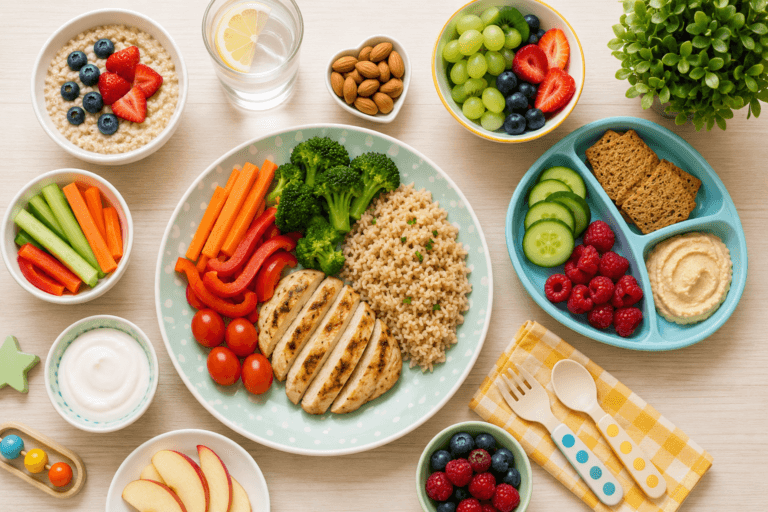
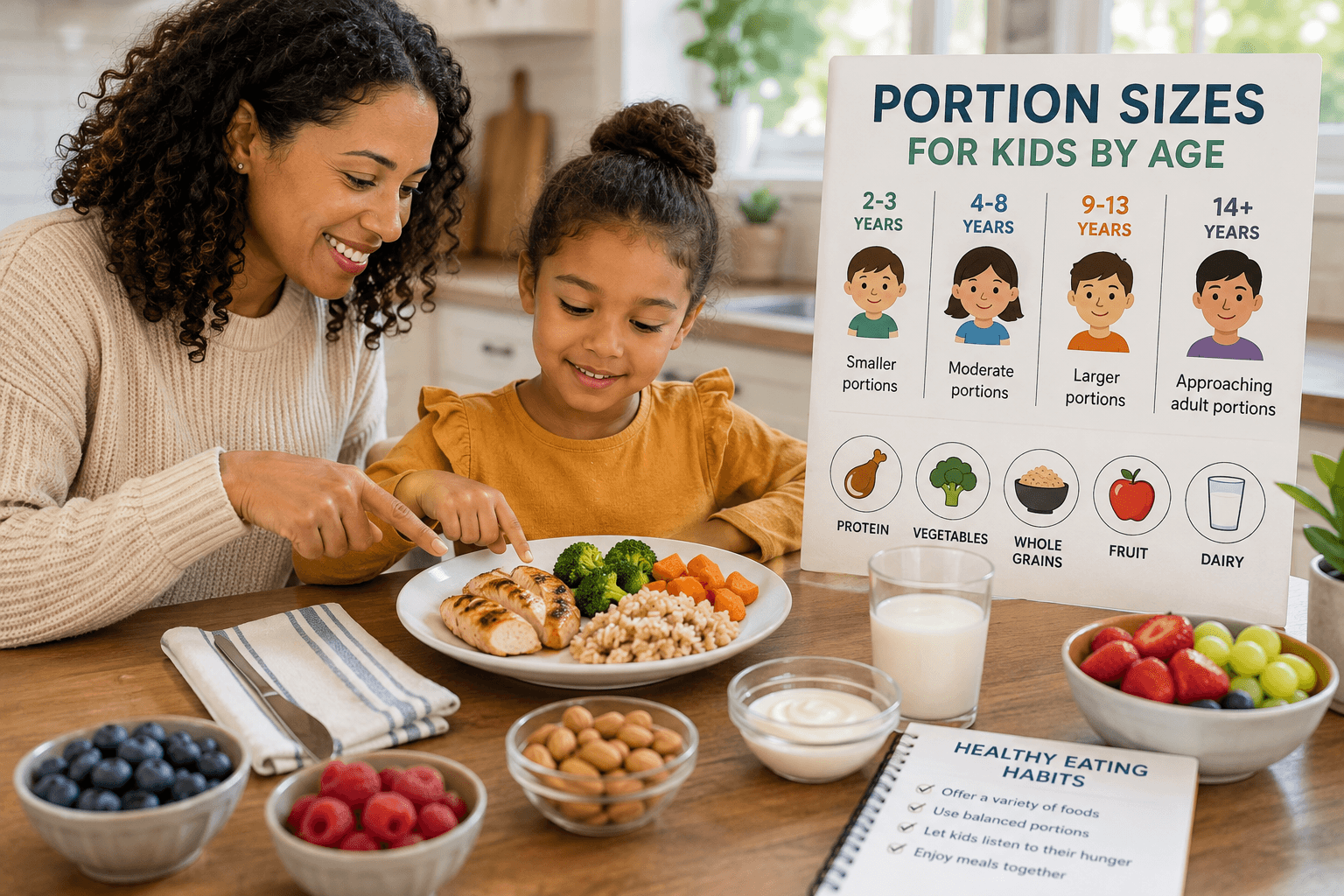
A simple visual guide is to fill about half the plate with vegetables, one-quarter with lean protein, and one-quarter with whole grains, then add fruit and a healthy beverage as appropriate.
7-Day Healthy Family Meal Plan
| Day | Breakfast | Lunch | Dinner | Snack |
|---|---|---|---|---|
| Monday | Oatmeal with berries | Turkey sandwich & carrots | Sheet pan chicken with vegetables | Apple & peanut butter* |
| Tuesday | Greek yogurt & fruit | Whole-grain wrap | Salmon, brown rice & broccoli | Cheese & whole-grain crackers |
| Wednesday | Scrambled eggs & toast | Pasta salad with chicken | Lentil soup & whole-grain bread | Banana |
| Thursday | Overnight oats | Bean burrito bowl | Turkey meatballs & whole-wheat pasta | Yogurt |
| Friday | Whole-grain cereal & milk | Tuna sandwich | Homemade veggie pizza | Mixed berries |
| Saturday | Banana oat pancakes | Leftover chicken salad | Beef stir-fry & brown rice | Hummus & vegetables |
| Sunday | Fruit smoothie | Grilled cheese & tomato soup | Baked chicken, sweet potatoes & green beans | Orange slices |
*Use nut butters only when appropriate for your child’s age and allergy status.
Healthy Grocery List for the Week
Shopping with a list makes meal planning easier and helps reduce impulse purchases. For a full breakdown by category, see our complete Healthy Grocery List for Families.
Produce: Apples, bananas, berries, oranges, broccoli, carrots, spinach, bell peppers, cucumbers, sweet potatoes.
Protein: Chicken breast, eggs, salmon, lean ground turkey, Greek yogurt, black beans, lentils, canned tuna (low sodium, if available).
Whole Grains: Oatmeal, brown rice, whole-grain bread, whole-wheat pasta, quinoa, whole-grain tortillas.
Dairy & Alternatives: Milk, plain yogurt, cheese, fortified unsweetened soy milk.
Healthy Fats: Olive oil, avocados, natural peanut butter, chia seeds, mixed nuts (age-appropriate).
Meal Prep Tips for Busy Families
A little preparation at the beginning of the week can make healthy meals much easier.
Try cooking chicken, rice, or beans in large batches, washing and chopping vegetables after grocery shopping, preparing overnight oats for several mornings, portioning snacks into reusable containers, freezing leftovers for busy evenings, keeping frozen vegetables available for quick meals, and labeling prepared meals with the date.
Meal prep doesn’t have to take hours—even 30–60 minutes each week can make a noticeable difference.
Budget-Friendly Meal Planning Tips
Healthy eating can fit almost any budget with thoughtful planning. Buy fruits and vegetables that are in season, choose frozen produce when fresh options are expensive, use beans and lentils as affordable protein sources, plan meals around weekly grocery store sales, compare unit prices instead of package prices, cook once and enjoy leftovers another day, and reduce food waste by using ingredients in multiple meals.
Common Meal Planning Mistakes
Avoid planning meals that are too complicated for busy weekdays, buying more fresh produce than your family can use, forgetting to check the pantry before shopping, not scheduling leftover nights, preparing meals that don’t match your family’s preferences, and trying too many new recipes in the same week.
Simple, realistic plans are easier to maintain over time.
Frequently Asked Questions
How do I start meal planning?
Begin by planning just a few dinners each week. As the routine becomes easier, gradually plan breakfasts, lunches, and snacks as well.
Can meal planning save money?
Yes. Planning meals before shopping often reduces impulse purchases, food waste, and frequent takeout meals.
What if my child is a picky eater?
Offer familiar foods alongside new ones, involve your child in choosing meals, and avoid pressuring them to eat unfamiliar foods.
How long does meal prep usually take?
Many families can prepare ingredients for the week in about 30 to 60 minutes, depending on the number of meals planned.
Should every meal be perfectly balanced?
No. Aim for balance over the course of the day and week rather than expecting every single meal to be perfect.
Key Takeaways
- Meal planning makes healthy eating easier and more consistent.
- A balanced weekly plan includes protein, vegetables, fruits, whole grains, and healthy fats.
- Preparing ingredients ahead of time saves time during busy weekdays.
- Shopping with a grocery list helps reduce waste and unnecessary spending.
- Small, sustainable habits are more effective than trying to create a perfect meal plan.
Continue Reading
- The Ultimate Guide to Kids’ Nutrition (Complete Guide)
- Healthy Grocery List for Families
- Healthy Breakfast Ideas for Kids
- Healthy Dinner Ideas for Busy Families
- Healthy Snacks for Kids: 25 Nutritious Snack Ideas Parents Will Love
- Healthy Drinks for Kids: Best & Worst Choices
- Best Healthy School Lunch Ideas Kids Will Actually Eat
- Best High-Protein Foods for Kids by Age
- Best High-Fiber Foods for Kids
References
This article is based on guidance from:
- American Academy of Pediatrics (AAP)
- U.S. Department of Agriculture (USDA) — MyPlate
- Centers for Disease Control and Prevention (CDC)
- Academy of Nutrition and Dietetics
Because nutrition recommendations may change over time, consult your child’s pediatrician or a registered dietitian for personalized advice.